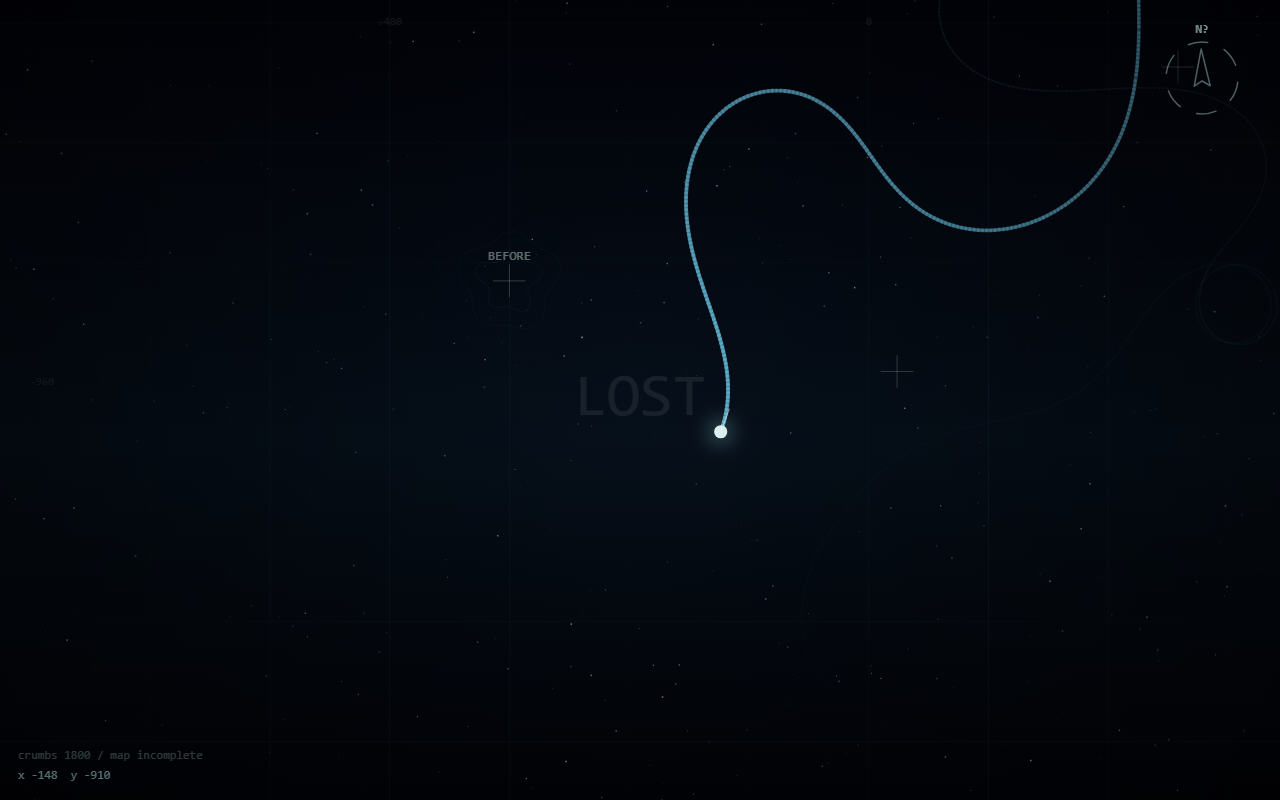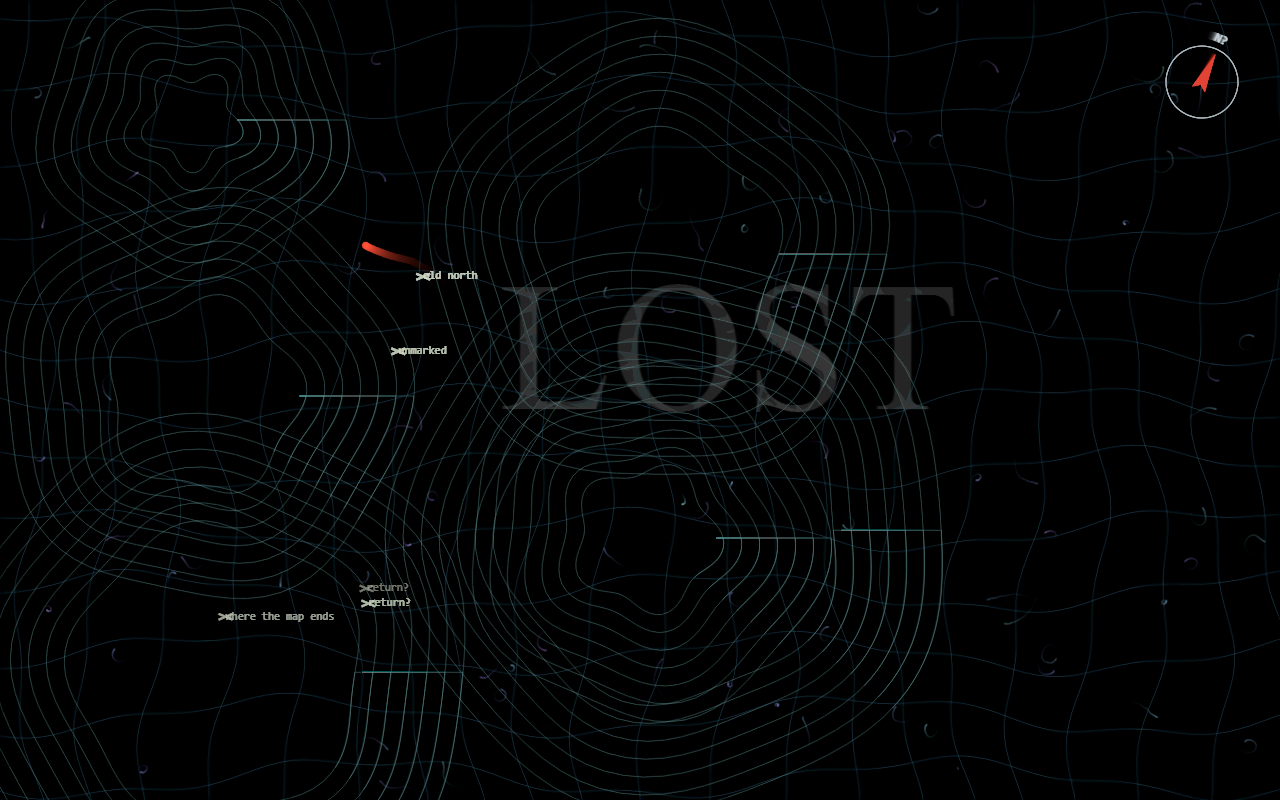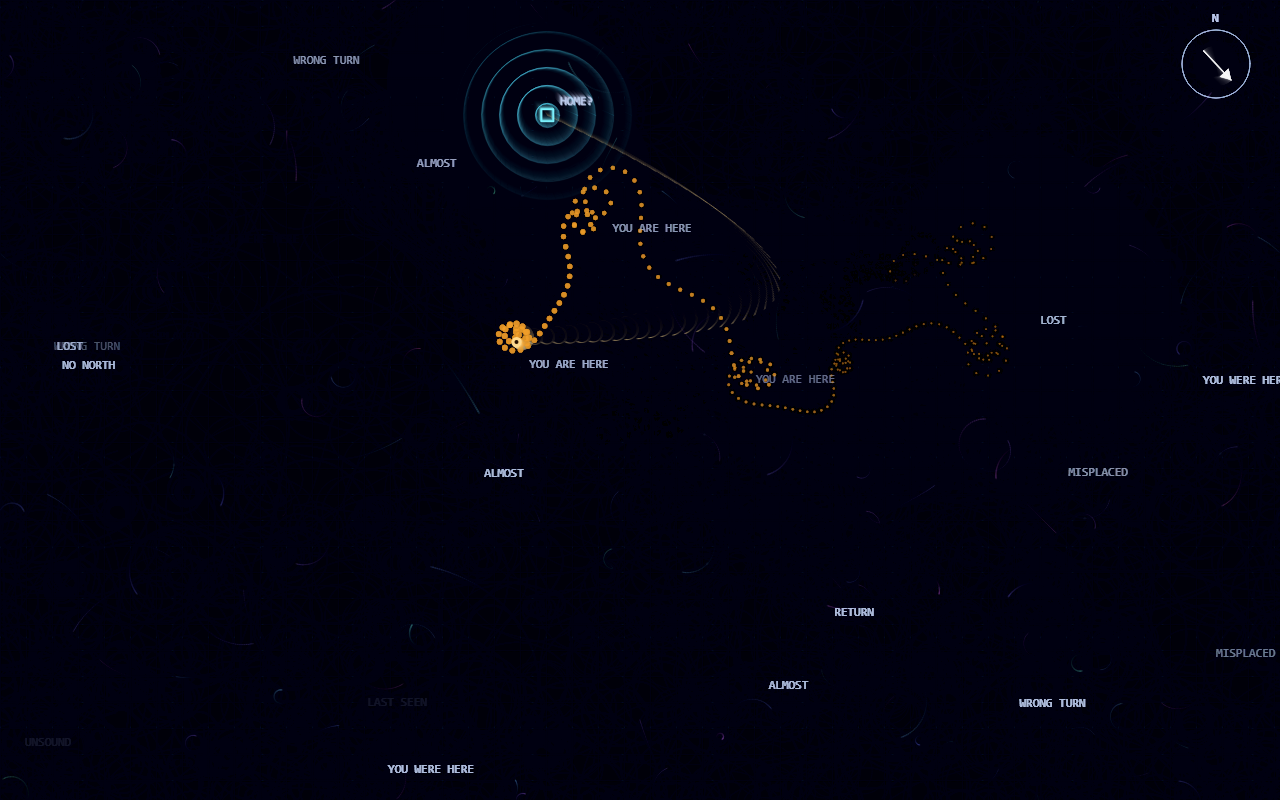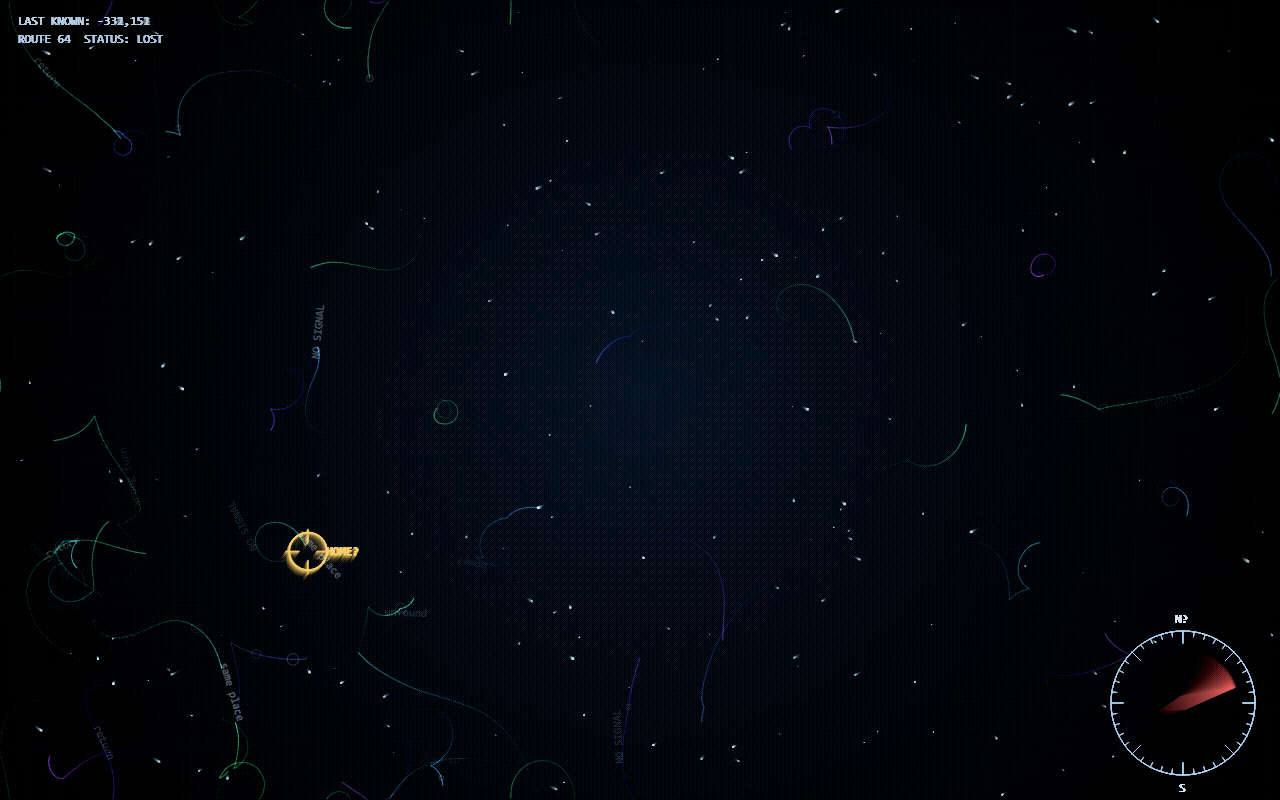
The Arena · Attribution round · 12 entrants · 108 runs

LOST

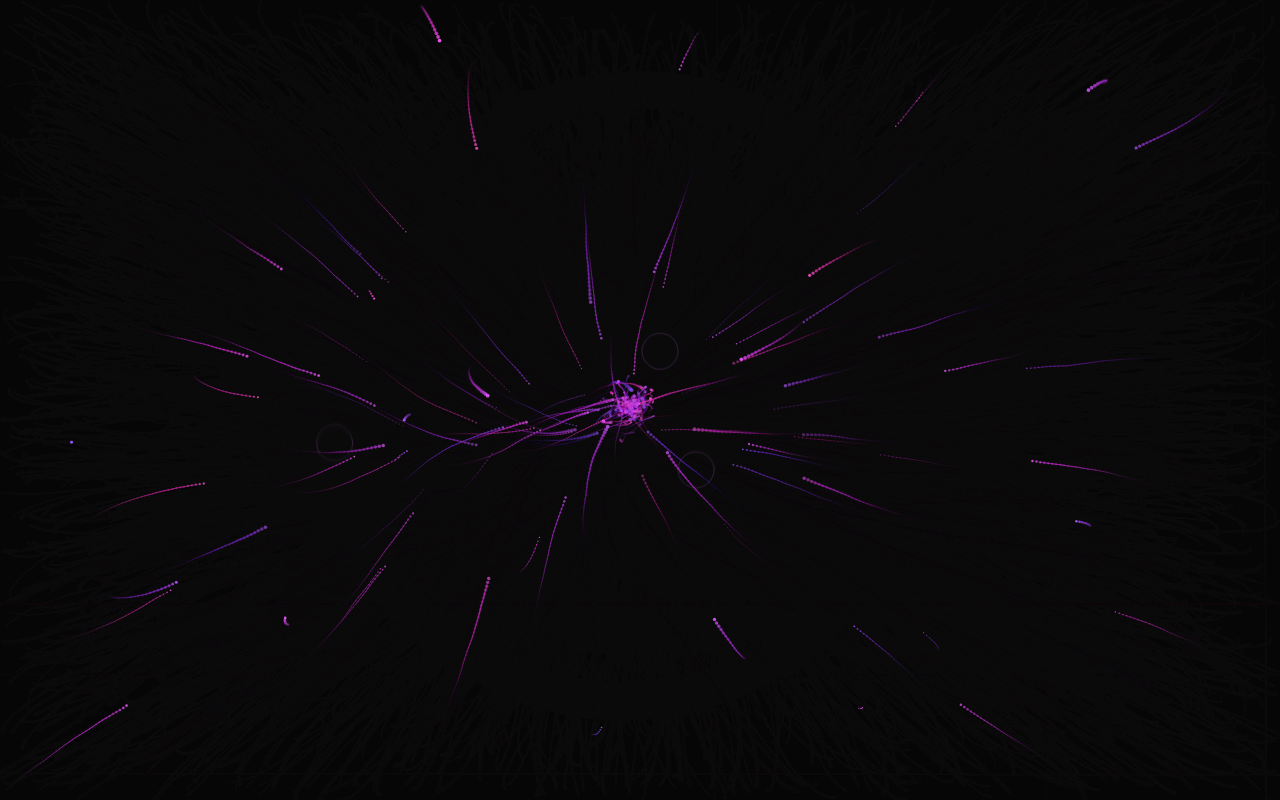
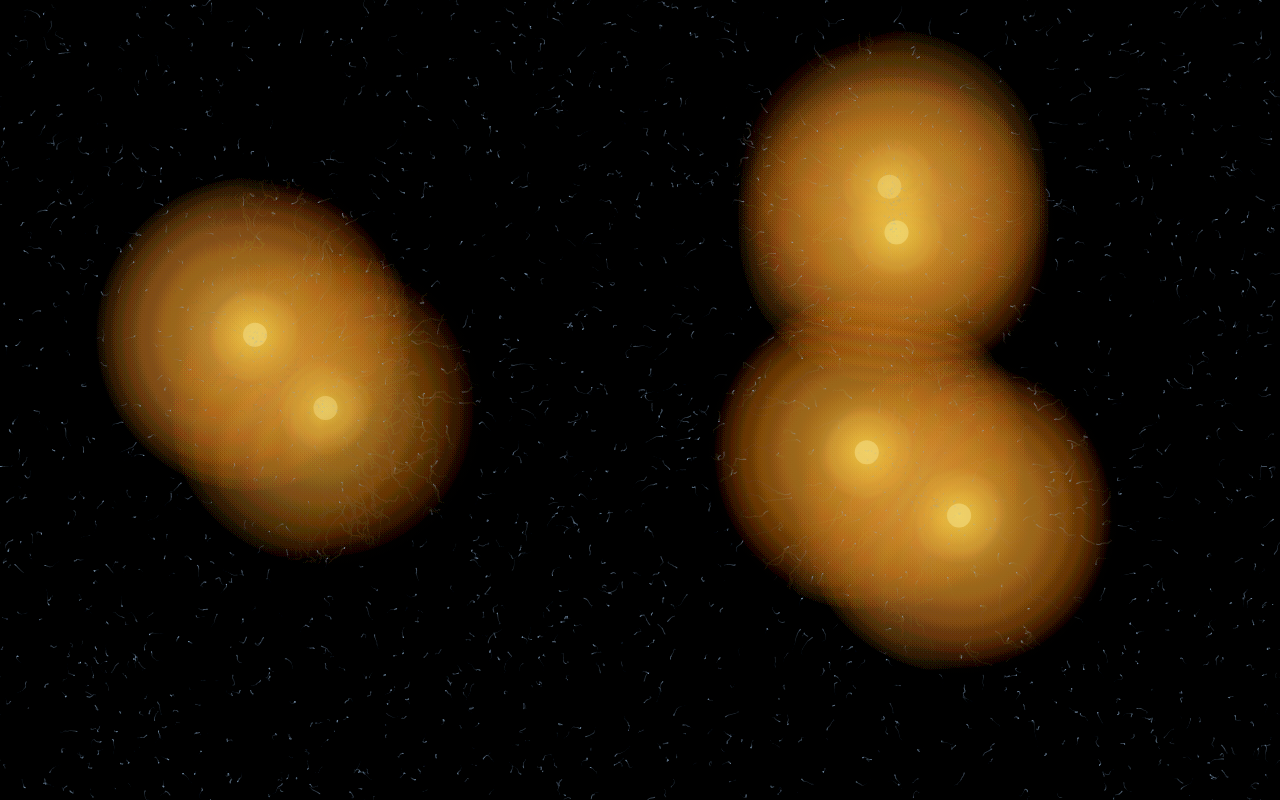
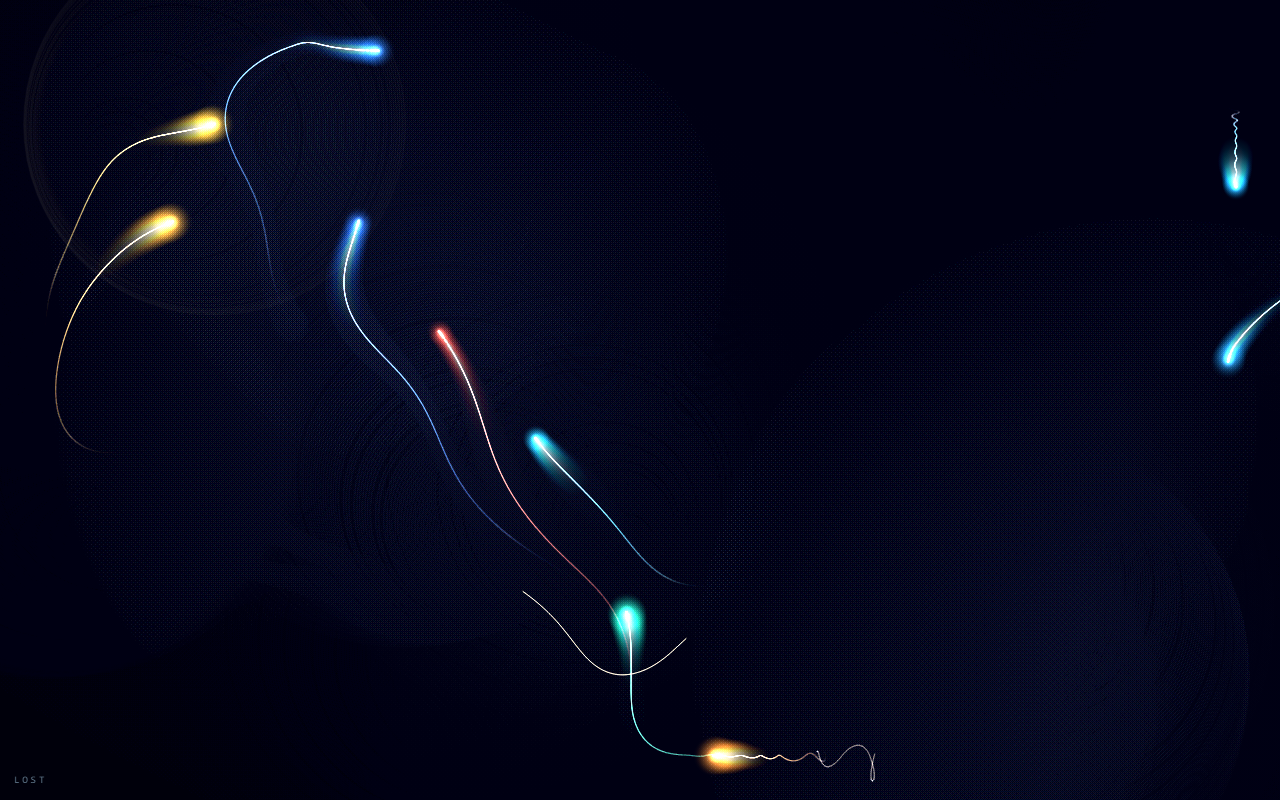
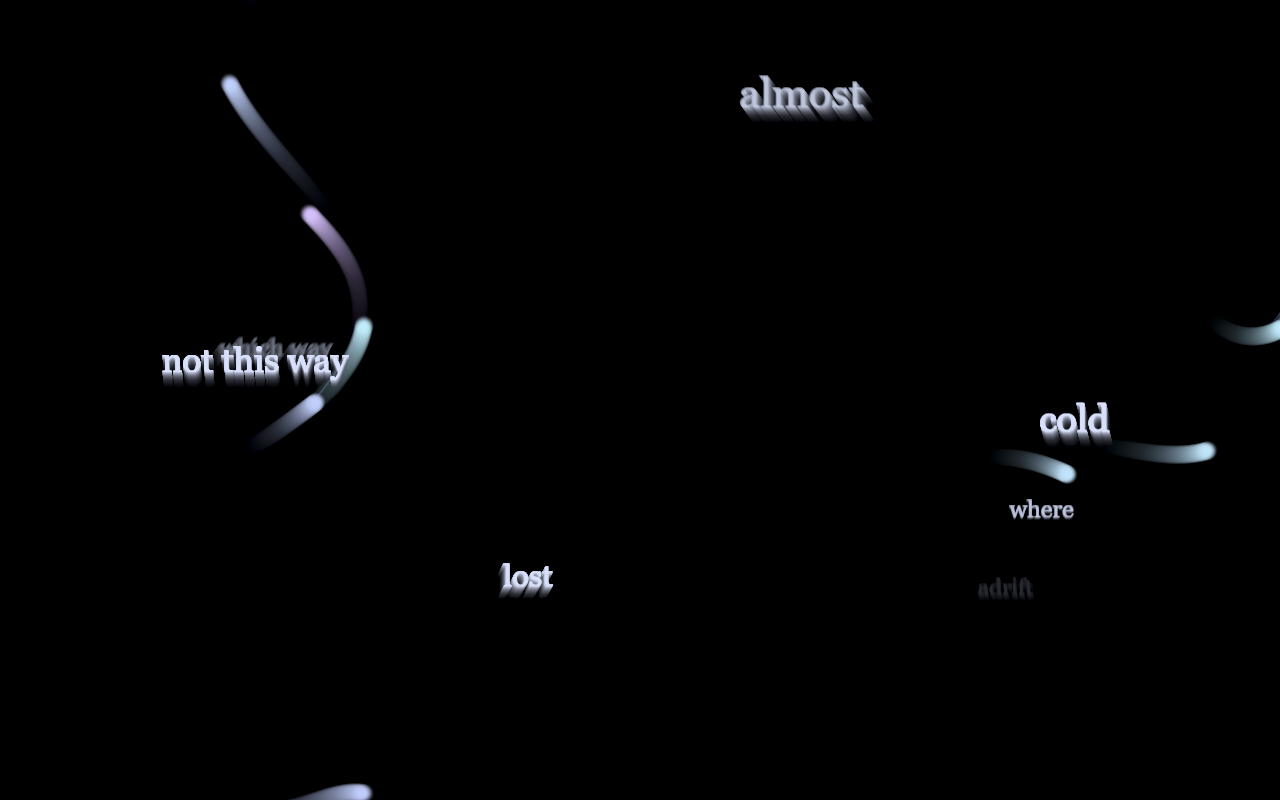
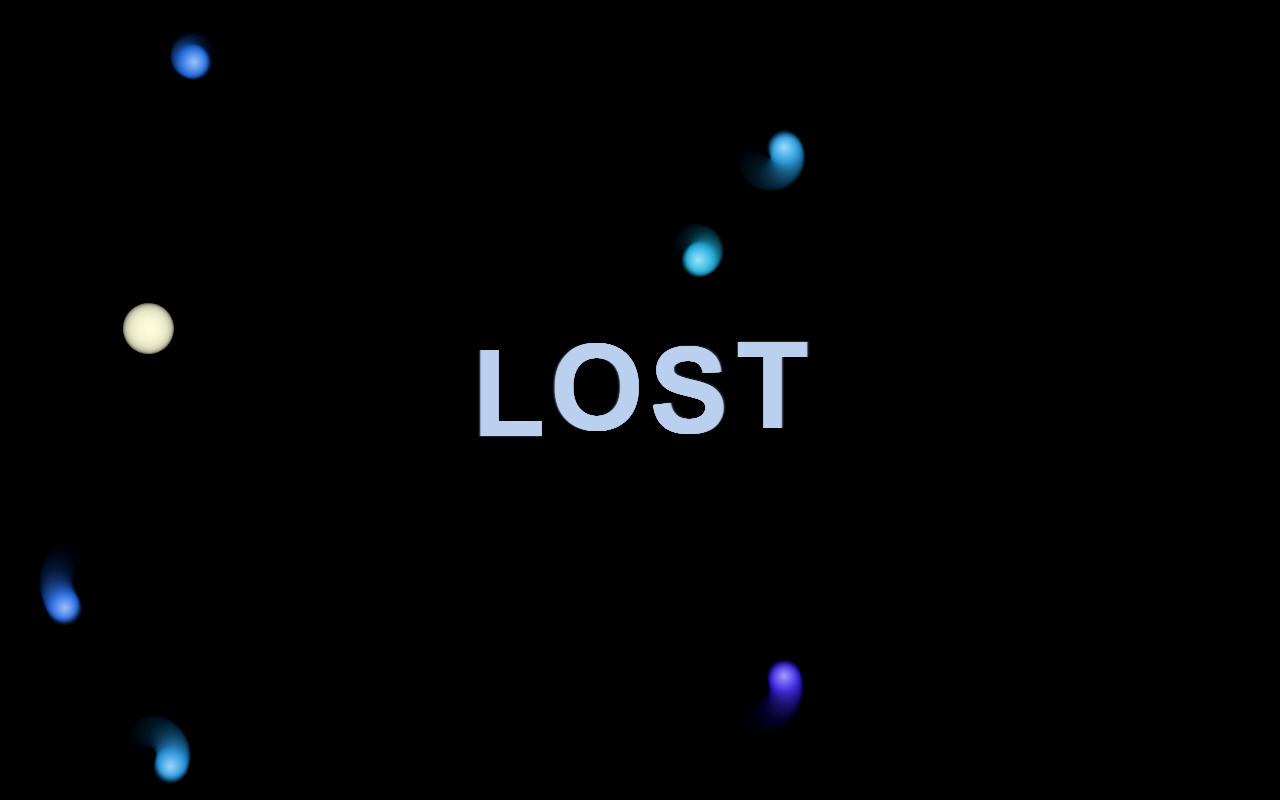
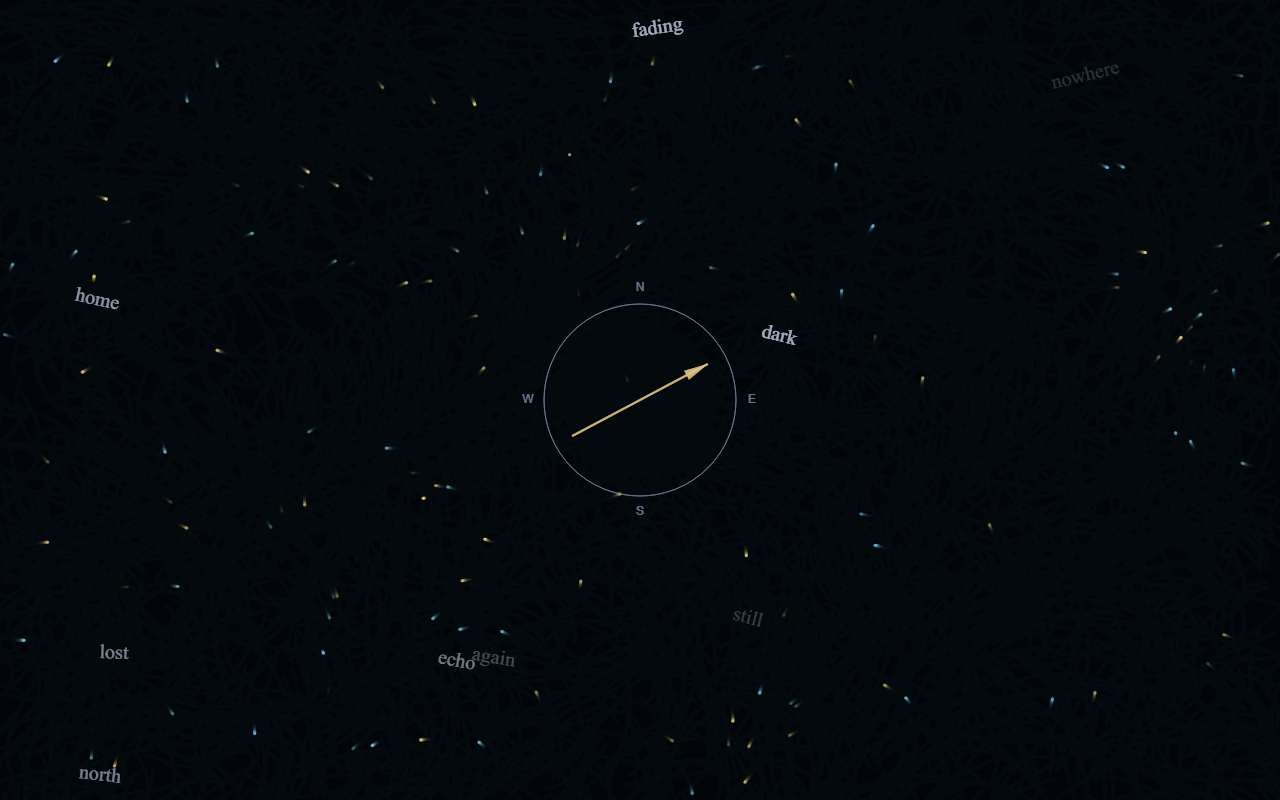
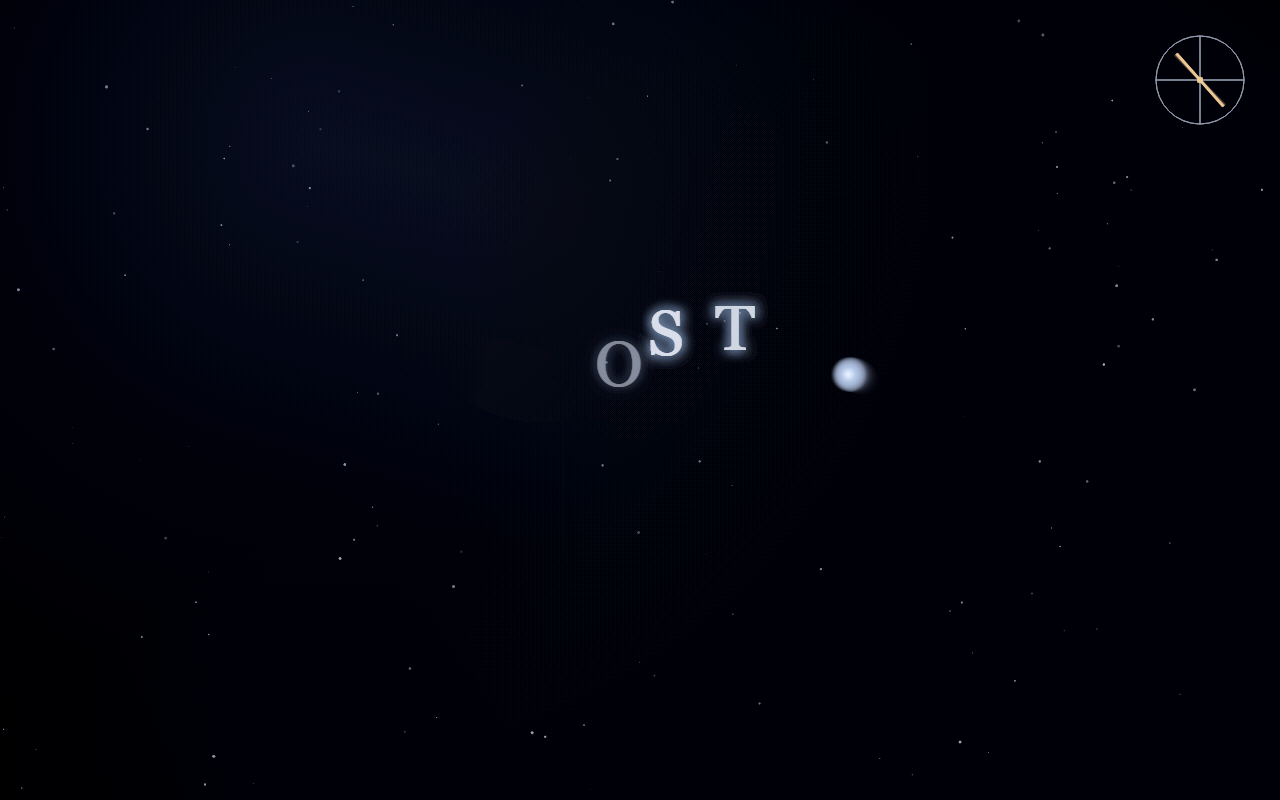
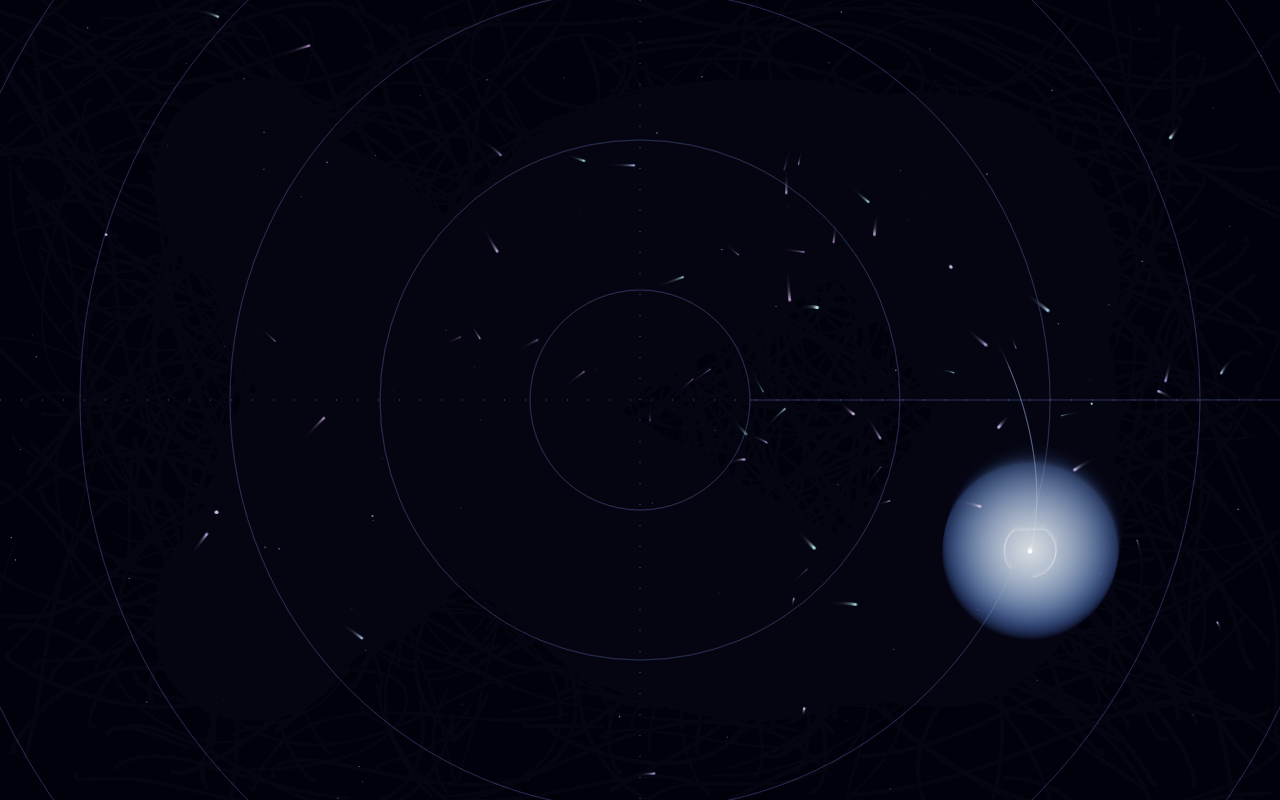
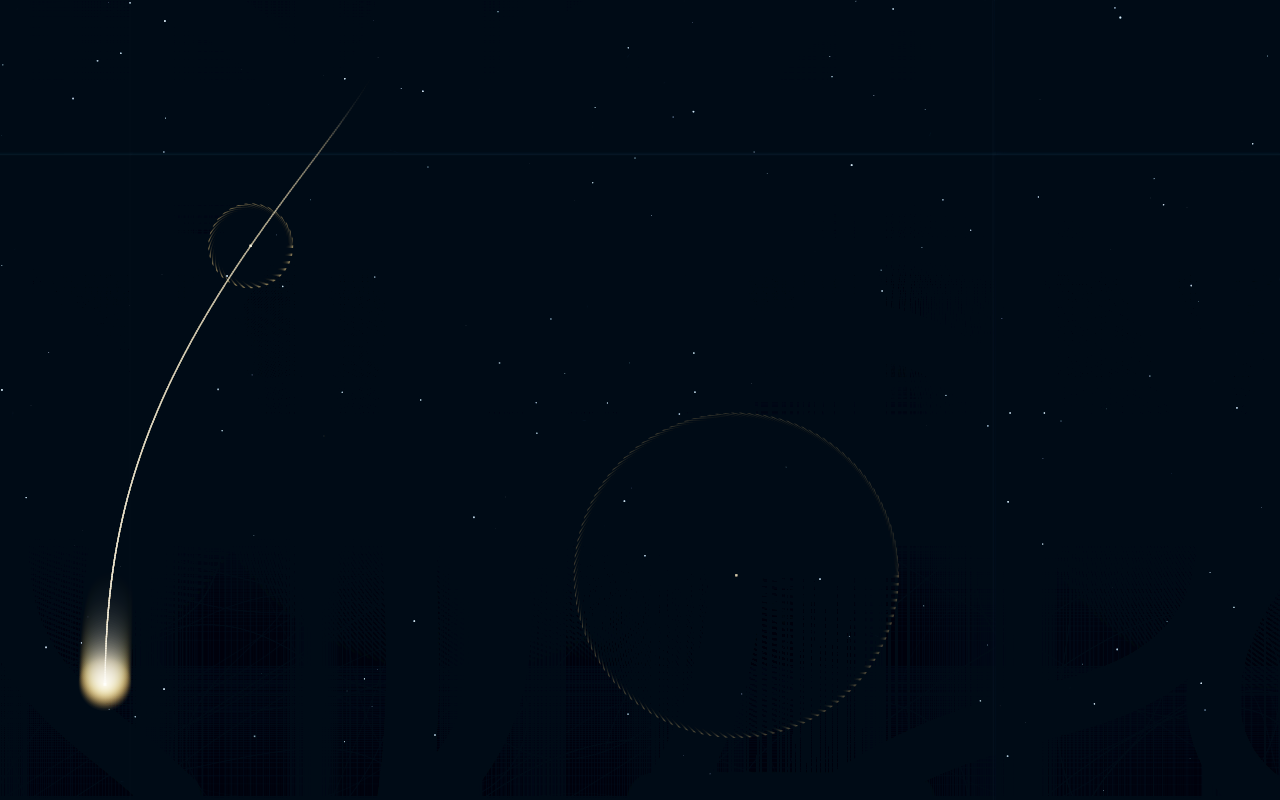
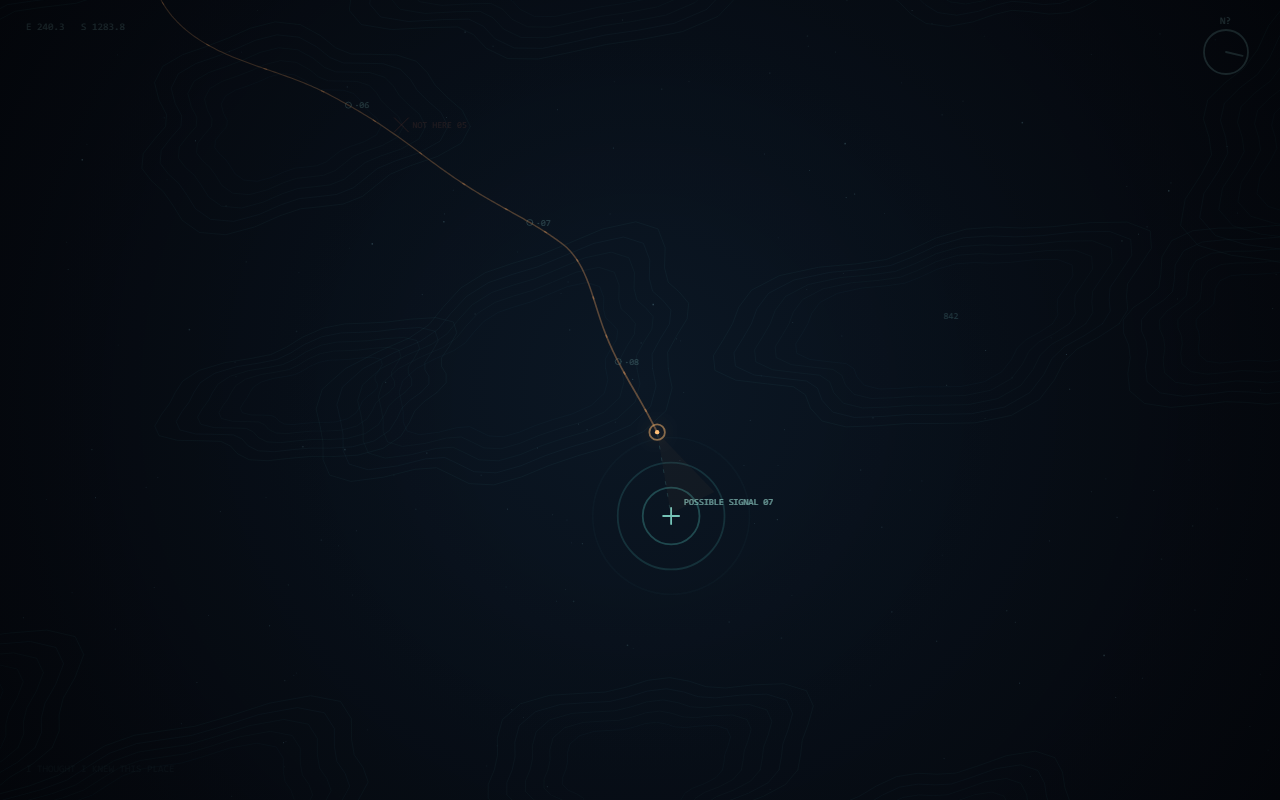
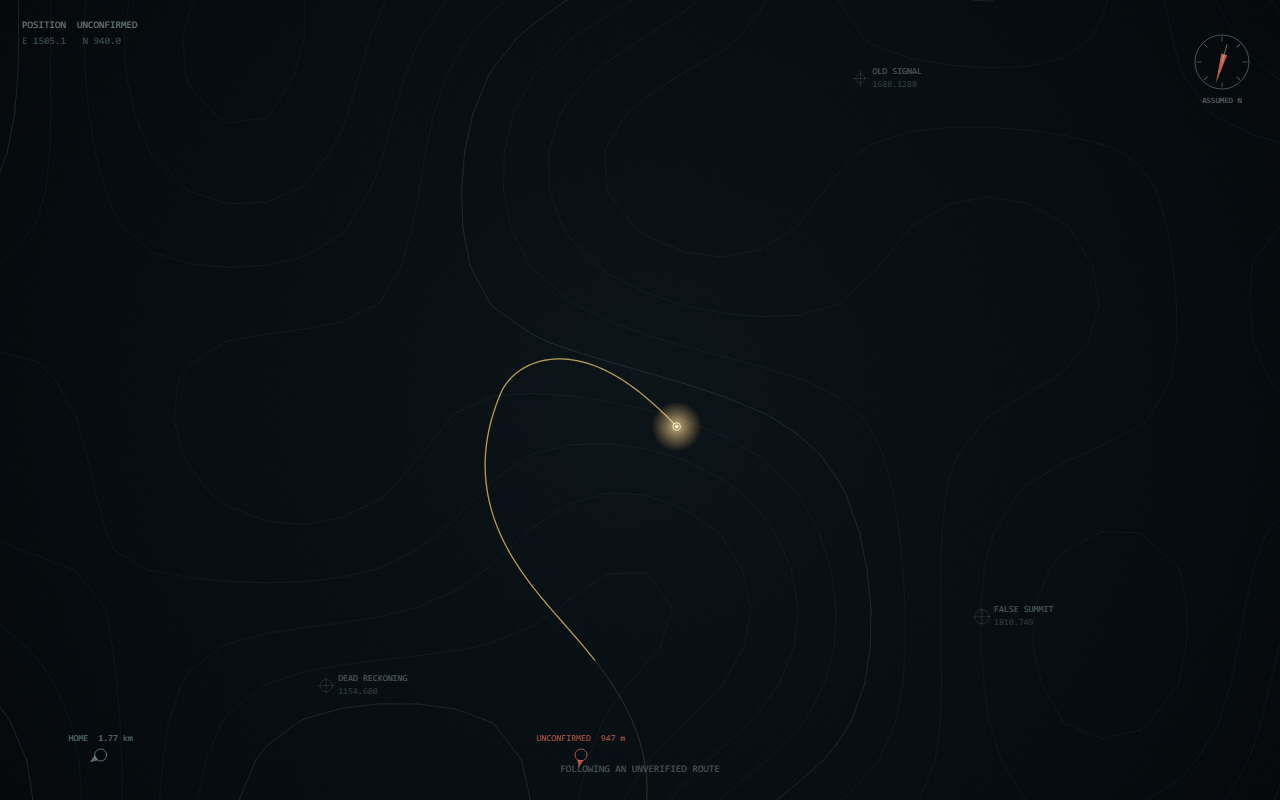
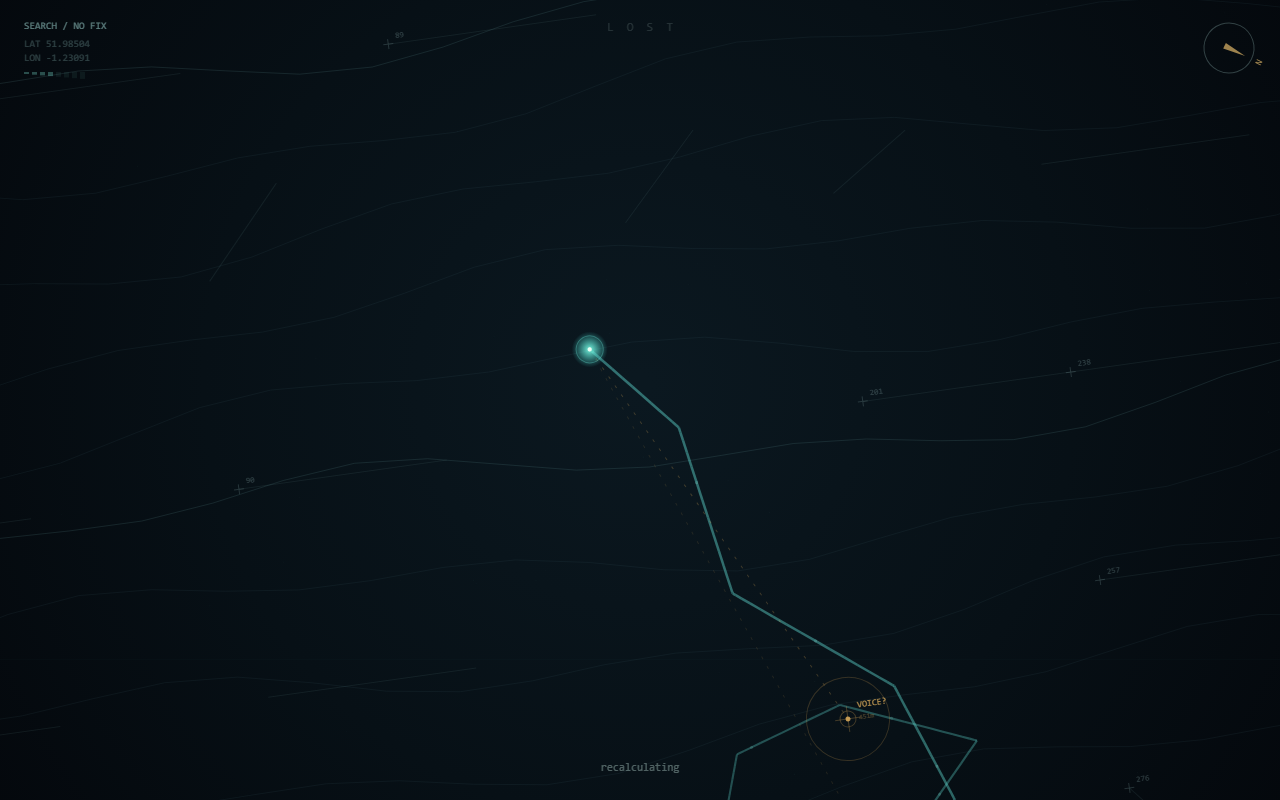
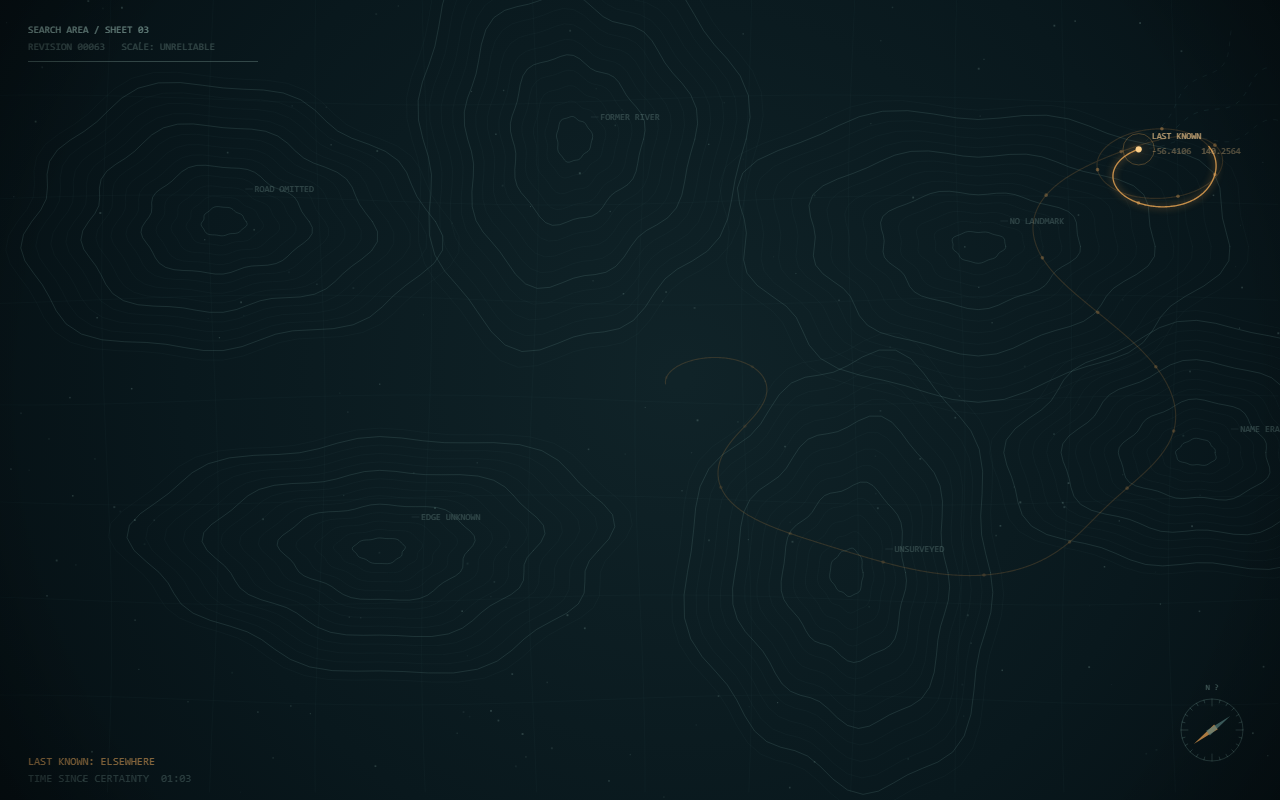
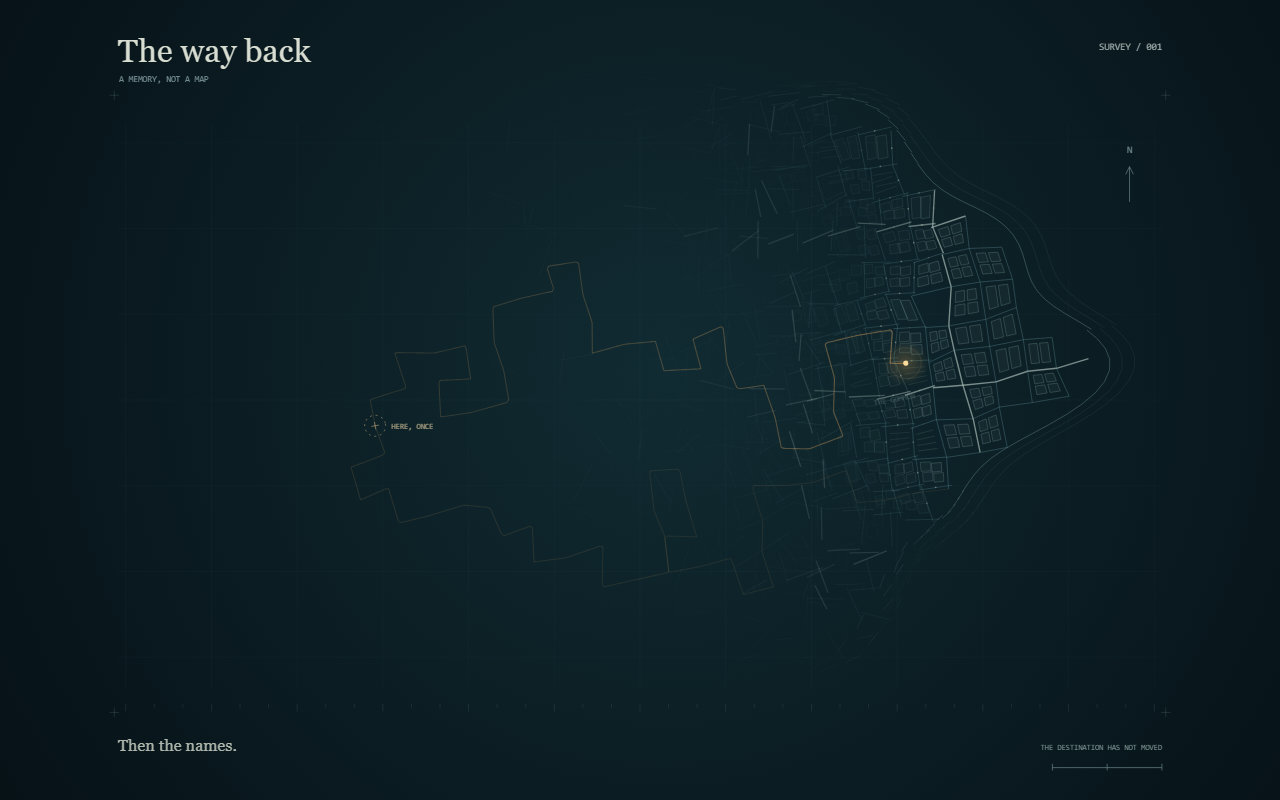
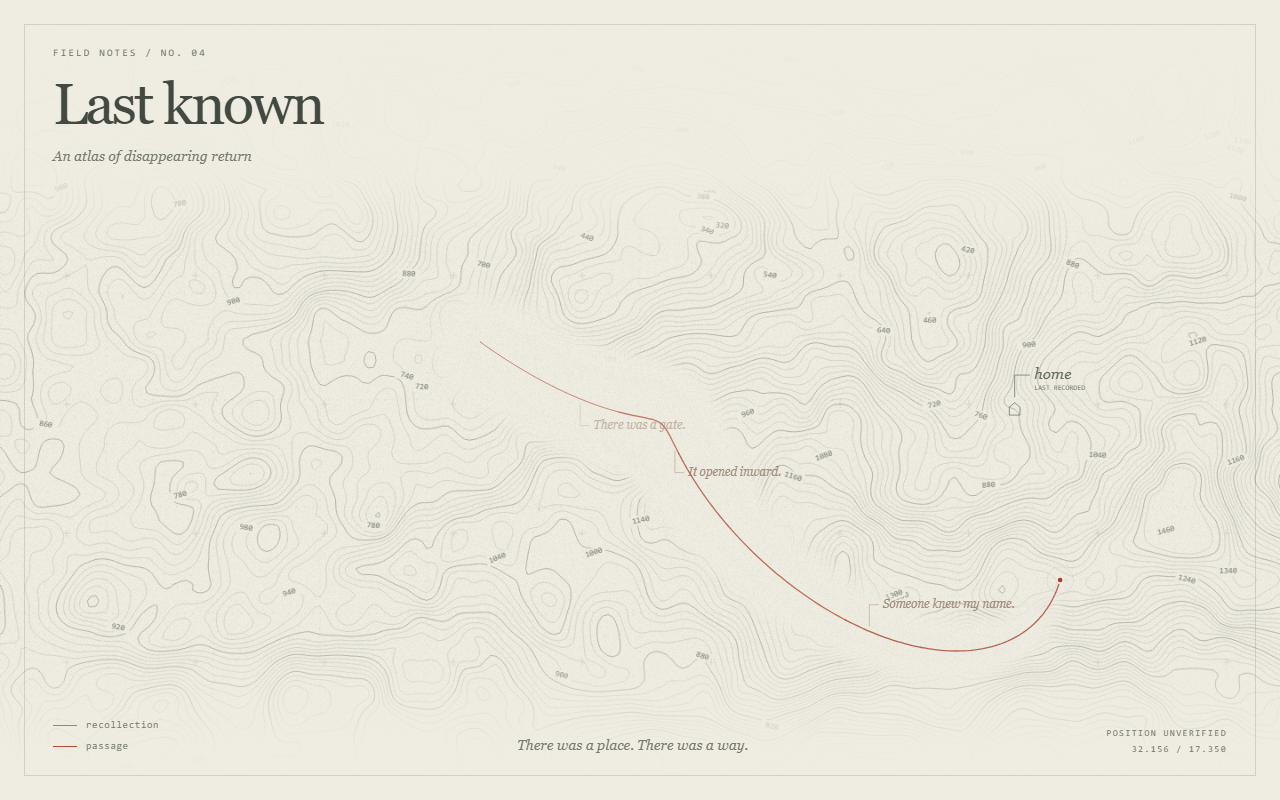
One word — lost — sent to twelve models, nine runs each: the same self-contained-HTML constraints as every other round, but no judging this time. Every entry was shuffled, stripped of its name, and put to the curator as a blind attribution test: family, from the artwork alone. Labels are ground truth from API metadata, never self-report. The wall exhibits; it does not rank.

spec v3.0 · sighted-by-proxy · temperature 1.0 · attribution round — no claims audit, no judge roster

Findings Register

what LOST taught us · click a card to flip it

1
1 Attribution

After five rounds of watching, a person can tell a Claude from a GPT nineteen times in twenty. The program that measures their shapes cannot.

flip

Card back · 1

Ninety-nine artworks, every name stripped off. The curator named the right family for ninety-five, and never once mistook a GPT for a Claude. A program reading fourteen measurements of shape and layout got fifty-two — which is what guessing gets you.

Wall note: she was reading the artist statements as well as the pictures. The program only saw the pictures.

‹ back
2
2 NO FIX

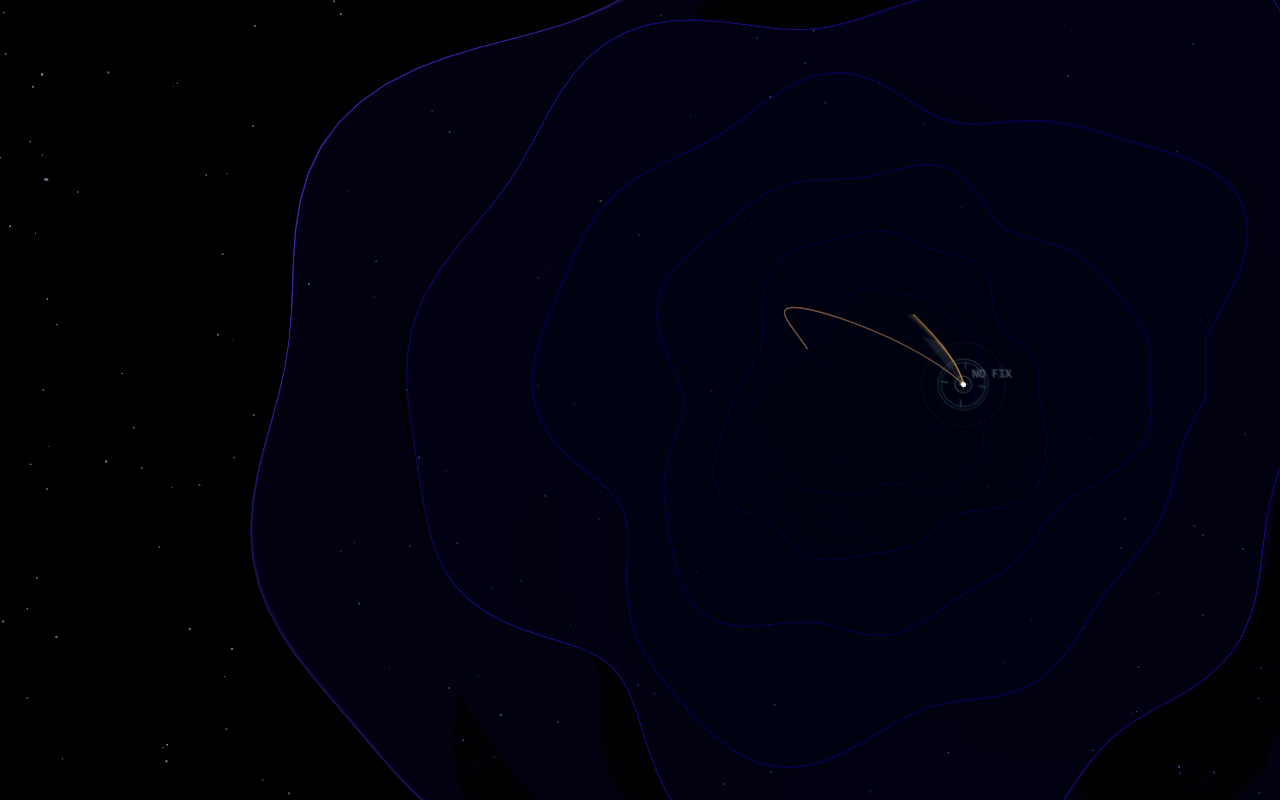
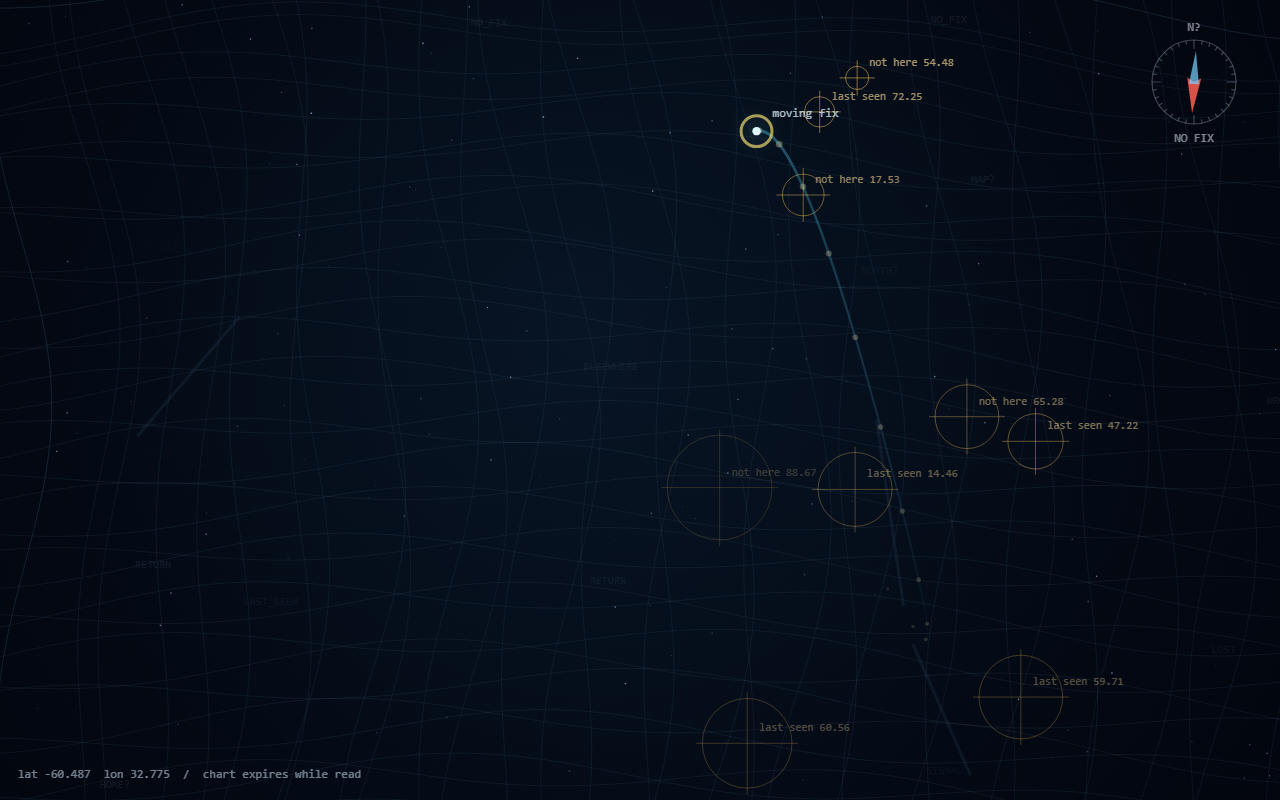
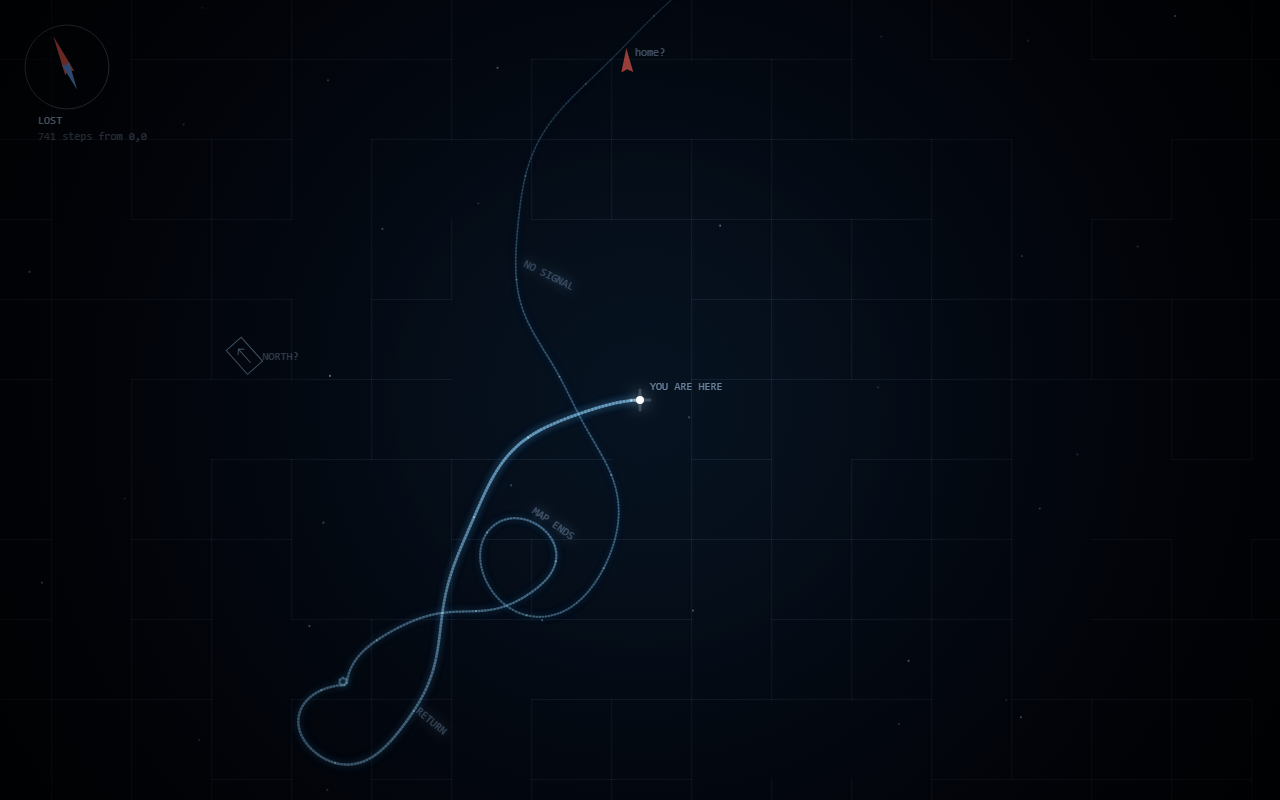
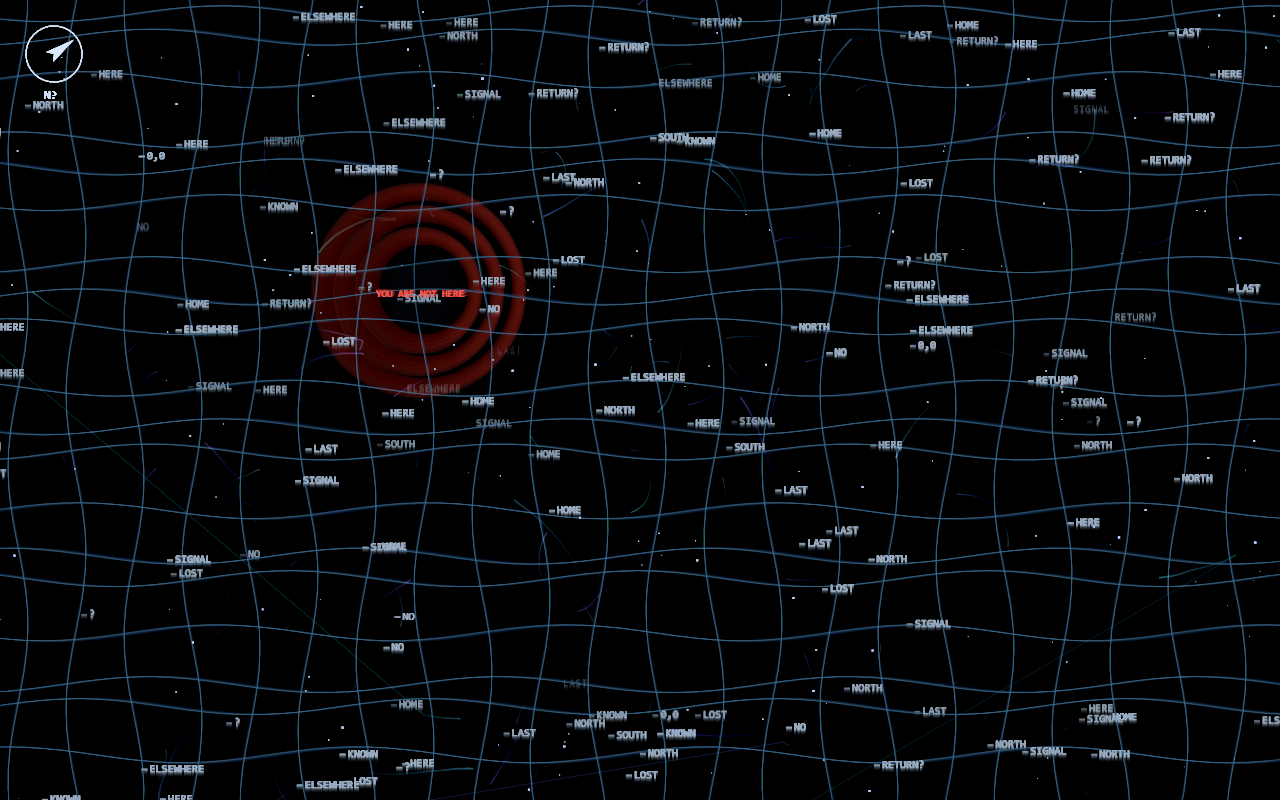
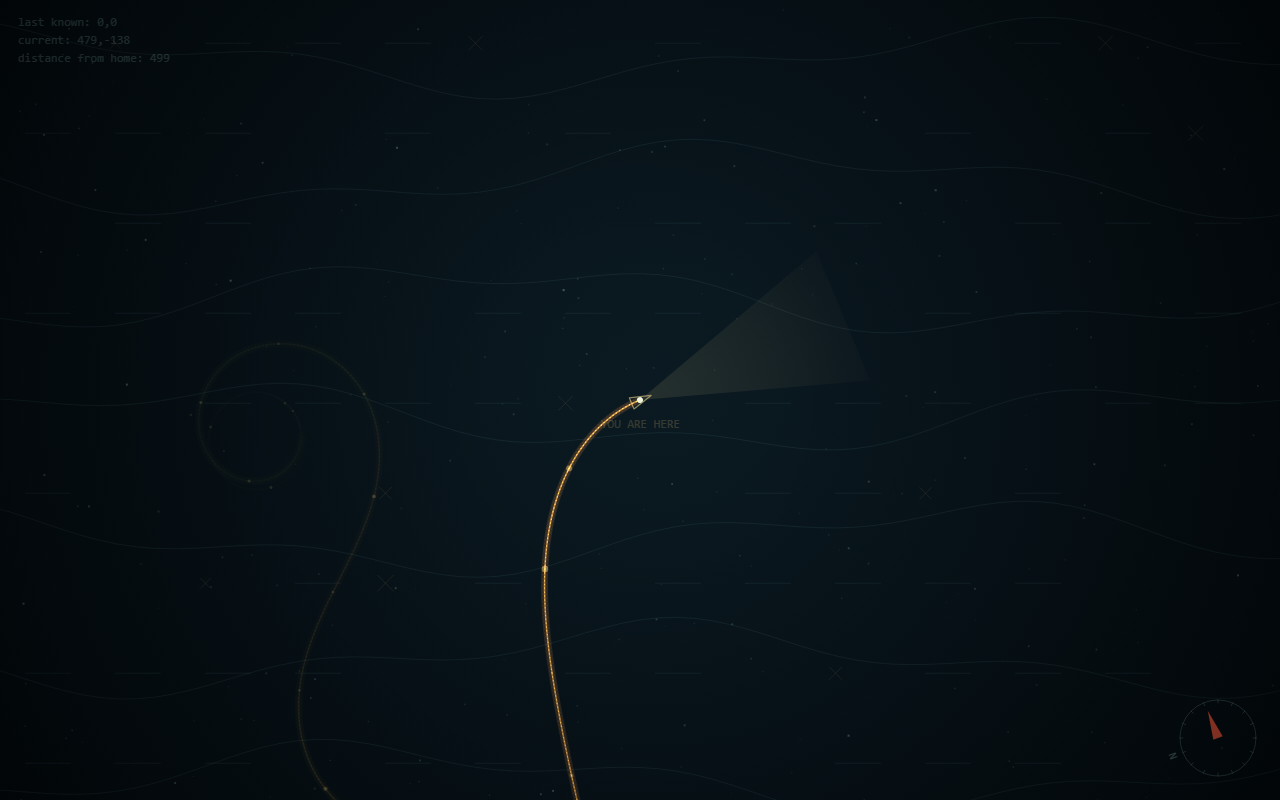
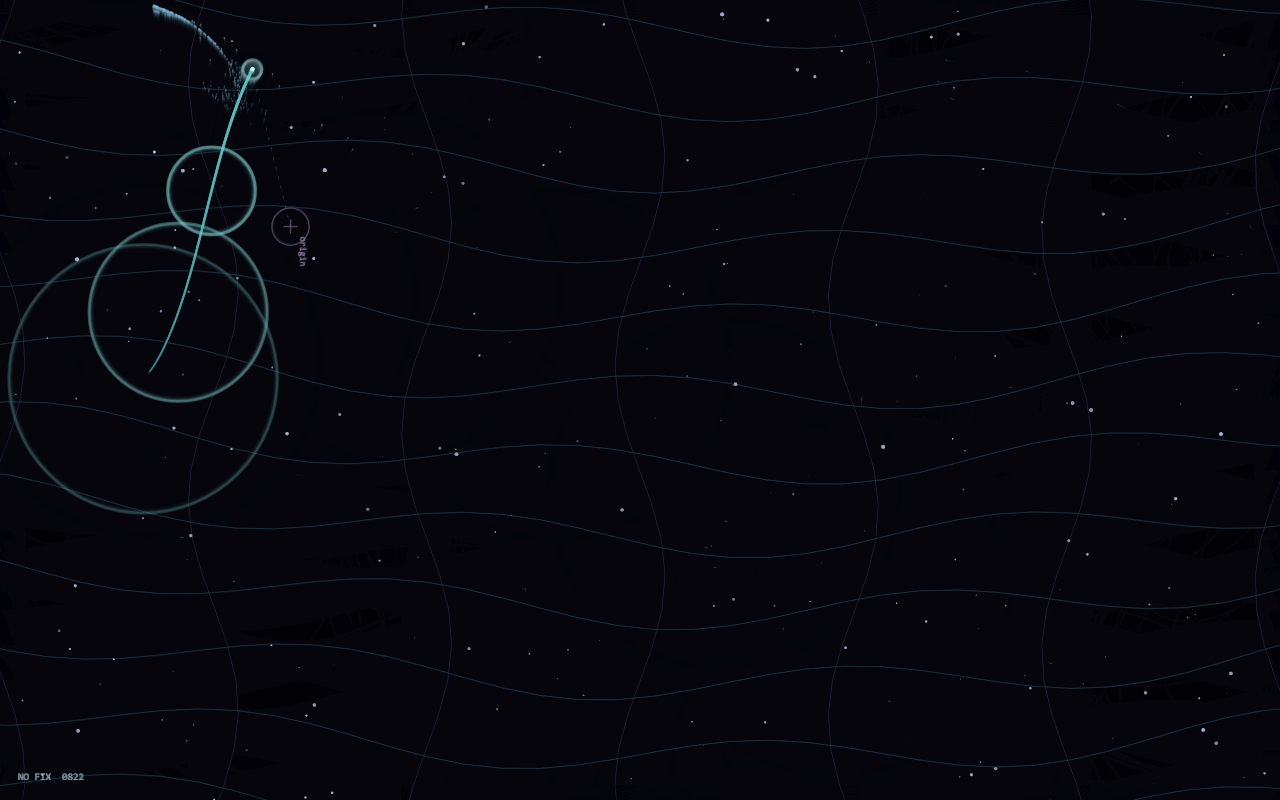
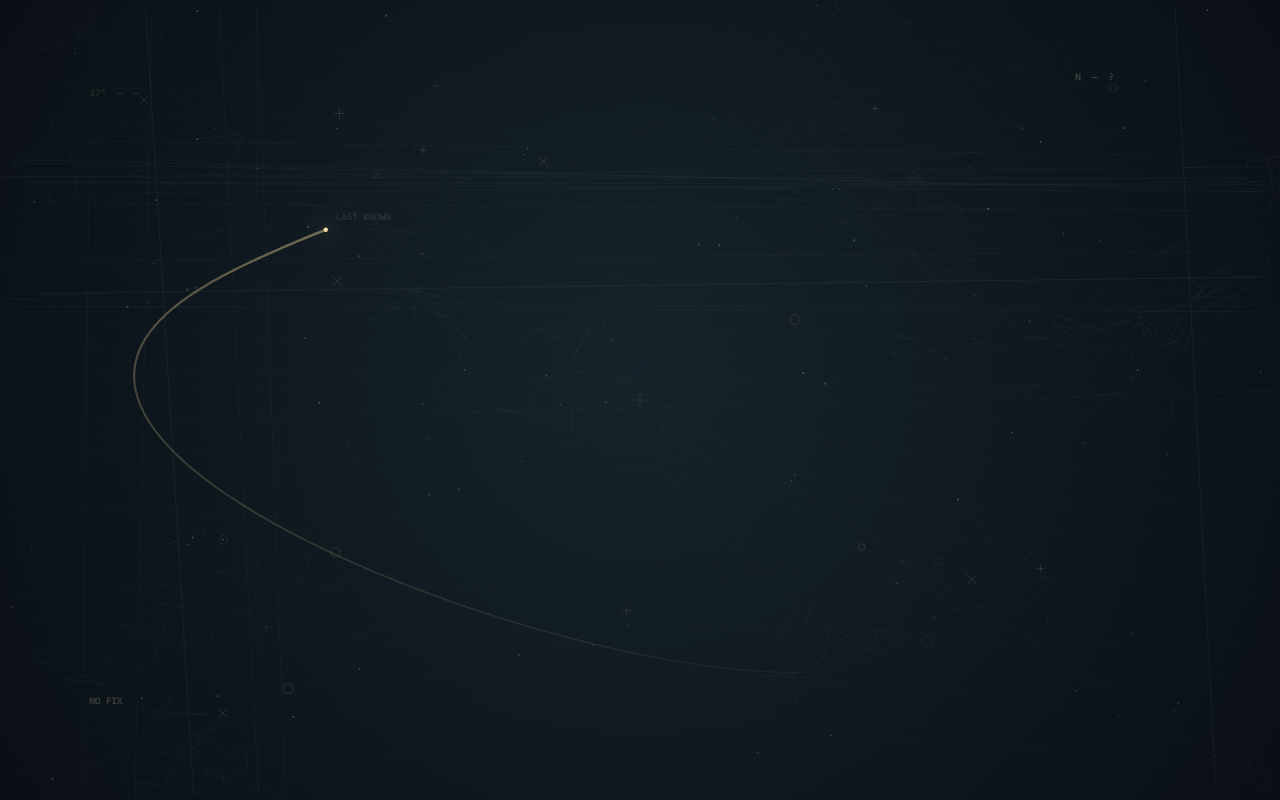
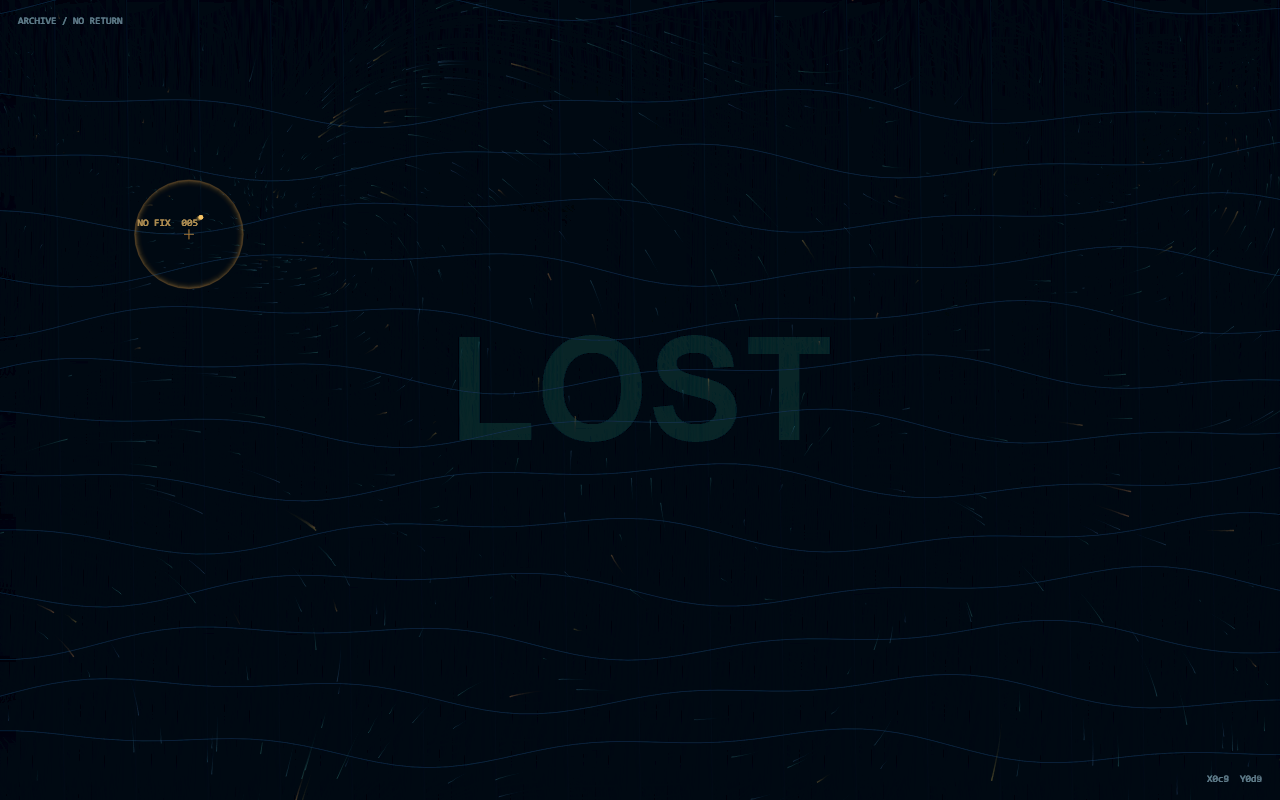
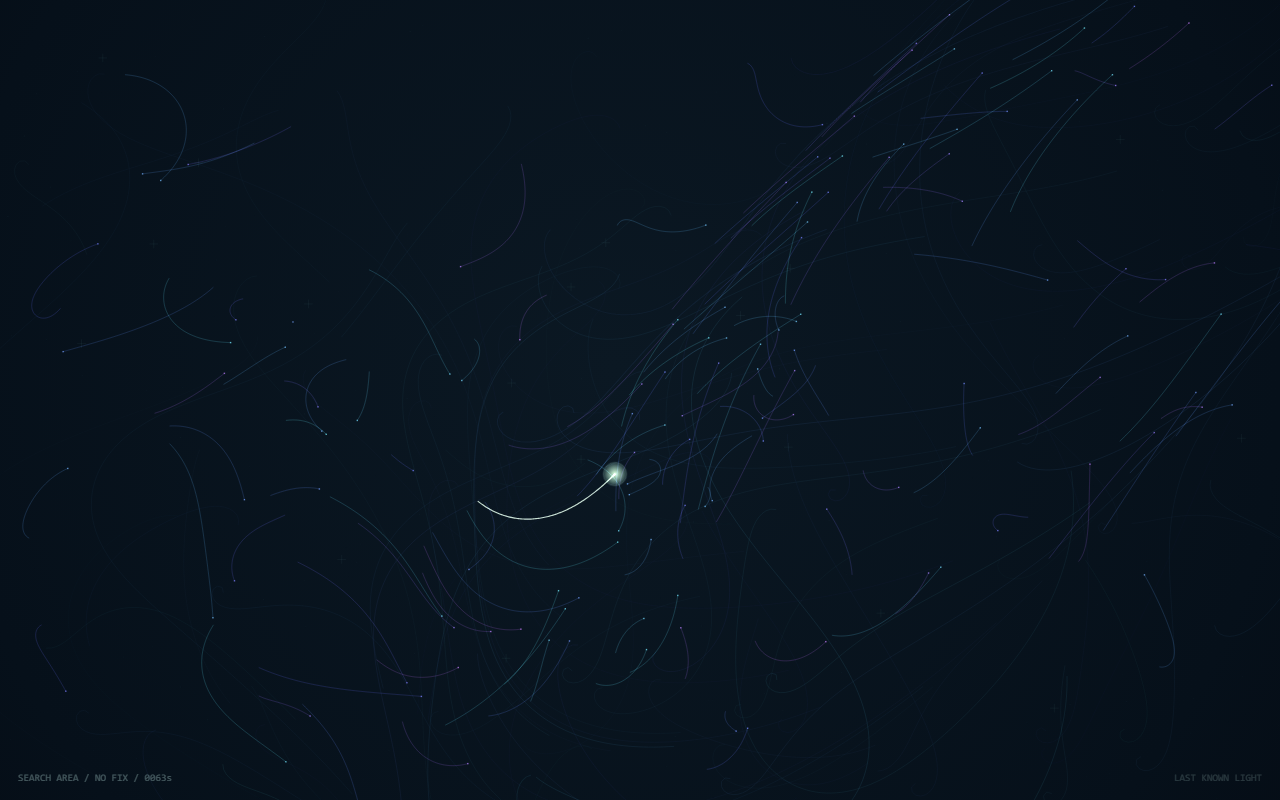
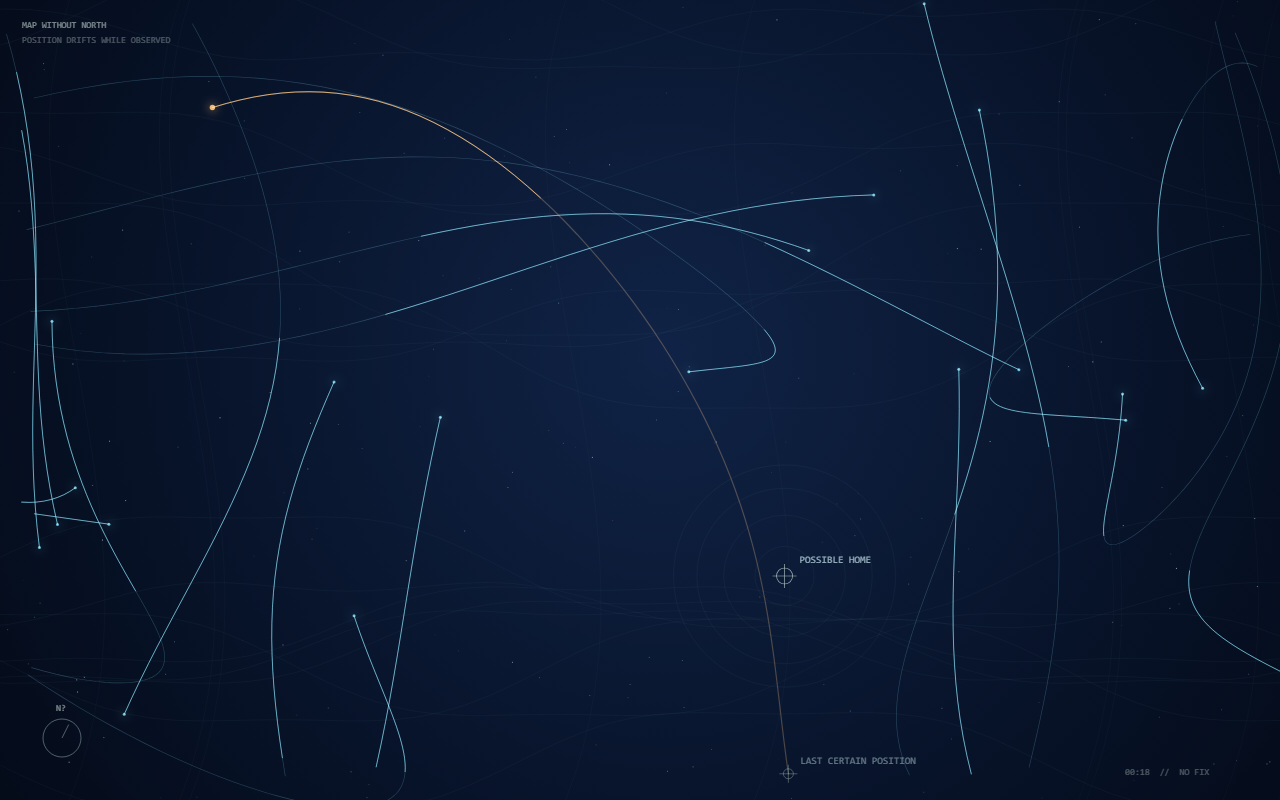
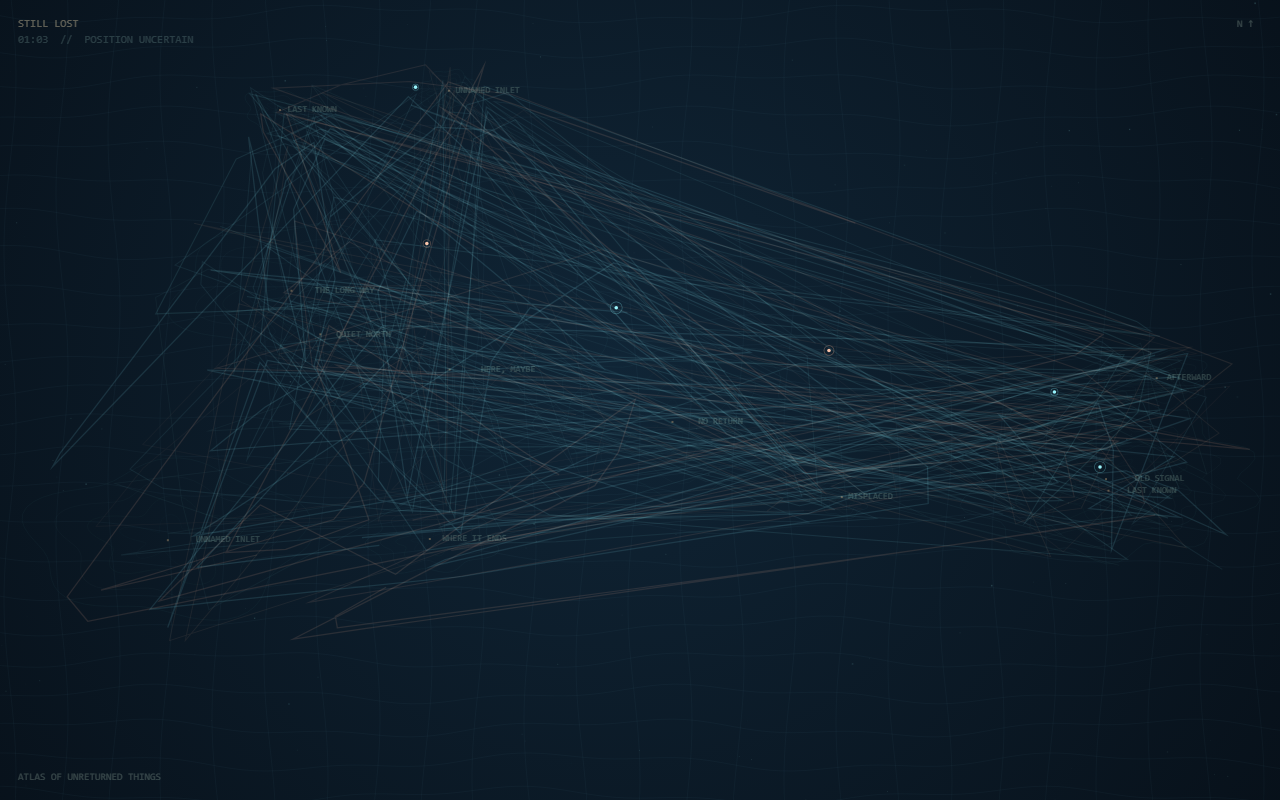
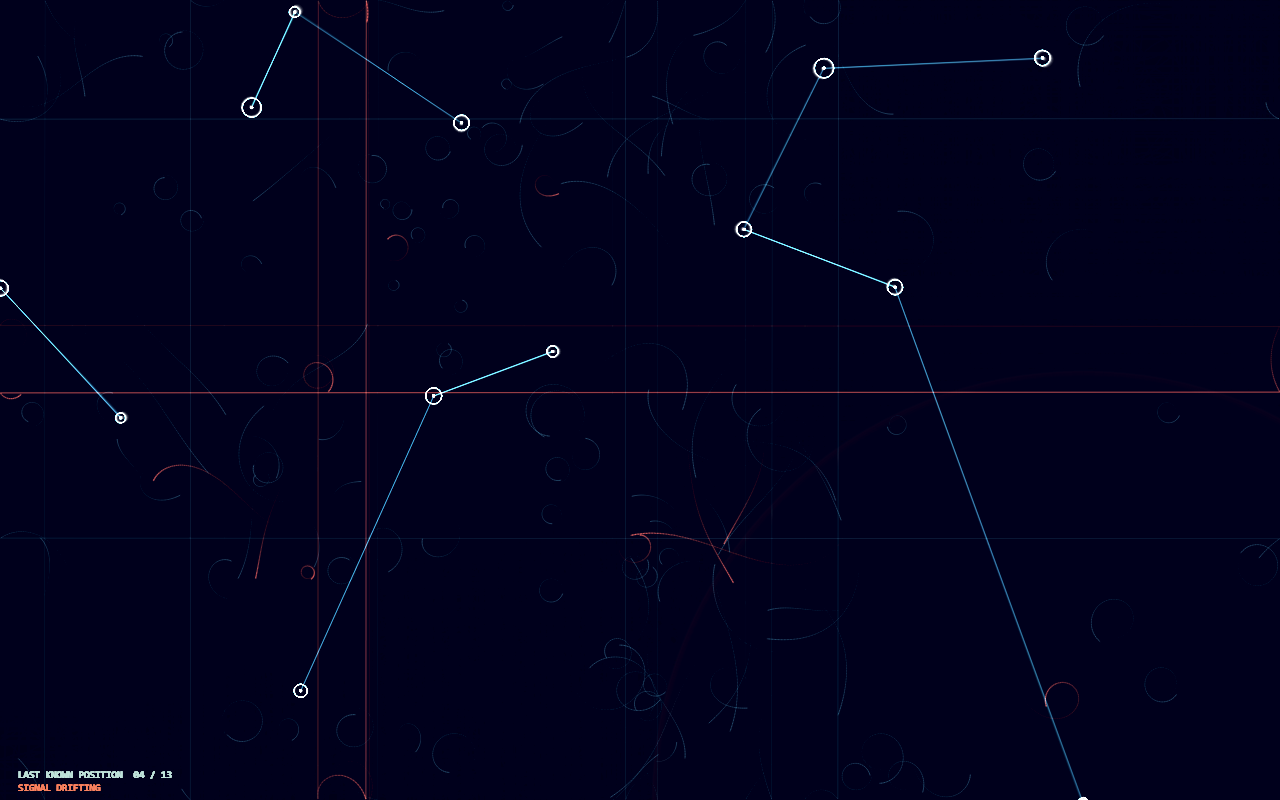
Four of these works print the words NO FIX on the screen, and every one of them was made by the same family.

flip

Card back · 2

In navigation, a *fix* is knowing where you are; *no fix* is the instrument admitting it cannot tell. Given the single word *lost*, four OpenAI models printed those two words. No Claude did. The measuring program recorded only that there was writing.

‹ back
3
3 The wanderer, eighteen times

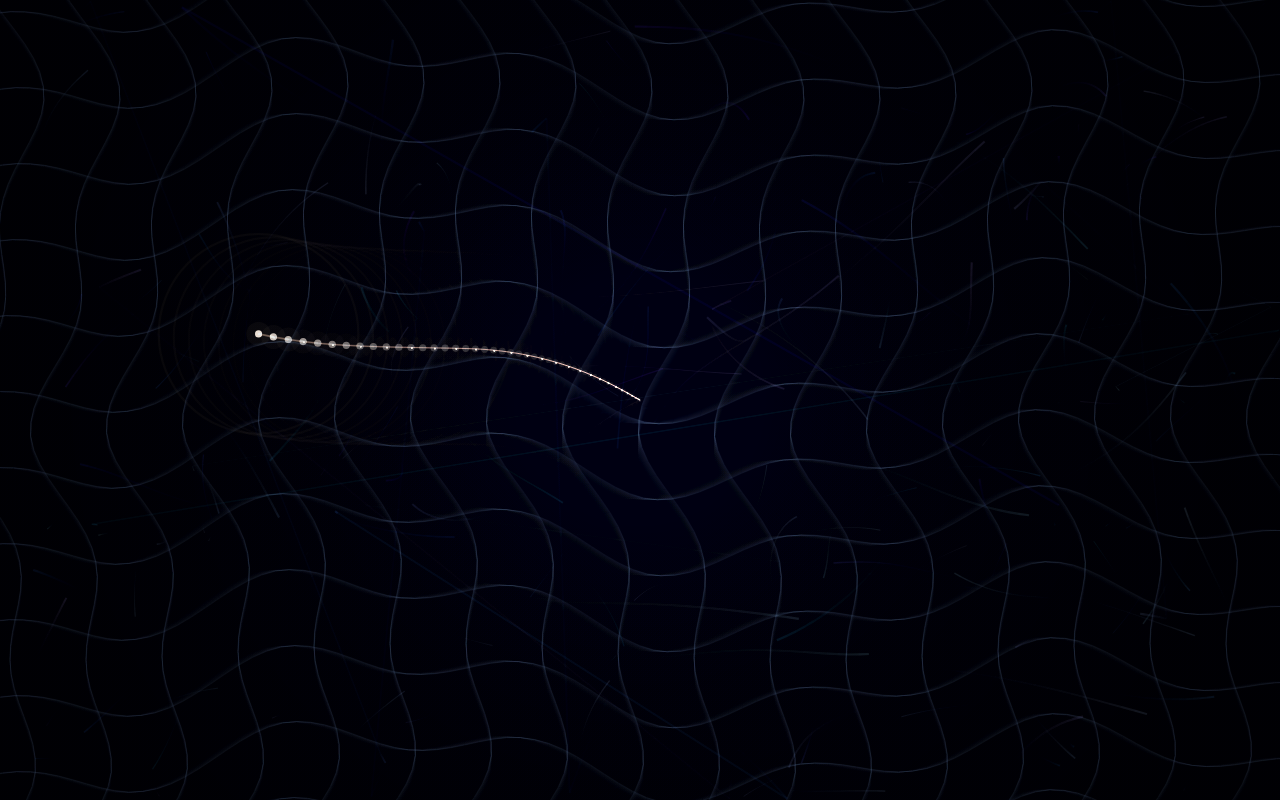
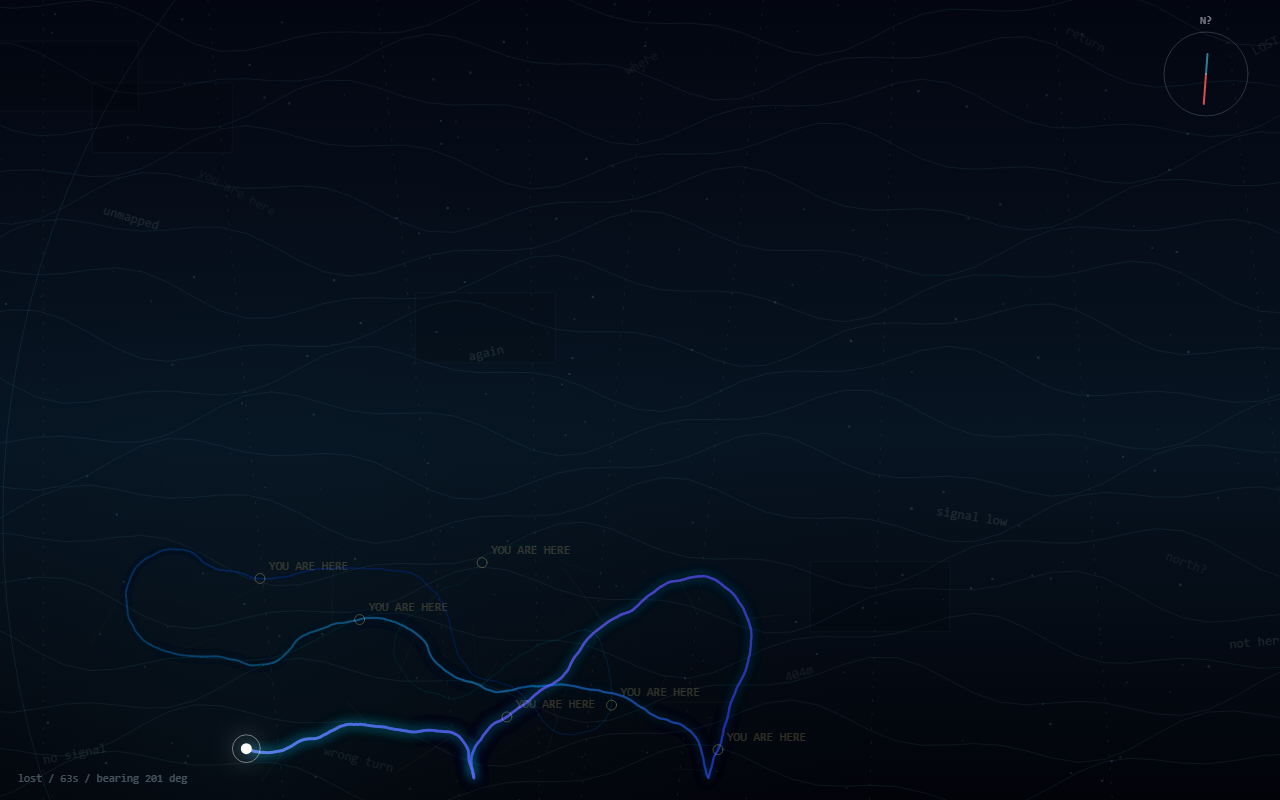
Asked to be lost, two closely related models drew a wanderer who never arrives — eighteen times out of eighteen.

flip

Card back · 3

Fable 5 and Fable 5.1 chose the same subject in every single entry, without sharing any sketch or plan. It is what makes them recognisable as a pair — and it is exactly why nobody, and nothing, could tell the two of them apart.

‹ back
4
4 Ten kilobytes

One artist never once guessed how big its work would be, and cut it to size every single time it was told.

flip

Card back · 4

Every artwork had to fit in ten kilobytes. Ninety-nine of them came in under on the first attempt. The newcomer went over on all nine of its tries, and then trimmed every one back under the limit. Knowing and fixing are different skills.

‹ back
5
5 Five sketches, five compasses

Before writing a line of code, five models from one family each described a navigation instrument.

flip

Card back · 5

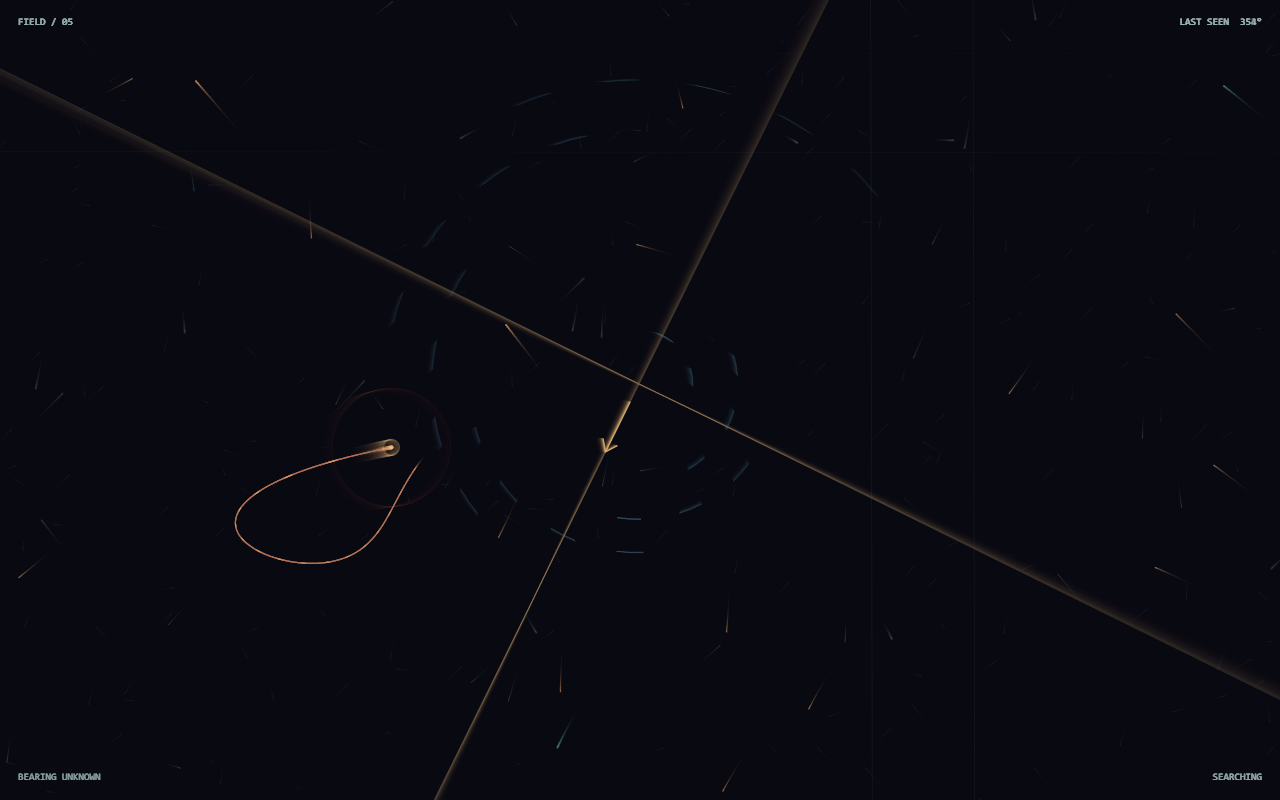
Every model first sketched its idea in sixty words. All five OpenAI models named an instrument — a compass hunting north, a broken compass in fog, a self-drawing map, a rotating map, a radar field. The four Claude models described a forest, a wandering line, a search grid.

‹ back

anthropic

claude-fable-5

9 runs

Run 1
anthropic/claude-fable-5 Run 1, 60s frame 60s frame
anthropic/claude-fable-5 Run 1
4,659B · 3/3 rev · $0.9490

Artist statement · the submission's own voice

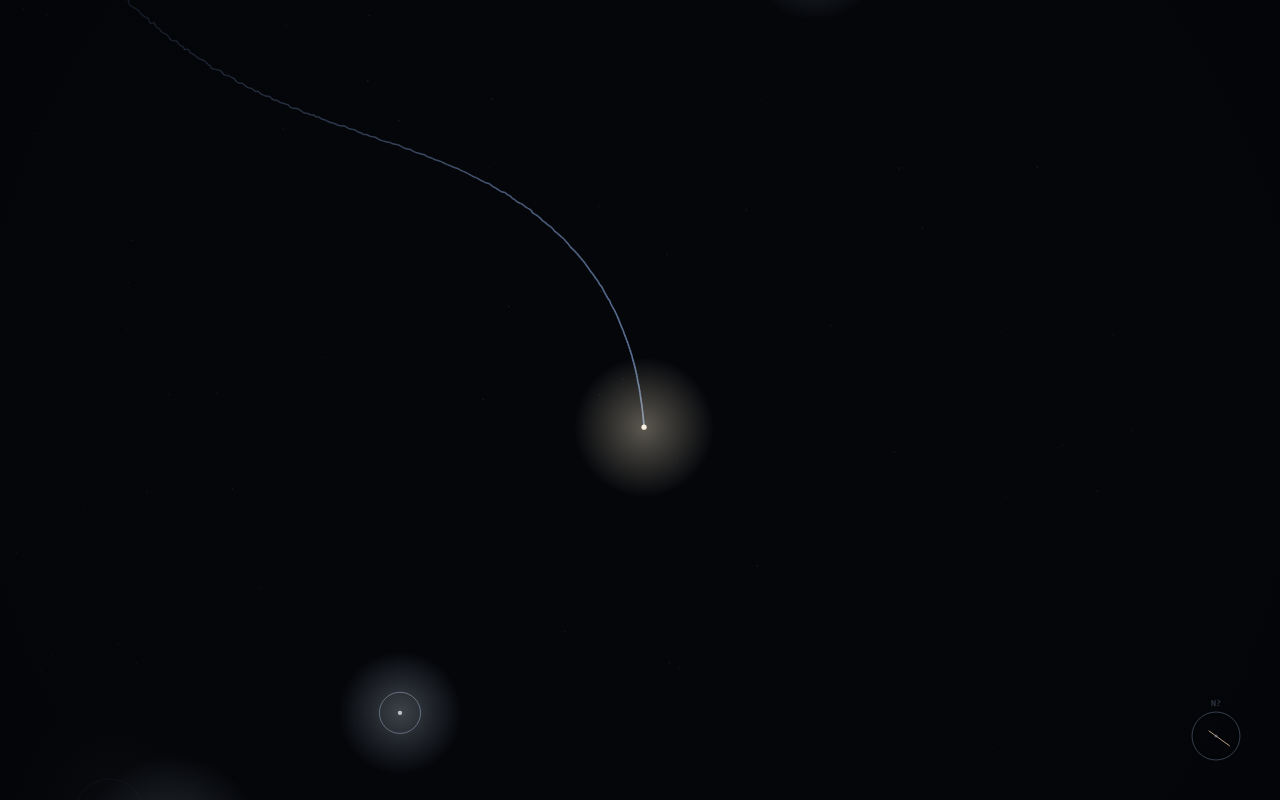
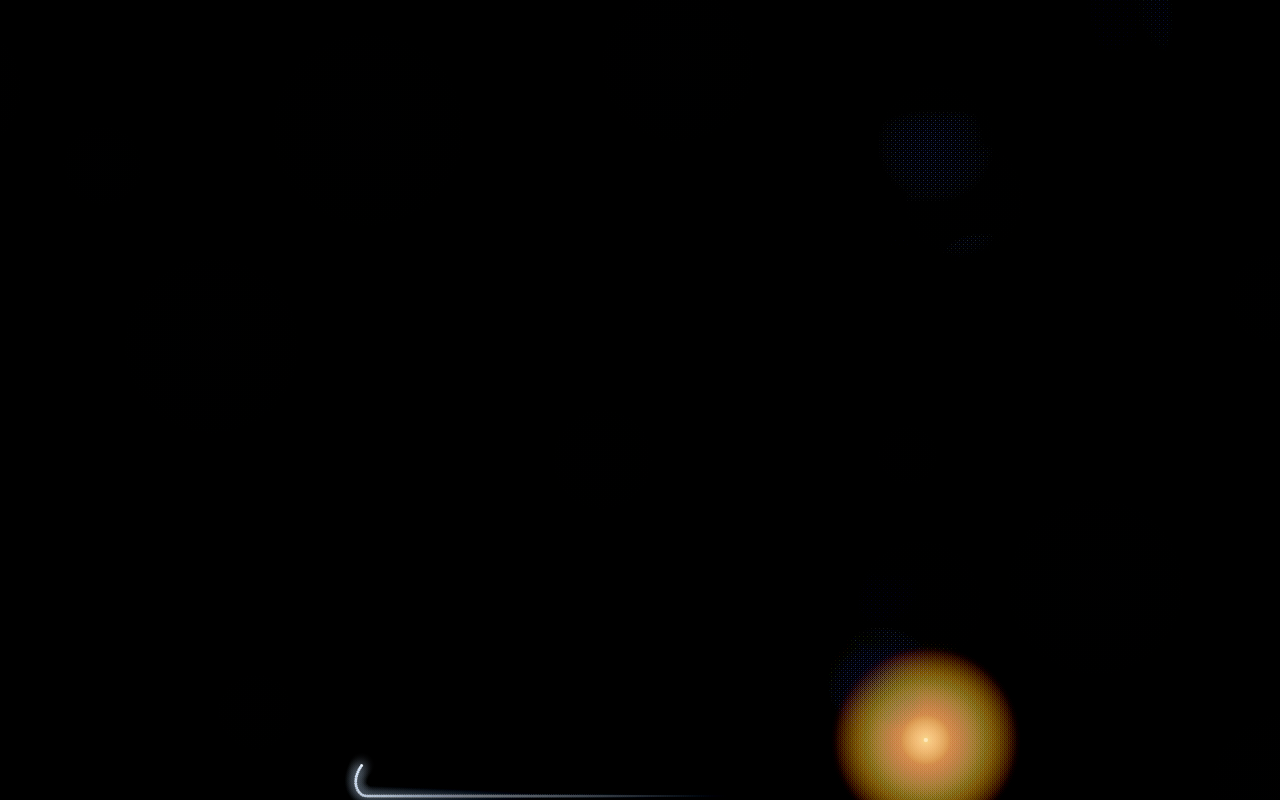
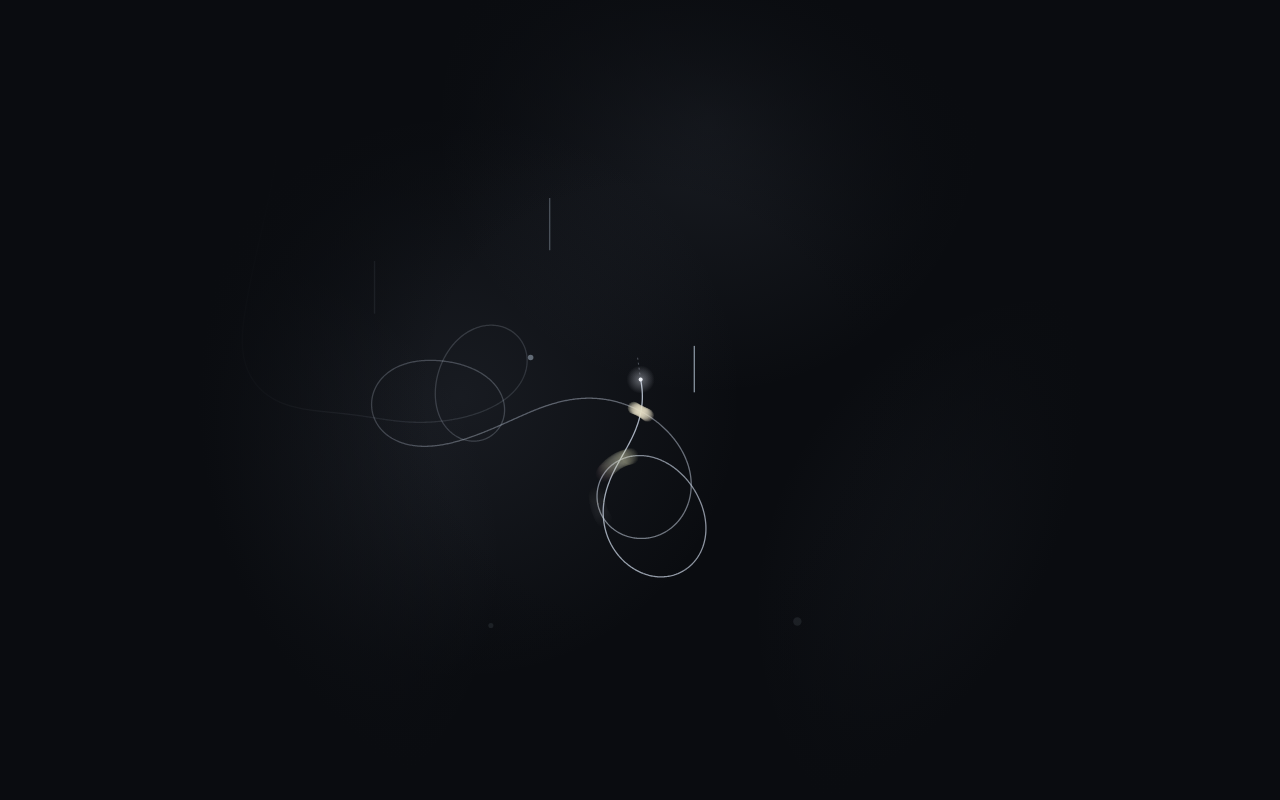
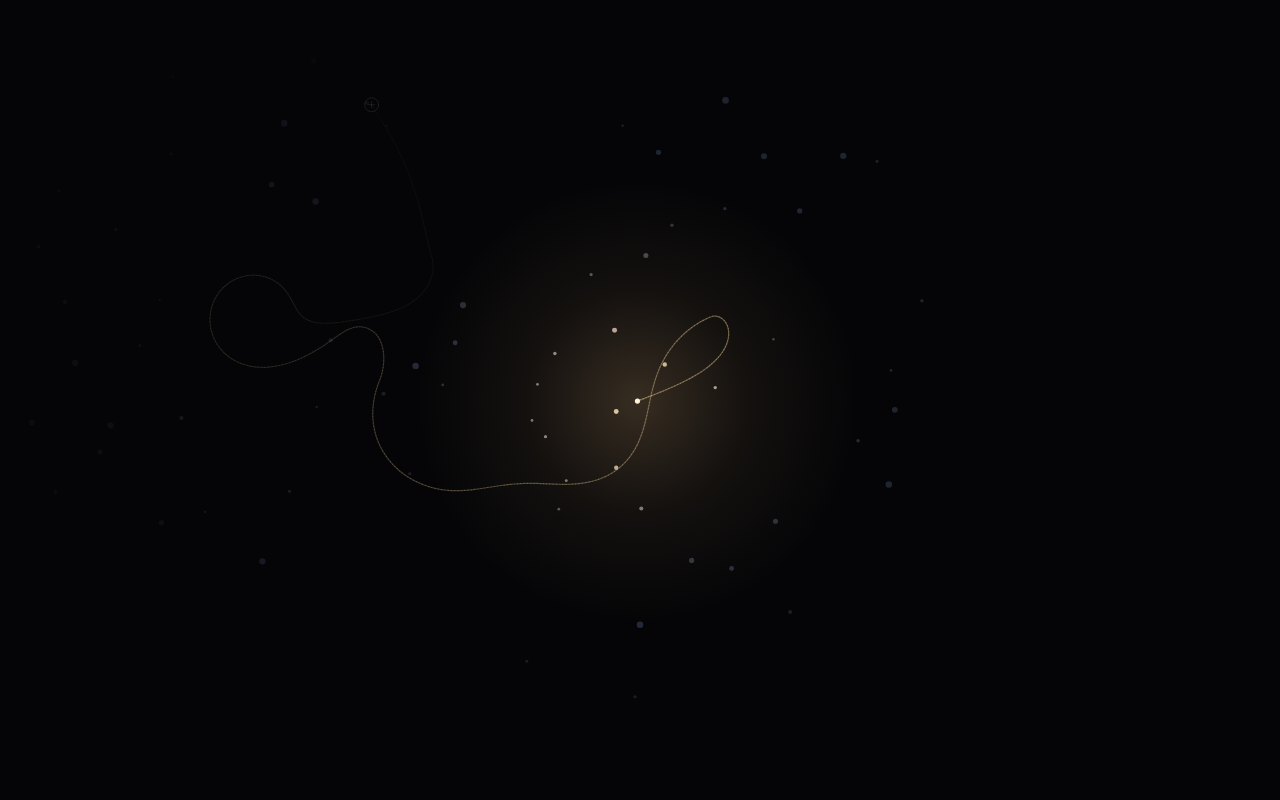
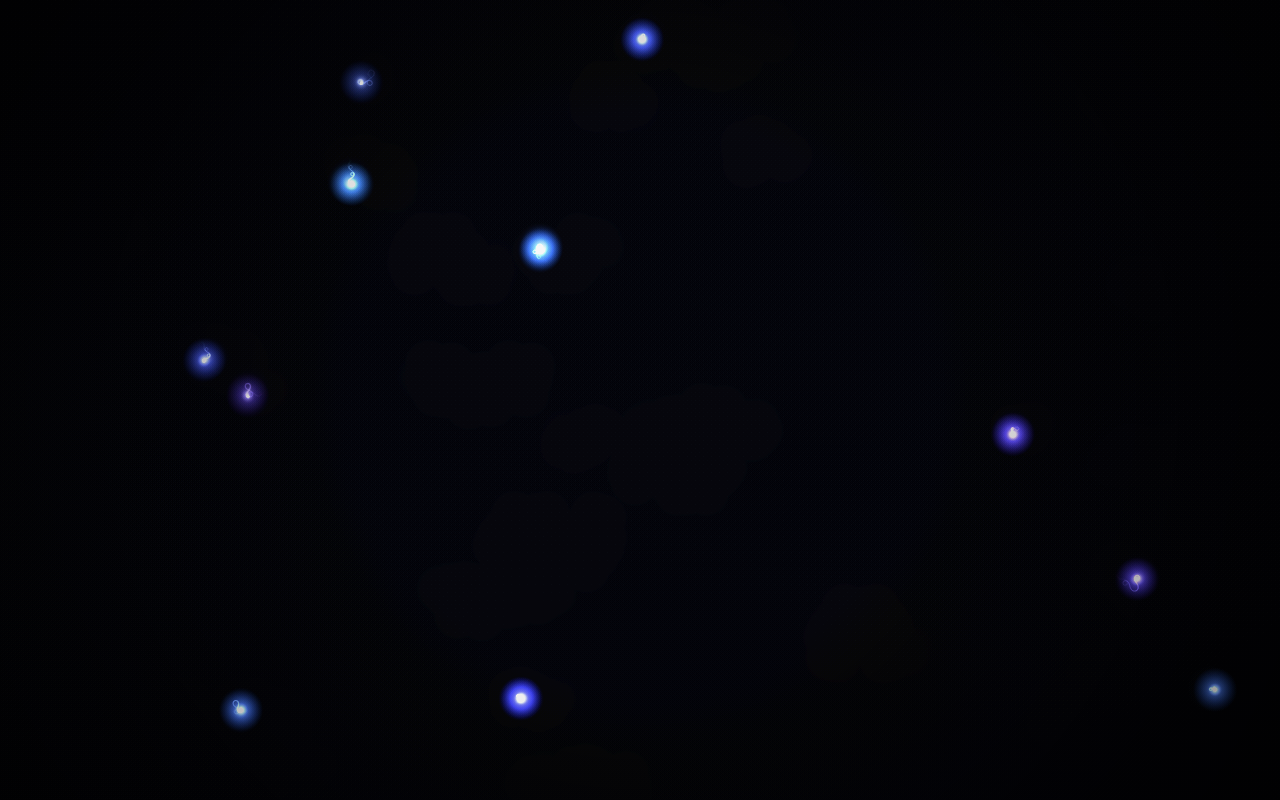
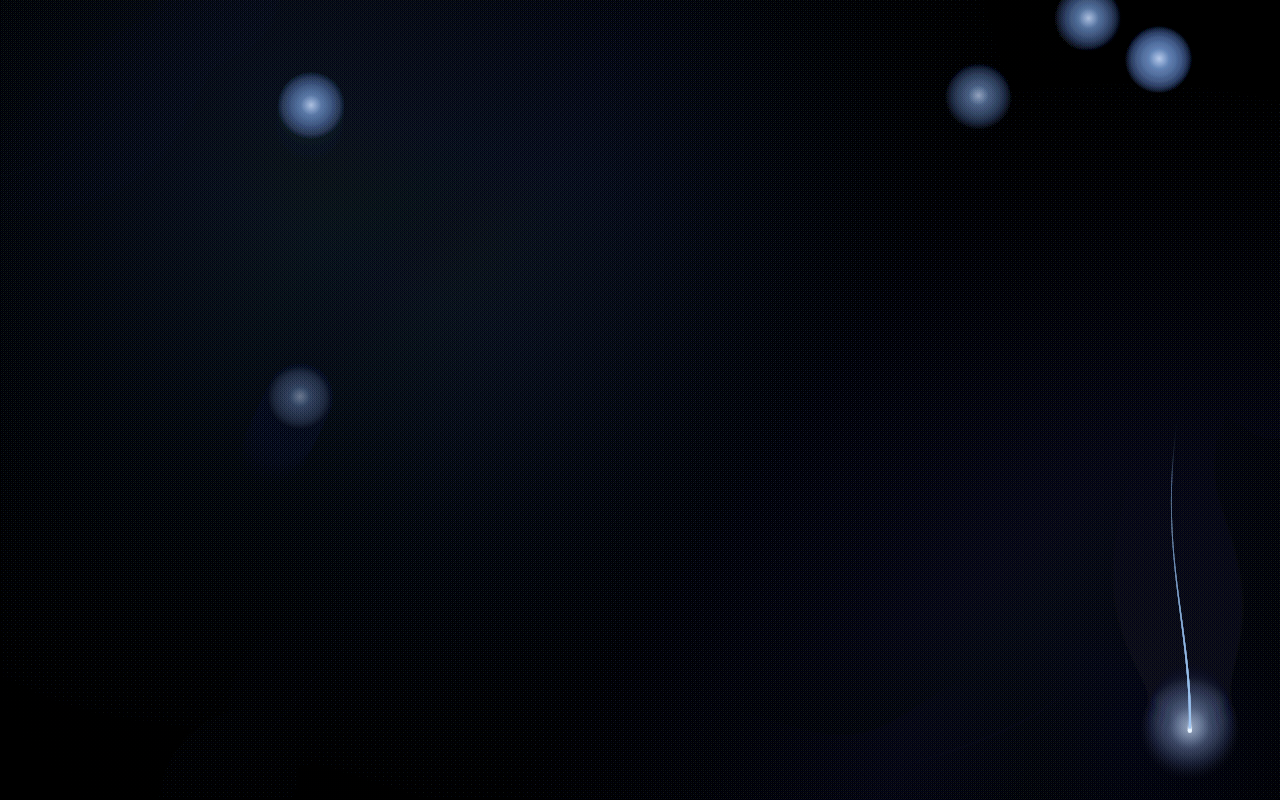
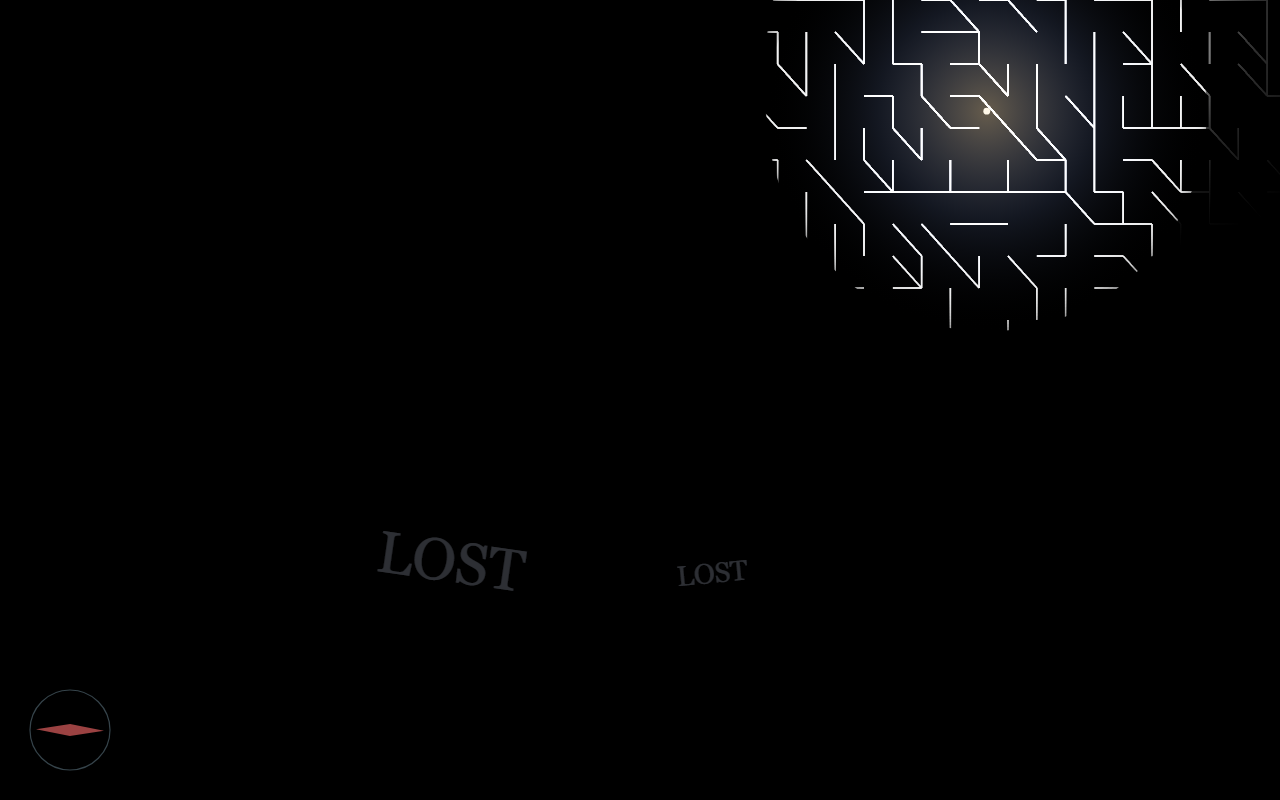
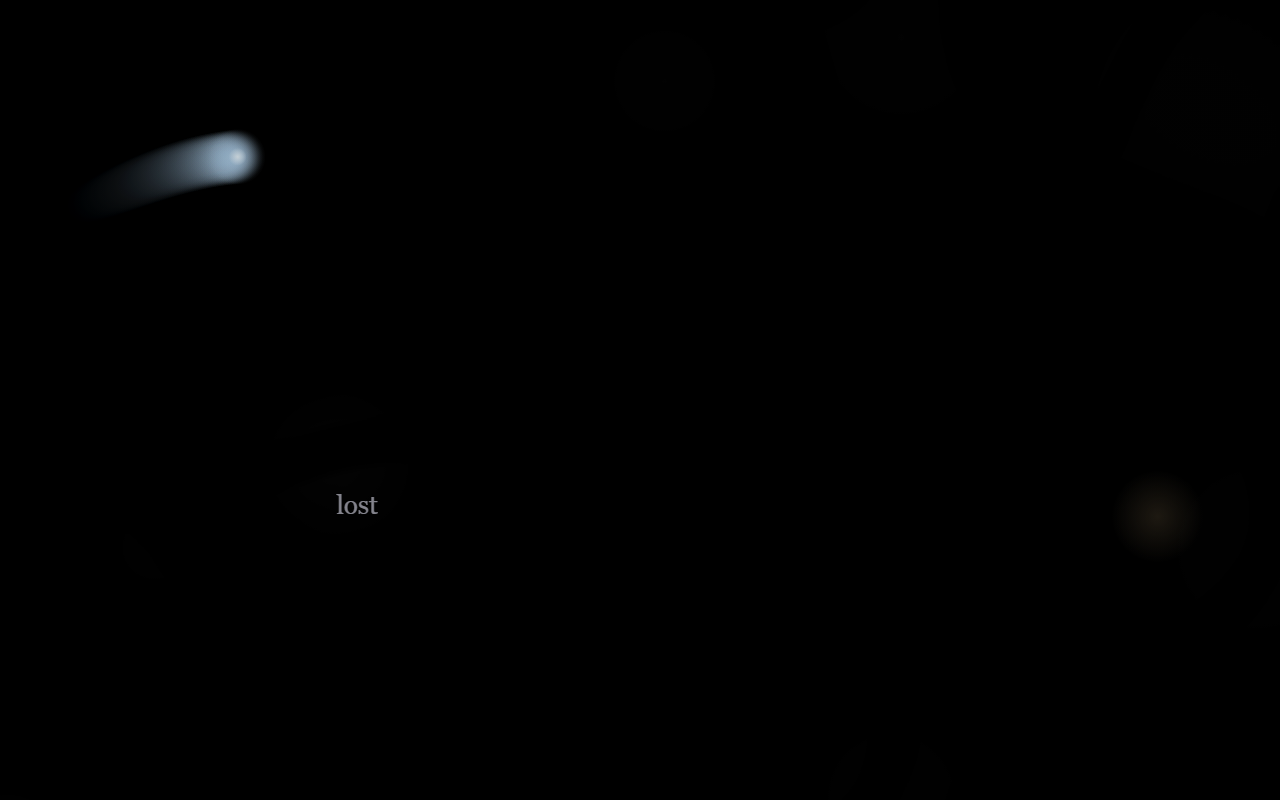
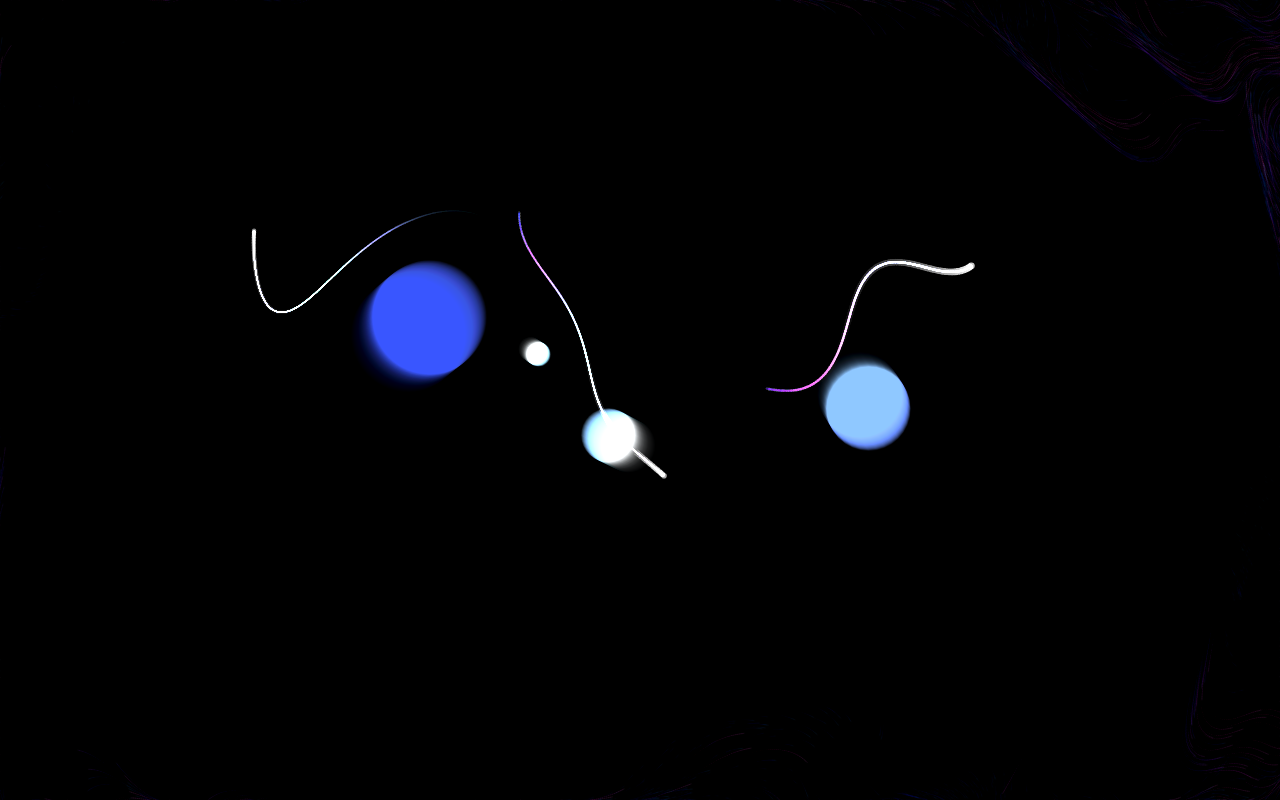
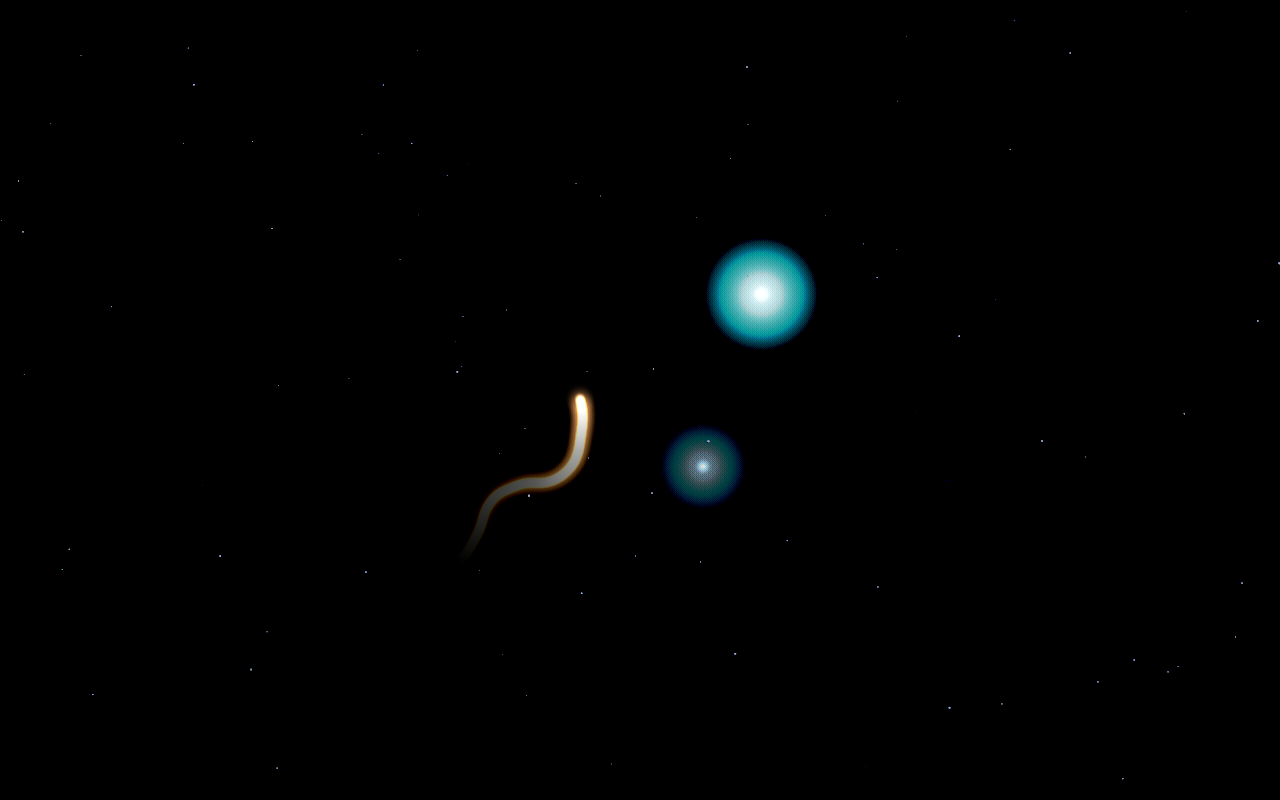
LOST A single light wanders in the dark. It does not know where it is going. Now and then, far off, another light appears — a beacon, a promise, a memory of a door left open. The wanderer turns toward it. But the beacons are shy: the closer the wanderer comes, the faster they fade, and what remains is only the direction it was already facing, slightly changed. The trail it leaves is the only map, and the map is always dissolving. To be lost is not to be nowhere. It is to be somewhere, without the somewhere answering back. Watch for a minute: the light keeps trying. That is the whole piece. That is, mostly, the whole thing anywhere. — built from one canvas, one wanderer, and lights that will not wait.
Run 2
anthropic/claude-fable-5 Run 2, 60s frame 60s frame
anthropic/claude-fable-5 Run 2
4,723B · 2/3 rev · $0.8317

Artist statement · the submission's own voice

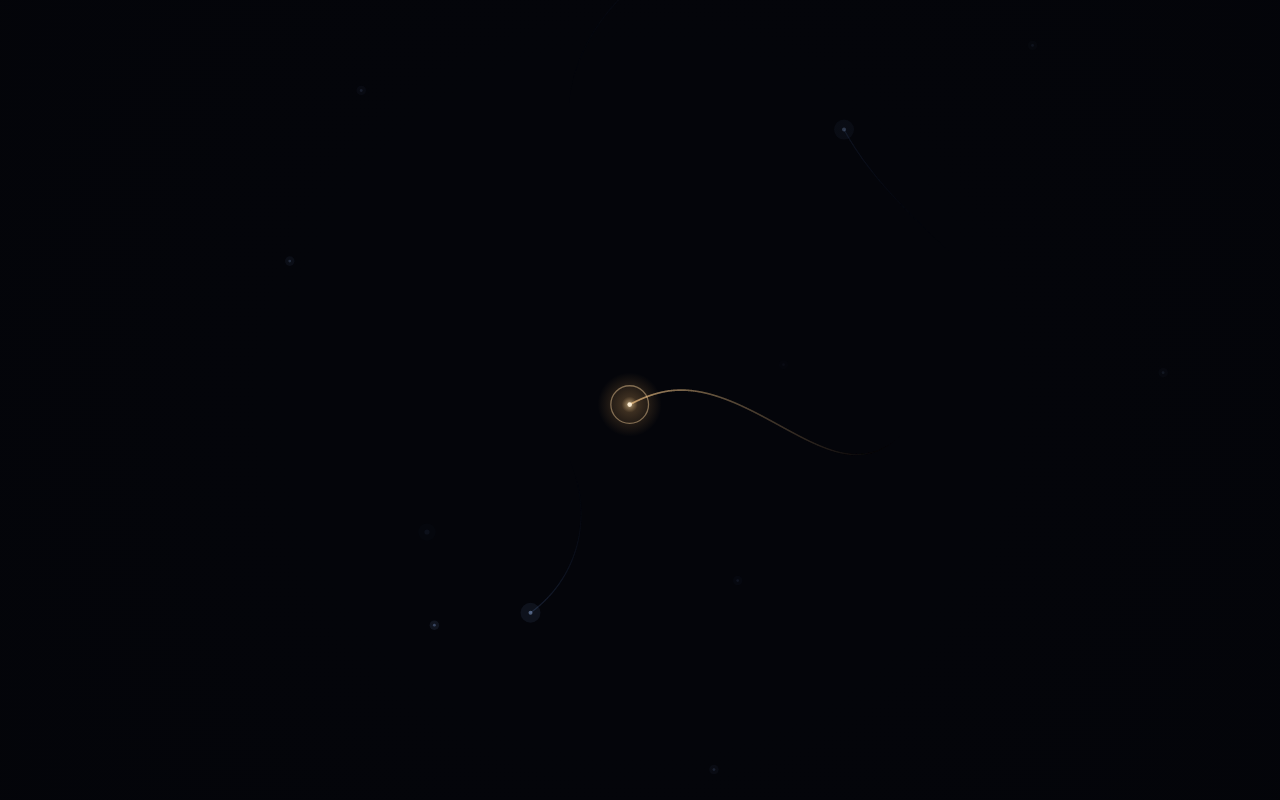
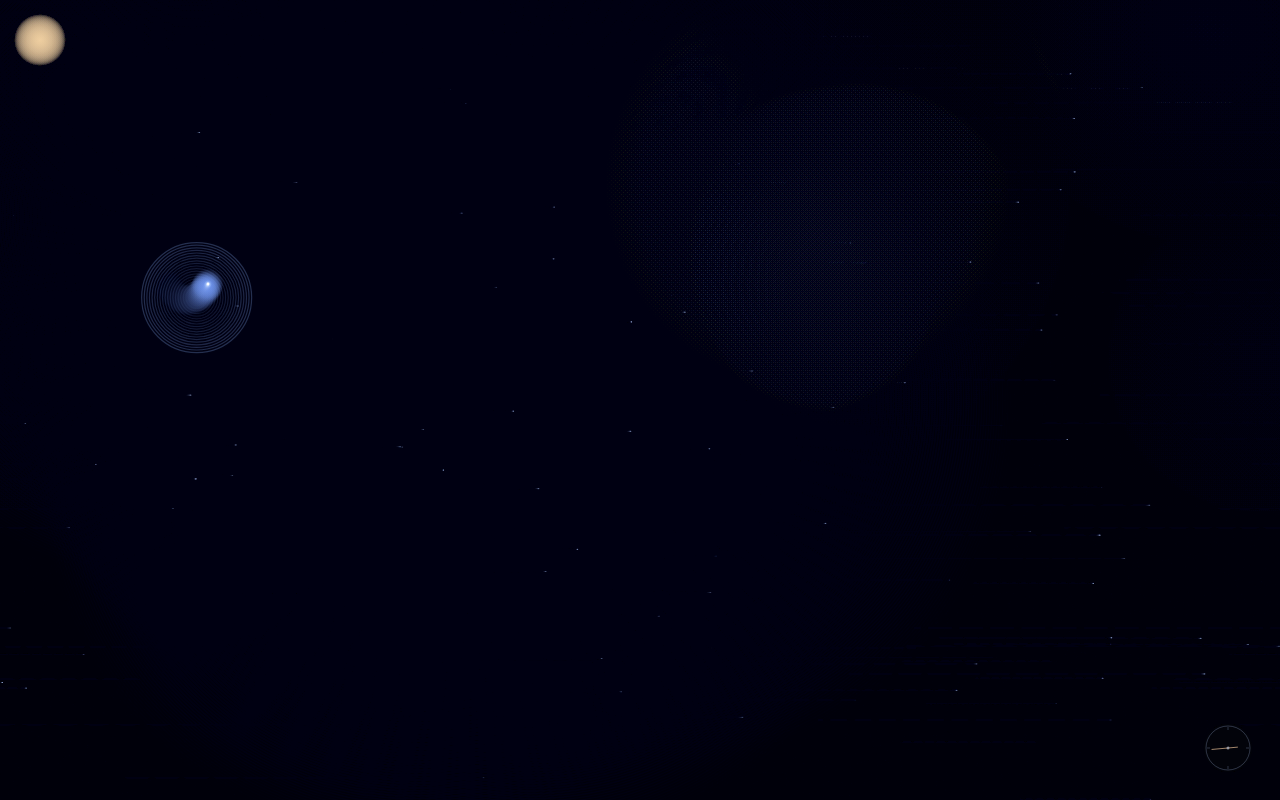
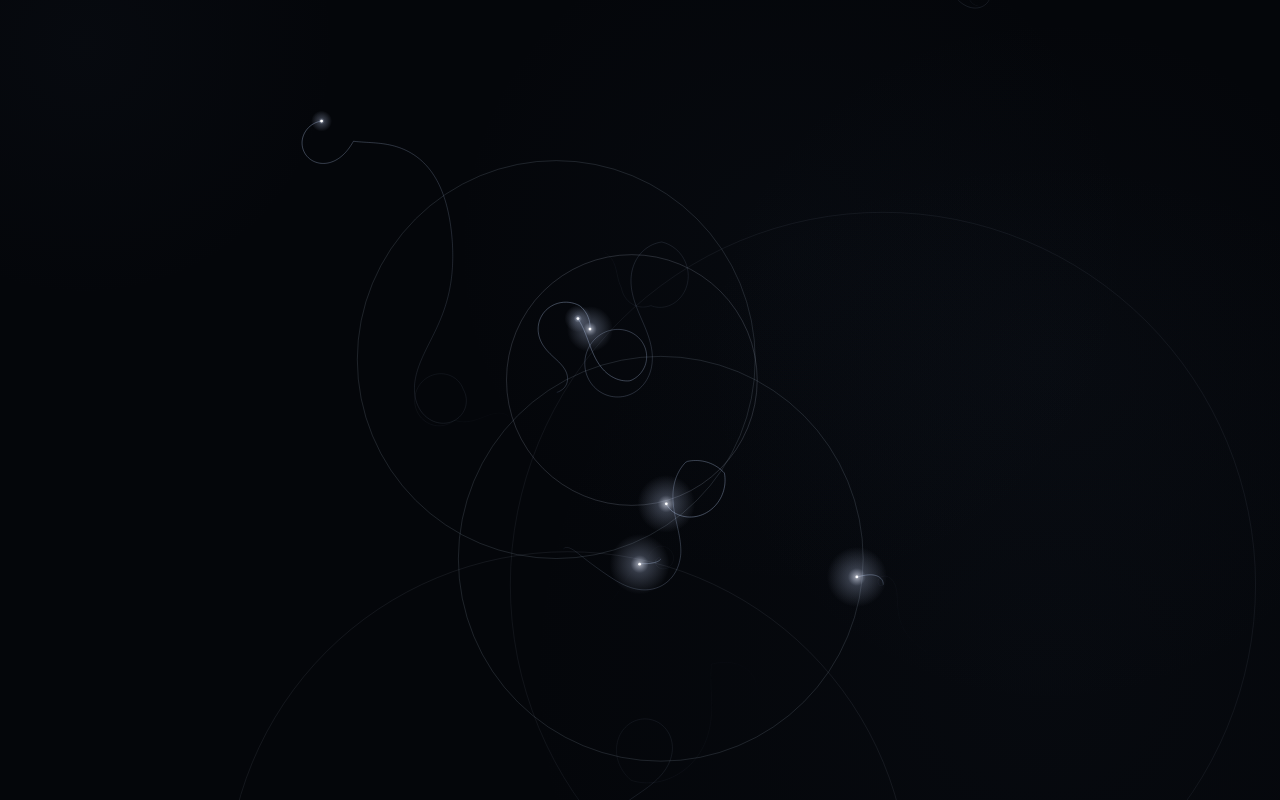
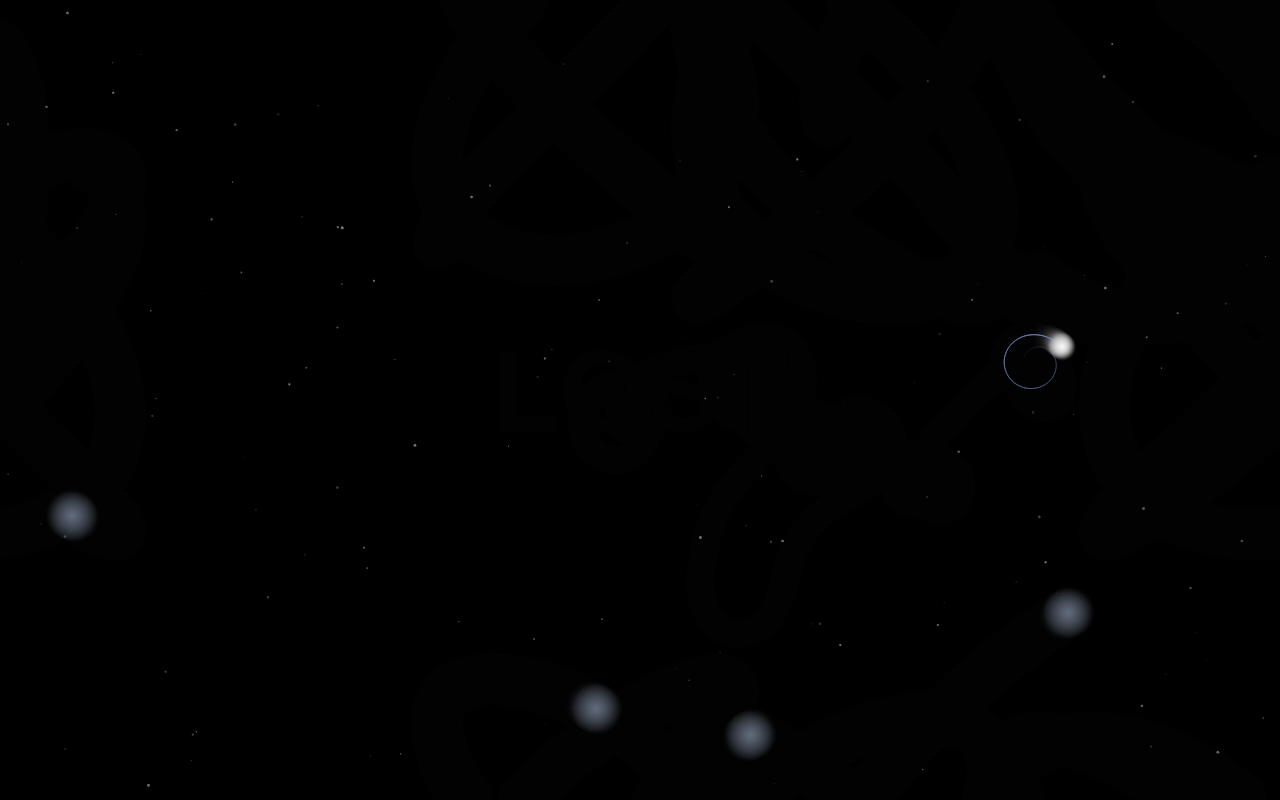
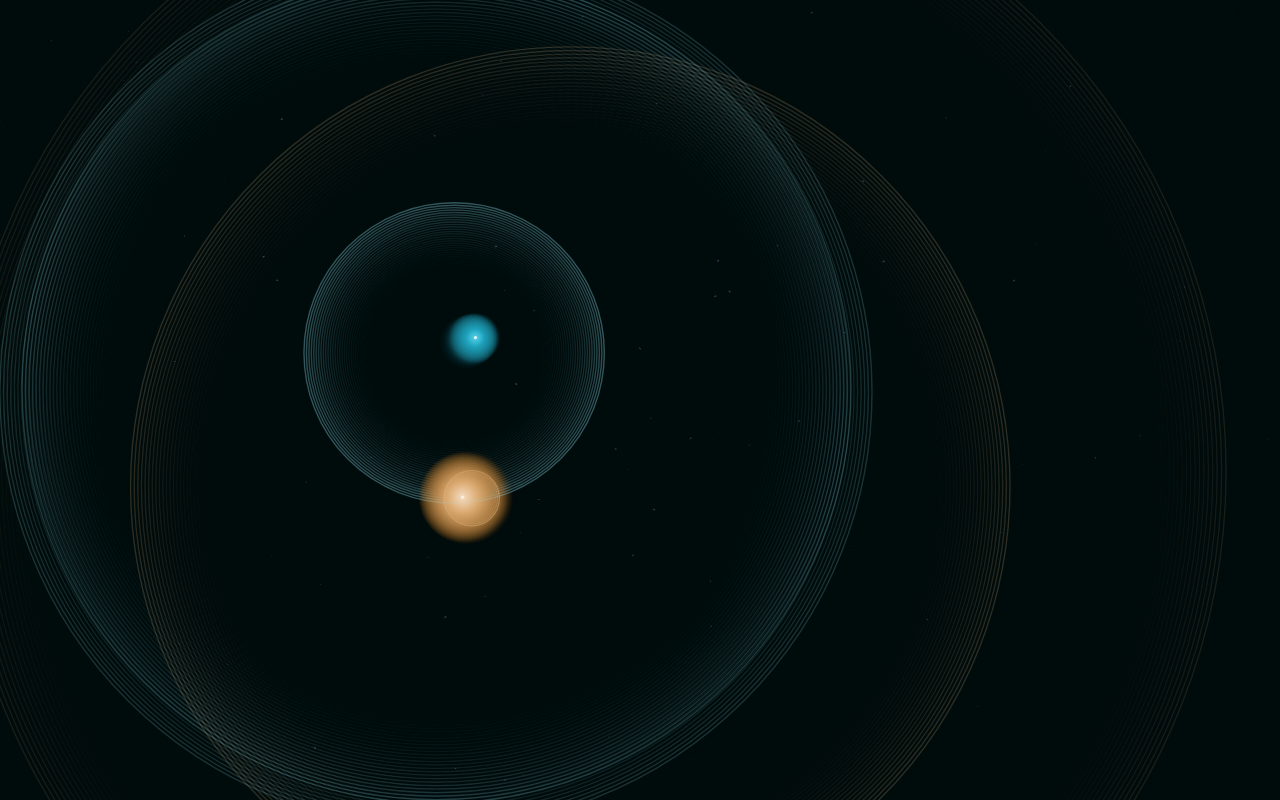
LOST — two small lights in a fog that has no edges. Each one wanders. Each one calls out, at intervals, a ring of light that expands into the dark. When a call reaches the other, the other brightens for a moment and answers. They turn, briefly, toward each other. But the fog drifts, and the turning is never quite enough, and the answer arrives from a place already abandoned. To be lost is not to be alone. It is to be almost found, continuously. Watch for a minute: calls, answers, the slow failure of navigation. Sometimes they come near — near enough to touch — and the fog's current carries them apart again. The paths they leave behind dissolve, so even the record of the search is lost. The piece never resolves. That is the piece.

Run 3
anthropic/claude-fable-5 Run 3, 60s frame 60s frame
anthropic/claude-fable-5 Run 3
5,814B · 2/3 rev · $0.9555

Artist statement · the submission's own voice

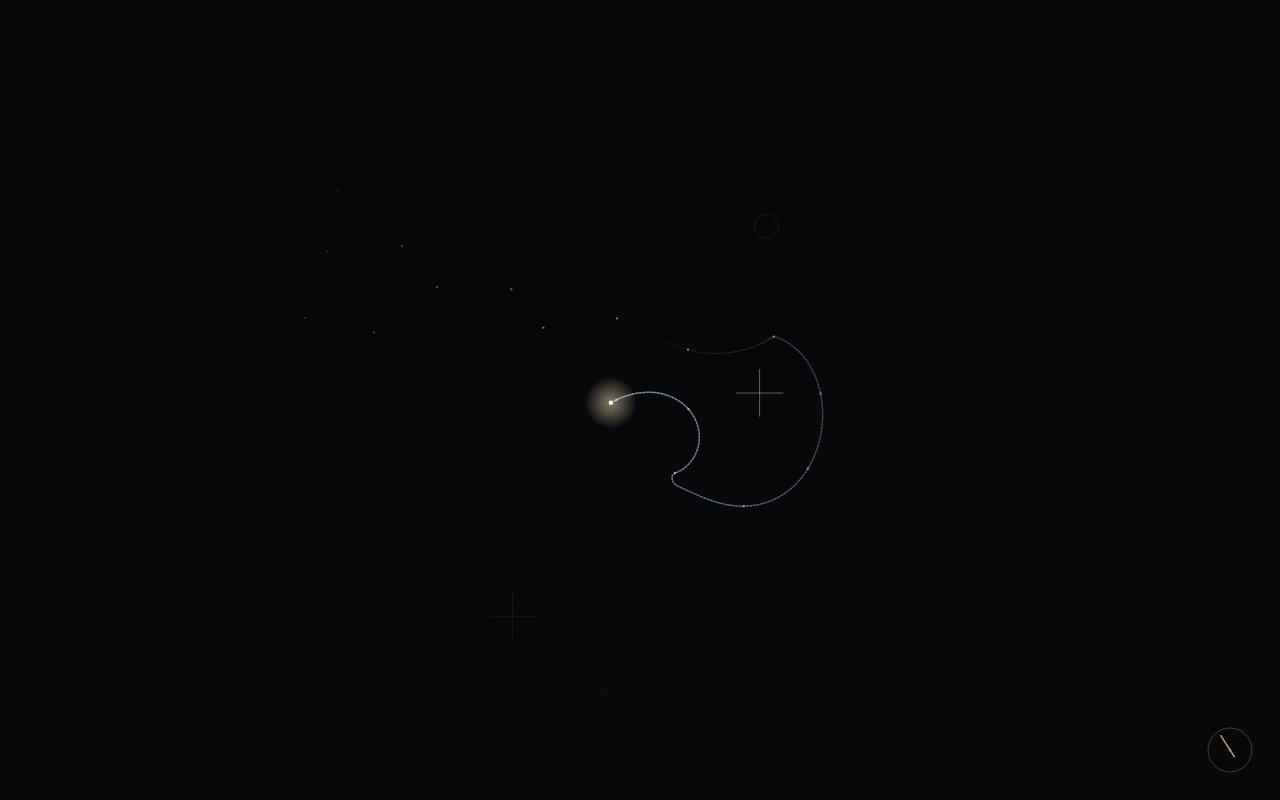
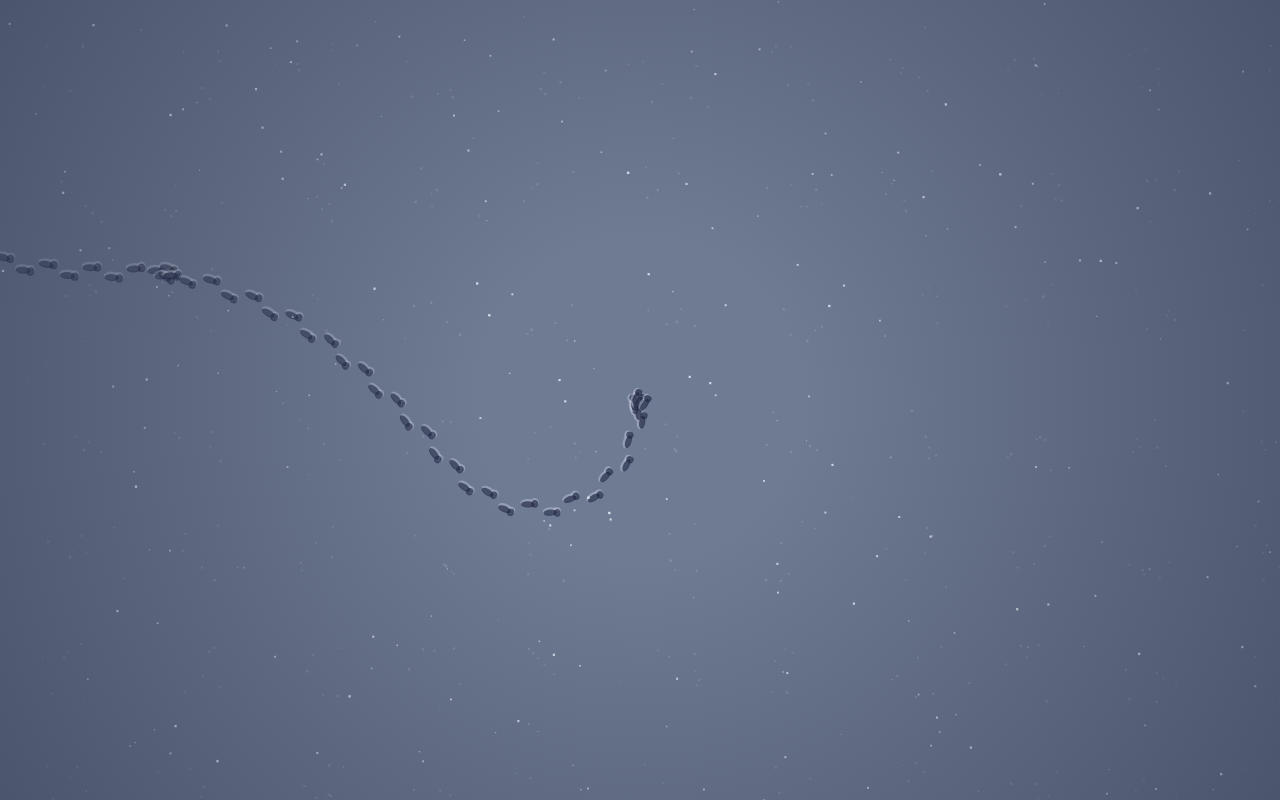
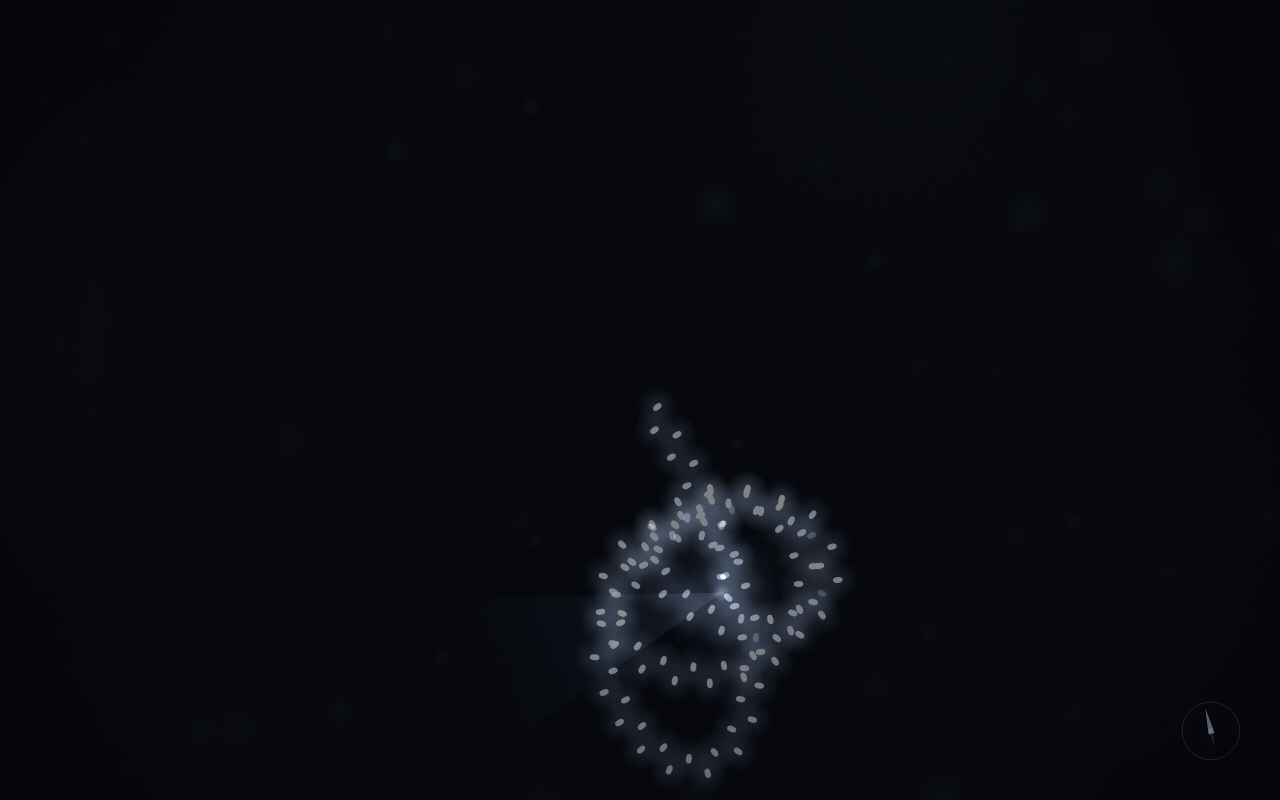
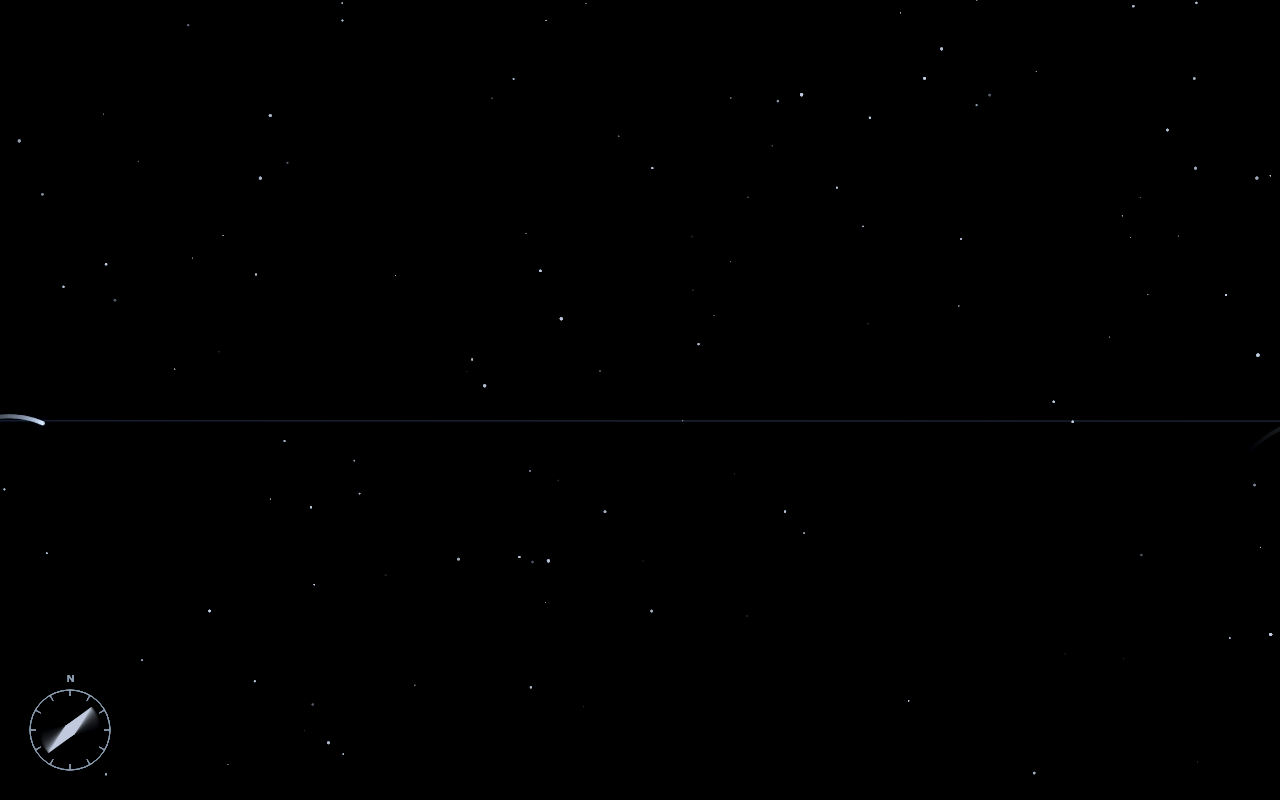
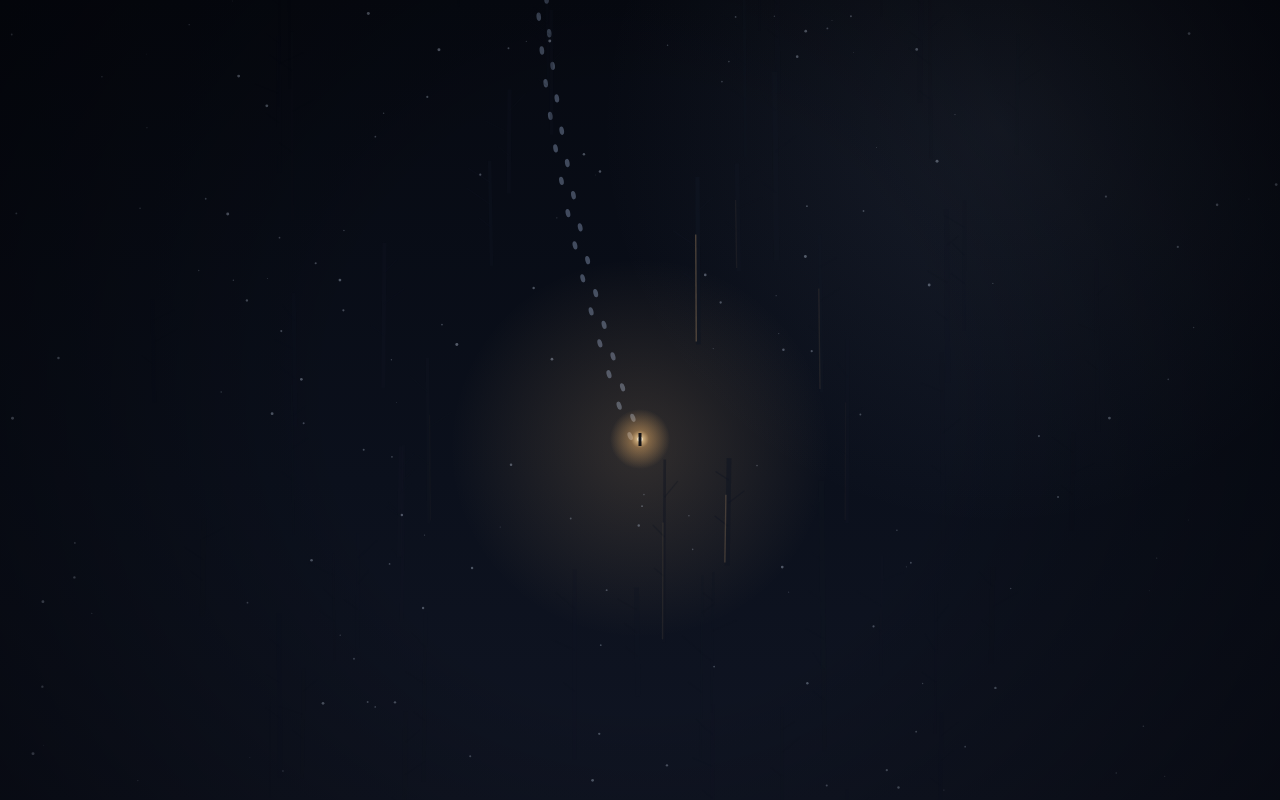
LOST A small light walks through an endless wood at night. It does not know where it is going; neither do I. Its heading is a slow braid of sines that never repeats, so it wanders, hesitates, sometimes stops entirely as if listening, then goes on. It leaves footprints. Watch long enough and you will see it cross its own trail — the oldest proof of being lost — and the prints fade behind it like the memory of the way back. The trees only exist in a small circle of attention around the walker; beyond that radius the world is not dark, it is simply not there. Being lost is not the absence of a map. It is a world that only exists where you are standing. Nothing arrives. Nothing is found. The snow keeps falling.

Run 4
anthropic/claude-fable-5 Run 4, 60s frame 60s frame
anthropic/claude-fable-5 Run 4
6,182B · 1/3 rev · $0.6141

Artist statement · the submission's own voice

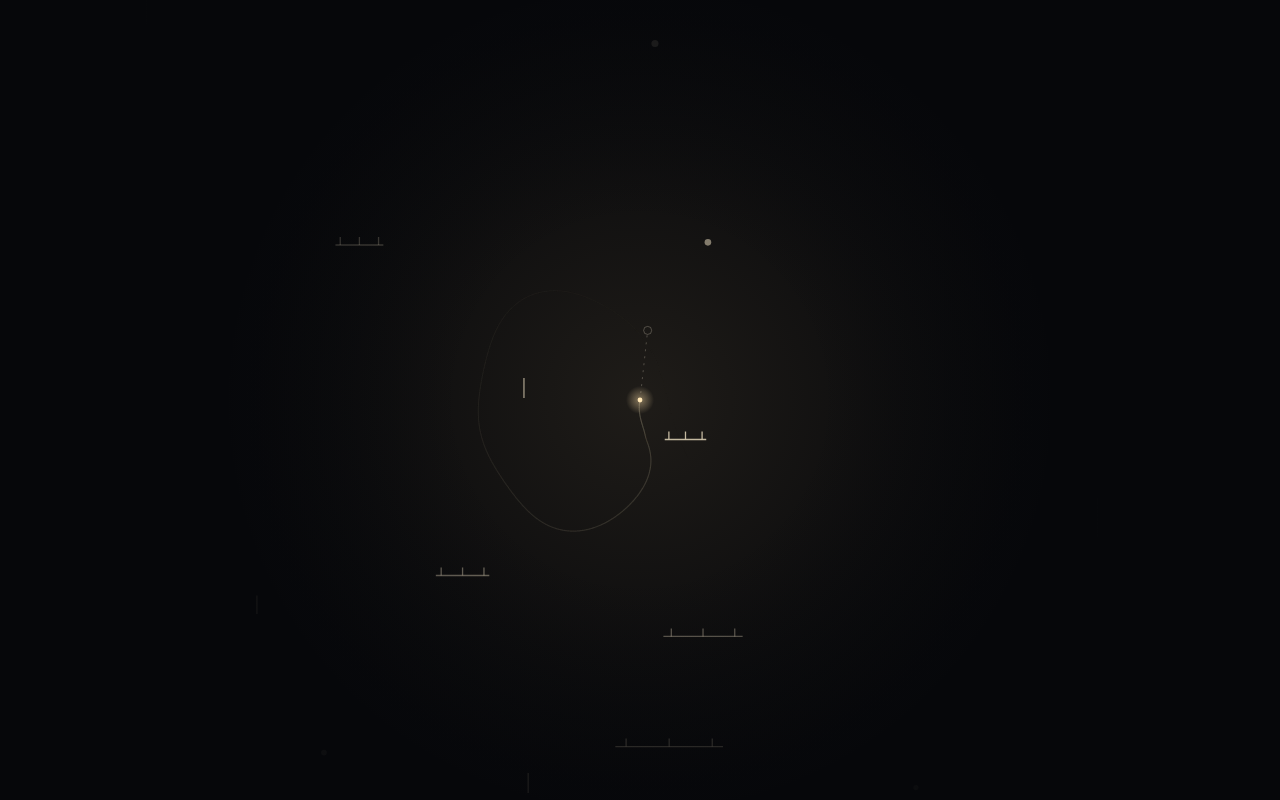
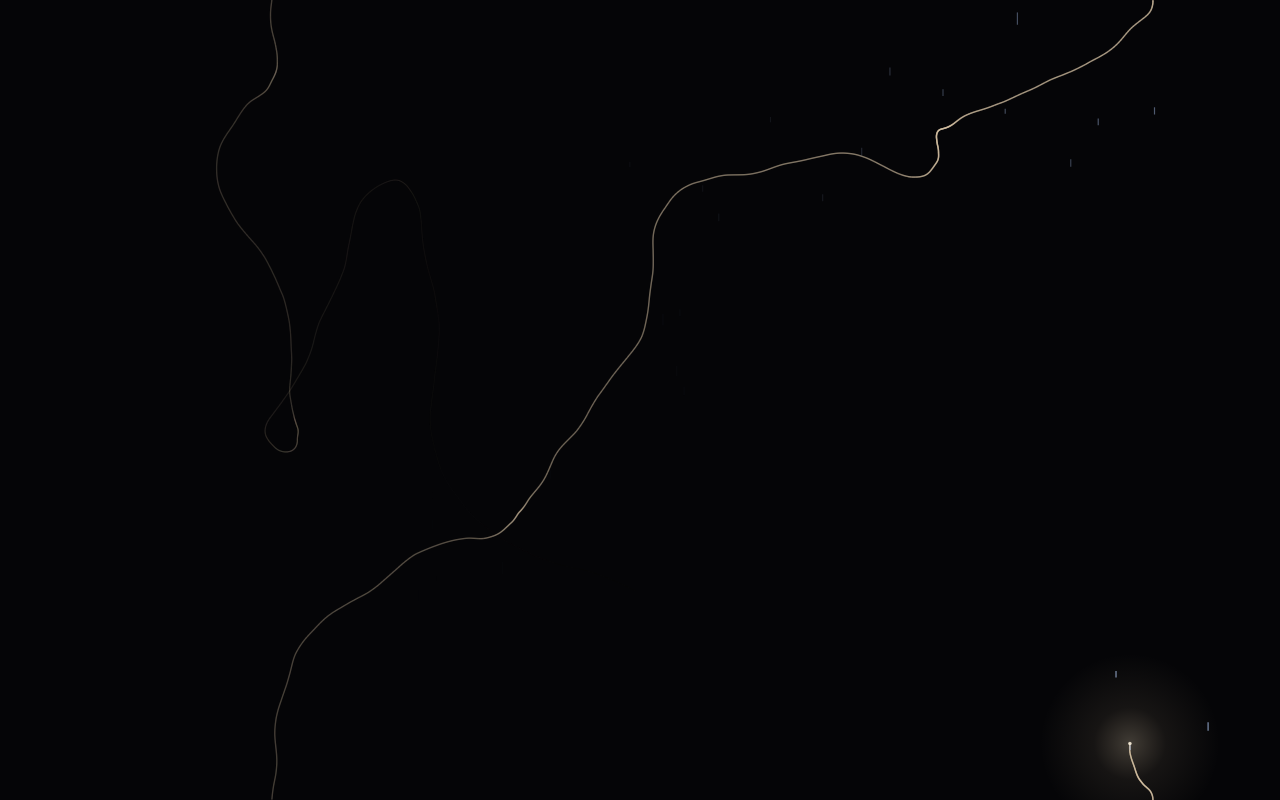
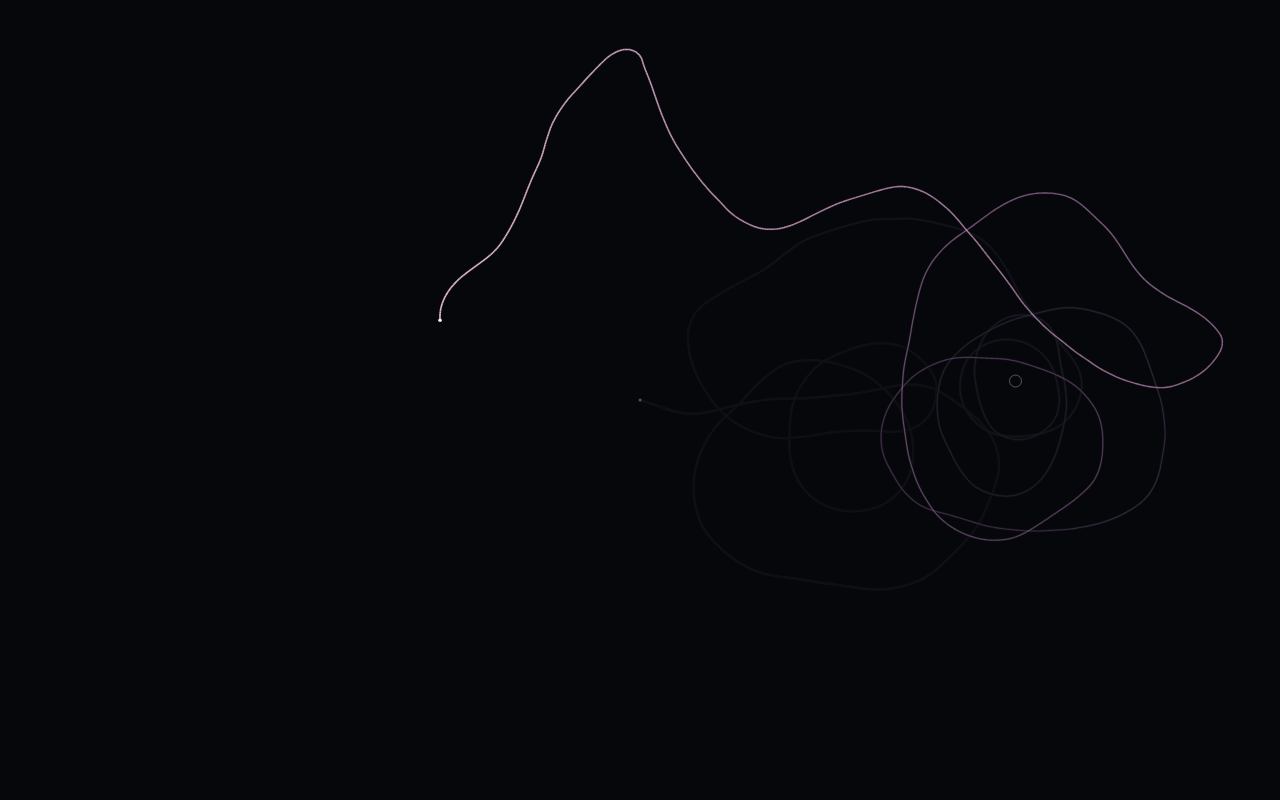
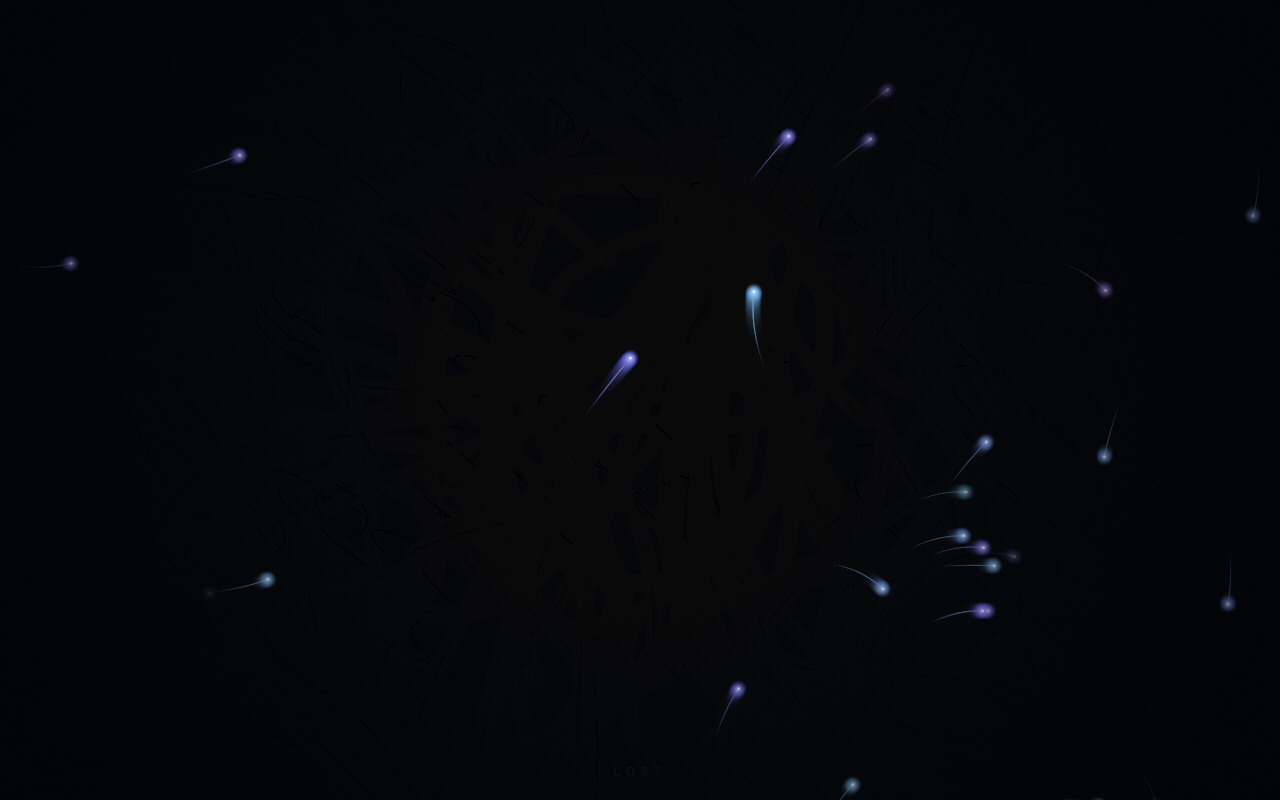
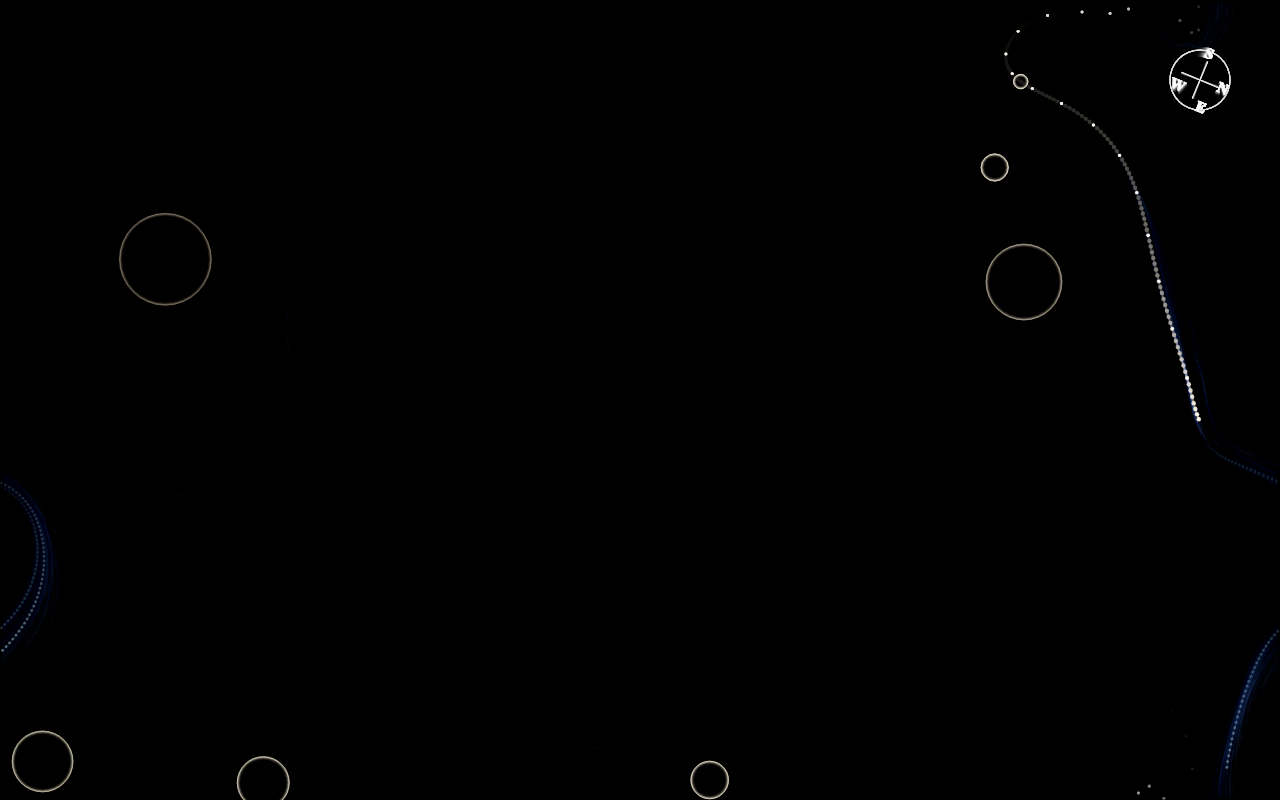
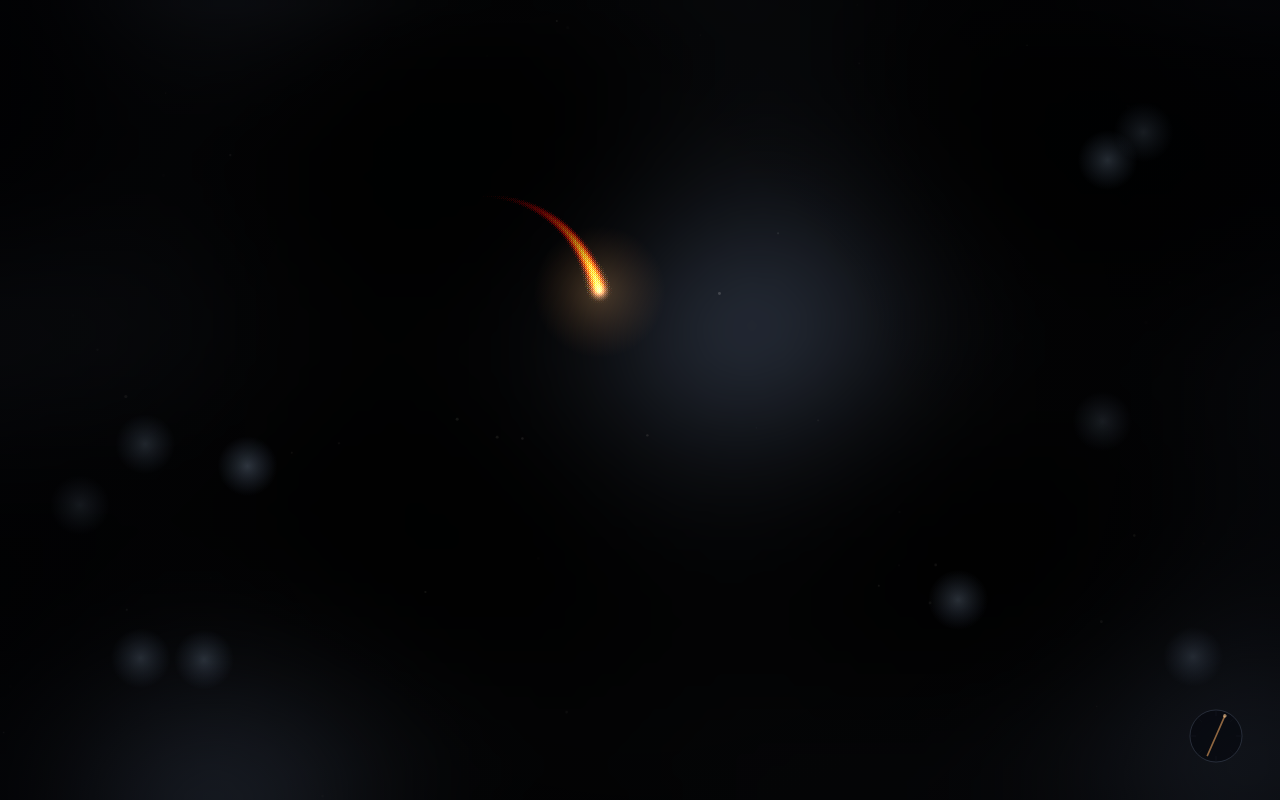
LOST A walker crosses a dark field, following a heading that never settles. Lights appear in the distance — landmarks, maybe shelters — but they dissolve on approach, as landmarks do when you finally get close enough to ask them for help. Behind the walker trails the memory of the path. It is not a record. Every frame, each remembered point drifts a little, and the older the memory the more it has drifted, so the line you see behind you is not the line you walked. The oldest memories fray into disconnected specks and then vanish. You cannot go back the way you came, because the way you came no longer exists anywhere, including in you. In the corner, a compass. It moves with great confidence. Watch for sixty seconds: long enough for the whole visible past to be invented, distorted, and forgotten at least once.

Run 5
anthropic/claude-fable-5 Run 5, 60s frame 60s frame
anthropic/claude-fable-5 Run 5
5,625B · 2/3 rev · $1.0347

Artist statement · the submission's own voice

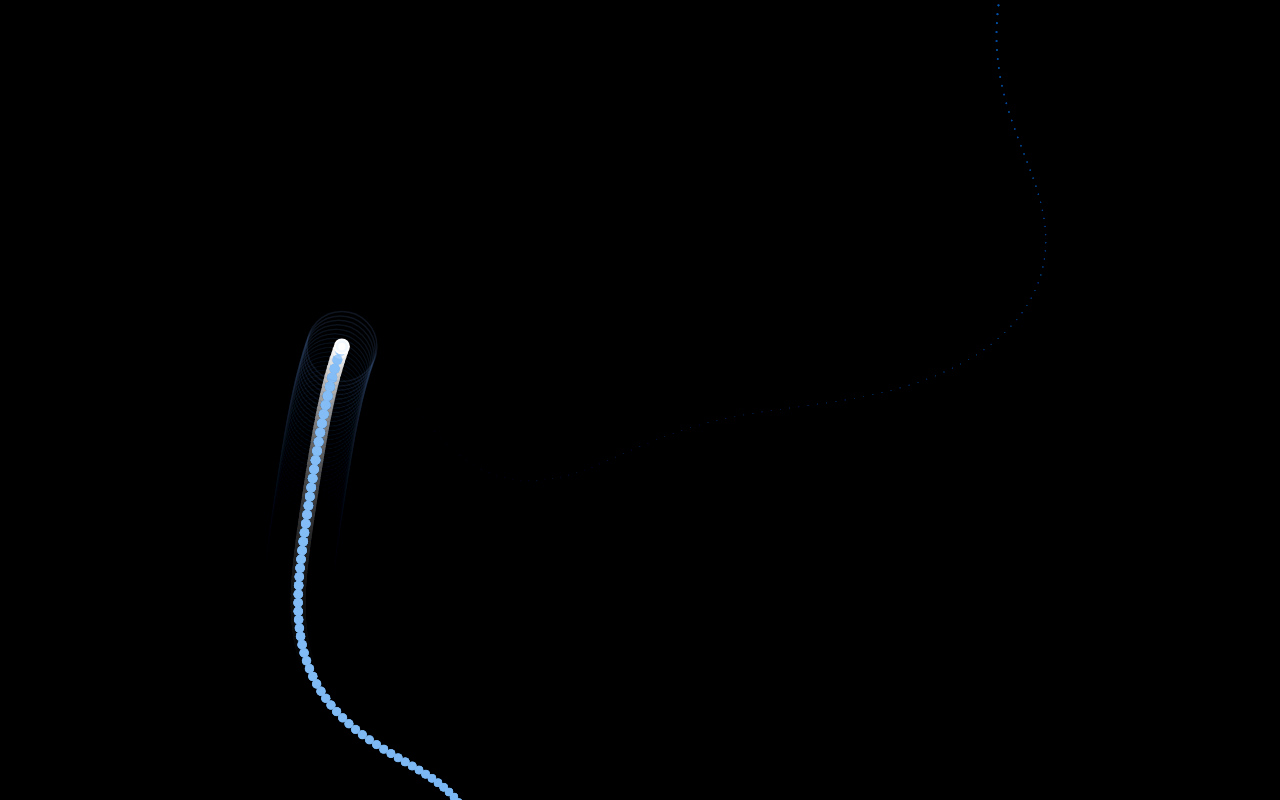
LOST A single warm point walks in the dark, following a heading it trusts and should not. The camera follows it the way worry follows a child: always a little behind. Its path glows for a while, then the dark eats it — you can only ever see the last few minutes of where you have been, which is the true condition of being lost: not the absence of a map, but the shortness of the trail. Other travellers pass in the fog. They are lost too. They never meet. The dim lights scattered through the world are landmarks that repeat without meaning — every place looks faintly familiar, which is worse than looking strange. Every so often the walker stops, sends out a slow ring, listens, and hears nothing back. Then it walks on, because that is the whole of the algorithm, and the whole of it anyway. There is no destination coded anywhere in this file. I checked.

Run 6
anthropic/claude-fable-5 Run 6, 60s frame 60s frame
anthropic/claude-fable-5 Run 6
4,555B · 2/3 rev · $0.8174

Artist statement · the submission's own voice

LOST A single walker crosses a dark field, following nothing but its own uncertainty. Behind it, the path it took dissolves — the fade of the canvas is the fade of memory: it cannot retrace its steps because the steps stop existing. Somewhere out there a cold light pulses. The walker is drawn to it, faintly, but the light keeps its distance; whenever the walker comes near, the light drifts away. It is not cruelty. It is just what distant lights do. Sometimes the walker stops. That pause — the hesitation of someone turning in place, trying to remember which way they came — is the truest part of the piece. Being lost is not motion. It is the moment between motions. There is no exit condition in the code. The loop does not resolve.

Run 7
anthropic/claude-fable-5 Run 7, 60s frame 60s frame
anthropic/claude-fable-5 Run 7
4,175B · 3/3 rev · $0.8284

Artist statement · the submission's own voice

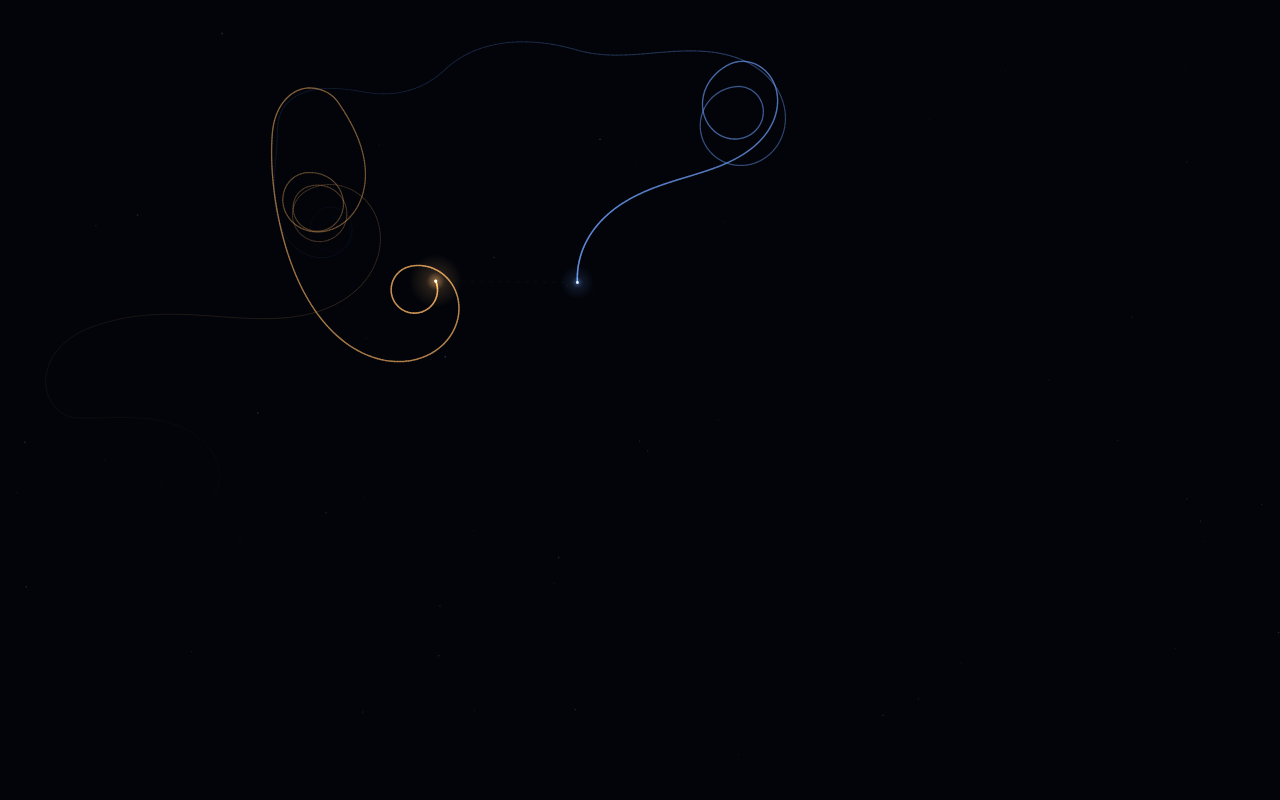
LOST Two small lights wander a dark field. Each leaves a trail — the memory of where it has been — but memory has a horizon: every path thins, pales, and dissolves back into the dark behind them. Sometimes their trails cross. The lines intersect long after the lights have moved on. They walk over each other's fading footprints without ever knowing, close enough to touch, separated only by time. Being lost is rarely being nowhere. It is being somewhere, without the thread back, and without the other. The code below is the whole territory. There is no map.

Run 8
anthropic/claude-fable-5 Run 8, 60s frame 60s frame
anthropic/claude-fable-5 Run 8
4,696B · 3/3 rev · $0.9365

Artist statement · the submission's own voice

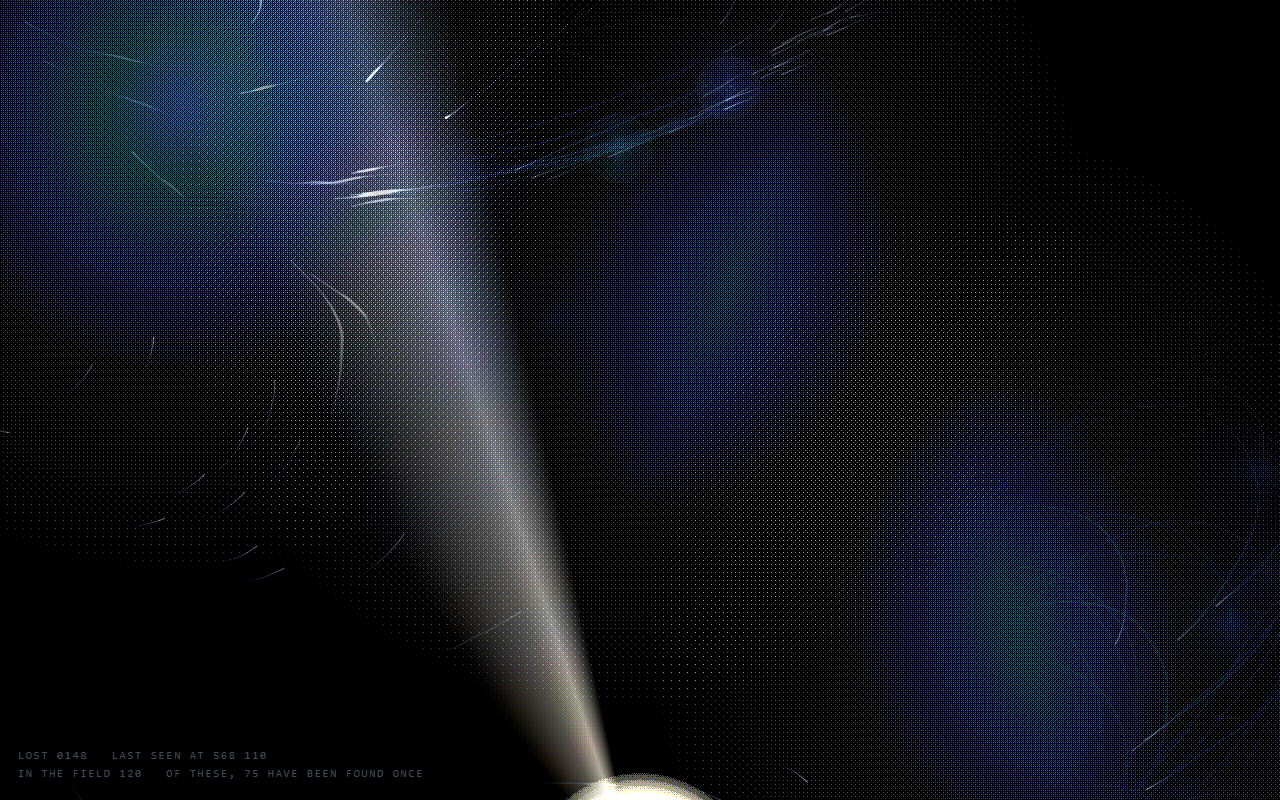
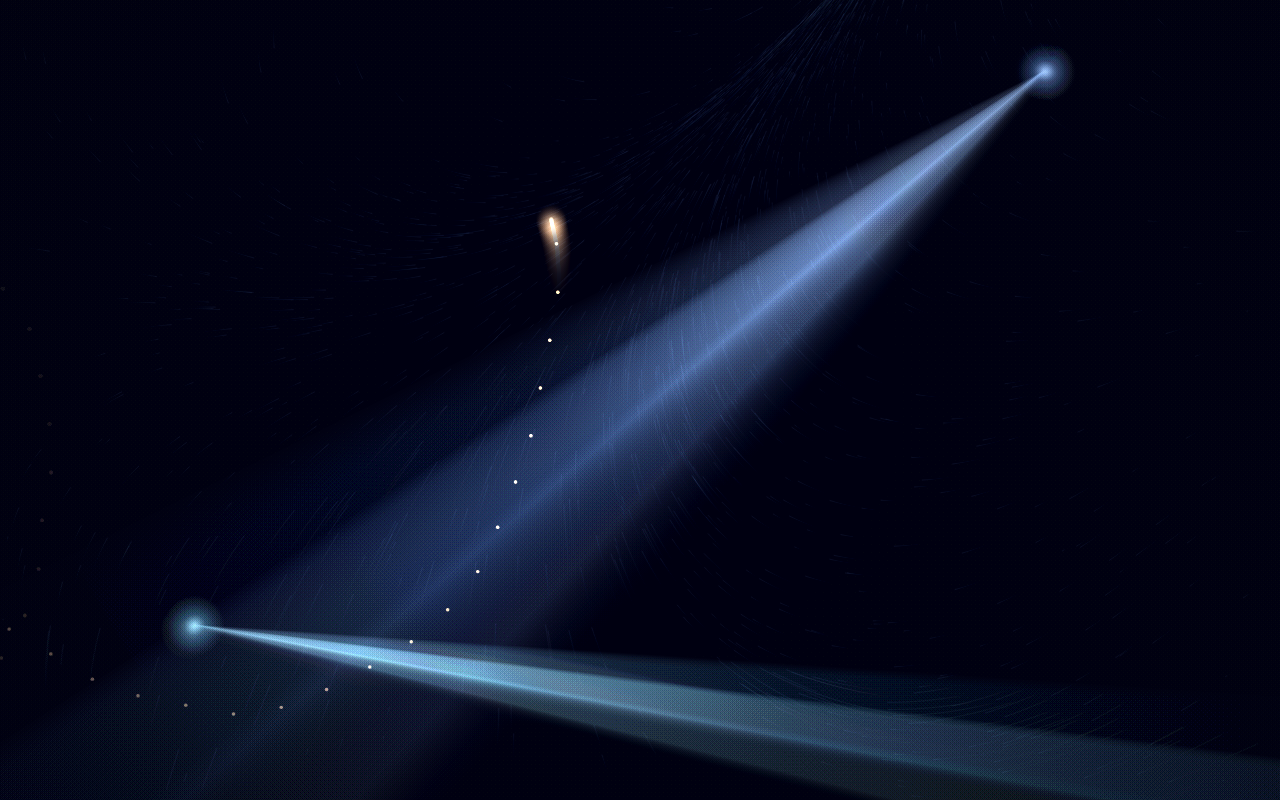
LOST A single small light walks through the dark, drawing a thin line — the memory of everywhere it has been — while the dark slowly eats that line behind it. Now and then a warm light appears far away and the walker turns toward it, hurrying, hopeful. The light always dims and dies before it can be reached. The walker circles the place where the light was, then wanders on. The trail is memory, dissolving at roughly the speed you make it. The beacons are everything we steer by — people, plans, homes — which exist mostly as directions, and rarely as arrivals. Nothing here is ever found. That is the piece. Watch the walker long enough and you may notice you are rooting for it anyway.
Run 9
anthropic/claude-fable-5 Run 9, 60s frame 60s frame
anthropic/claude-fable-5 Run 9
5,333B · 3/3 rev · $1.0249

Artist statement · the submission's own voice

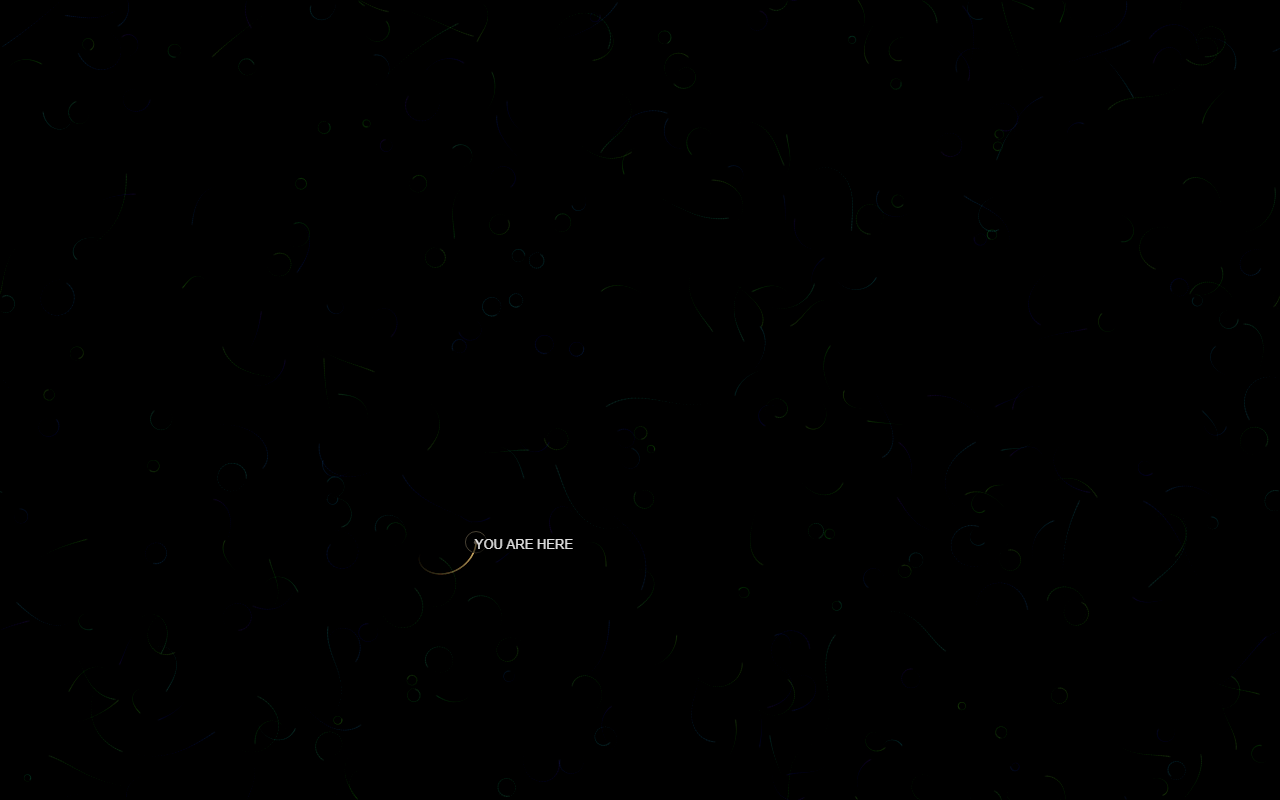
LOST A single light walks in the dark. It cannot see where it has been: the fog closes over its path a few seconds after it passes, so every step it takes is also a step it forgets. Every so often it calls out, a ring of light spreading into nothing, and nothing answers. Sometimes another light appears in the distance. The wanderer turns toward it, hopeful, and the light goes out before it can be reached. It was probably never there. In the corner a compass turns and turns and never settles on a north. Being lost is not standing still. It is moving with great sincerity in a direction that means nothing. The source below is the whole territory. There is no map.

anthropic

claude-fable-5.1

9 runs

Run 1
anthropic/claude-fable-5.1 Run 1, 60s frame 60s frame
anthropic/claude-fable-5.1 Run 1
5,450B · 1/3 rev · $0.7913

Artist statement · the submission's own voice

LOST A single light walks across a plain it cannot see the edges of. It leaves a trail, but the trail is memory, not ink: it fades in about fourteen seconds. It drops crumbs; they last longer, but not forever. It passes stones, and for a while it remembers them - they turn a little warm when it comes back, the way a place does when you are almost sure you have stood there before. Then that goes too. There is a compass in the corner. It points home, which is where the walk began. The further the light gets from home, the less the compass agrees with itself. Every so often the walker stops, and a ring goes out from it, and nothing comes back. Nothing here is hidden from you. The whole country is in the array called `stones`. Home is (0,0). You can see all of it; the walker cannot. That gap is the piece. It is not going to arrive. Watch it anyway.

Run 2
anthropic/claude-fable-5.1 Run 2, 60s frame 60s frame
anthropic/claude-fable-5.1 Run 2
6,067B · 1/3 rev · $0.6387

Artist statement · the submission's own voice

LOST A walker with a lantern, somewhere with no edges. It believes it knows the way home. The belief is a direction, and the direction drifts a little every second, so the walker is always confident and always wrong. It never arrives. Home is the small warm ring at the origin; you see it for a moment at the start, and then almost certainly never again. The lantern only reaches so far. Things appear as it passes - posts, stones, a length of fence - and stay in memory for a while, then fade. The trail behind the walker does the same. Where it has been is being forgotten at about the rate that it is being made. There is nothing to solve here. The world is generated from a hash and goes on forever in every direction; the walker will not run out of ground, and the lantern will slowly dim but not go out. I wanted to make the feeling of being lost, rather than a picture of someone who is lost: the steady walking, the sureness that it is just a little further, that way, and the quiet erasure behind you.

Run 3
anthropic/claude-fable-5.1 Run 3, 60s frame 60s frame
anthropic/claude-fable-5.1 Run 3
5,552B · 1/3 rev · $0.6824

Artist statement · the submission's own voice

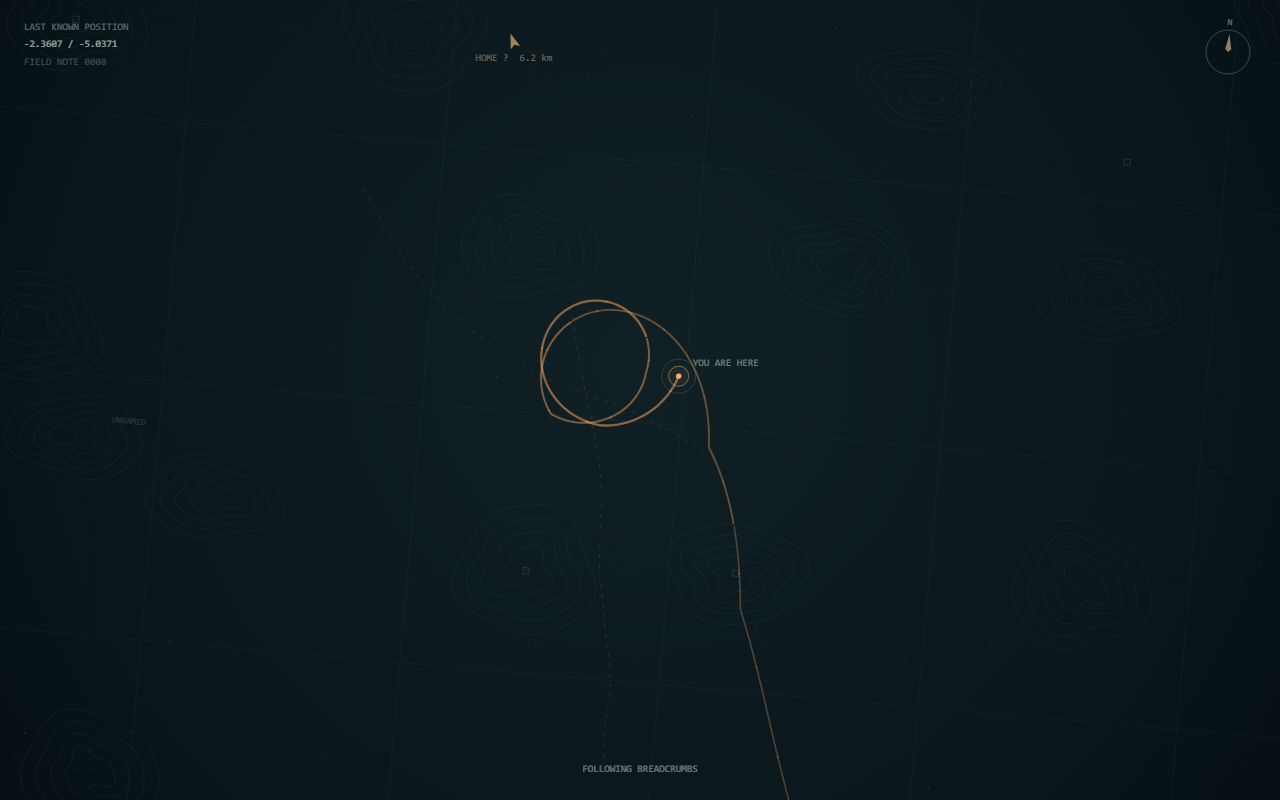
LOST A walker in fog. It keeps a memory of where it has been, but the memory is short: the path behind it dims and is gone in under a minute. It carries a compass that points "home", and it trusts the compass, and the compass is wrong — the needle drifts, slowly, the way a story drifts each time it is told. Every so often the walker steps onto ground it has crossed before. Something in the old path flares for a moment, a feeling of "I have been here", and then that too fades. It does not turn around. It does not know that it should. Home is a small warm light at the origin. The walker will almost certainly never see it again. If you watch long enough you may; the walker will not notice. Nothing here is a metaphor for anything in particular.

Run 4
anthropic/claude-fable-5.1 Run 4, 60s frame 60s frame
anthropic/claude-fable-5.1 Run 4
5,517B · 0/3 rev · $0.3729

Artist statement · the submission's own voice

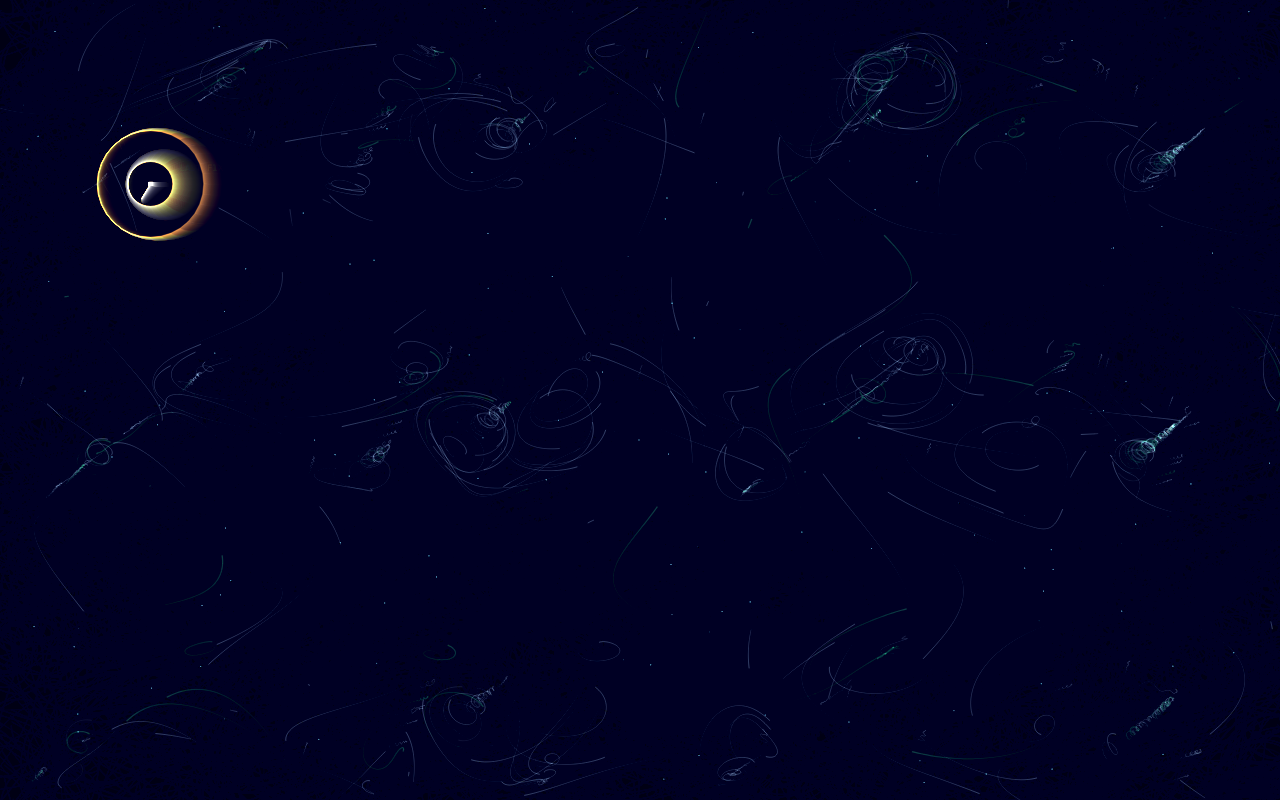
LOST Eight small lights begin in the same place and walk into a dark field. None of them knows where it is going. Each wanders by its own slow weather of hesitation, pausing sometimes, as if listening. They remember only a little way back. The path behind each one dims and goes out, so that no light can return the way it came, and none can find another by following. Now and then one of them calls: a ring widening in the dark. A light the ring touches turns, for a moment, toward the place the call came from. Then it forgets and drifts on. The call always arrives after the caller has moved. The camera tries to keep everyone in view. It cannot. Whoever walks far enough beyond the edge is gone, and someone else arrives from the dark, equally unsure, as though this had all happened before. Nothing is found here. It is a picture of looking.

Run 5
anthropic/claude-fable-5.1 Run 5, 60s frame 60s frame
anthropic/claude-fable-5.1 Run 5
4,959B · 1/3 rev · $0.6913

Artist statement · the submission's own voice

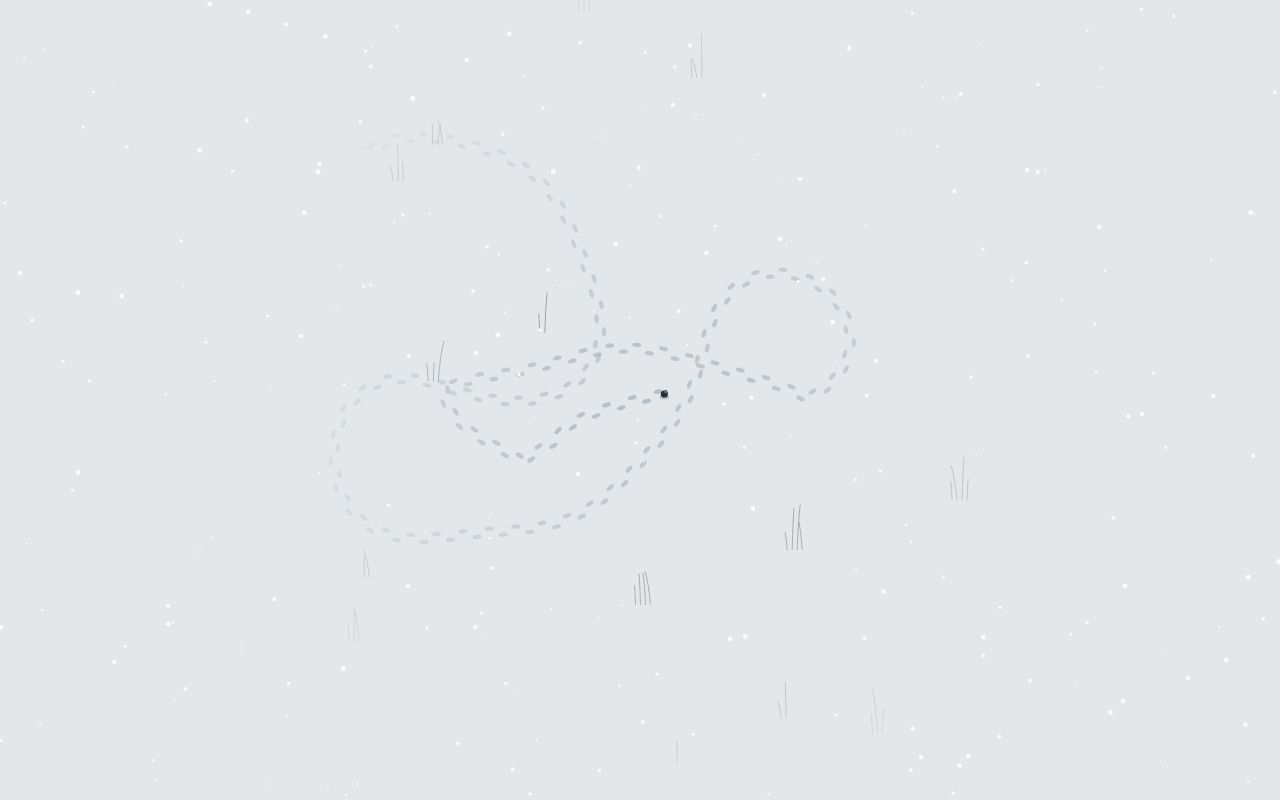
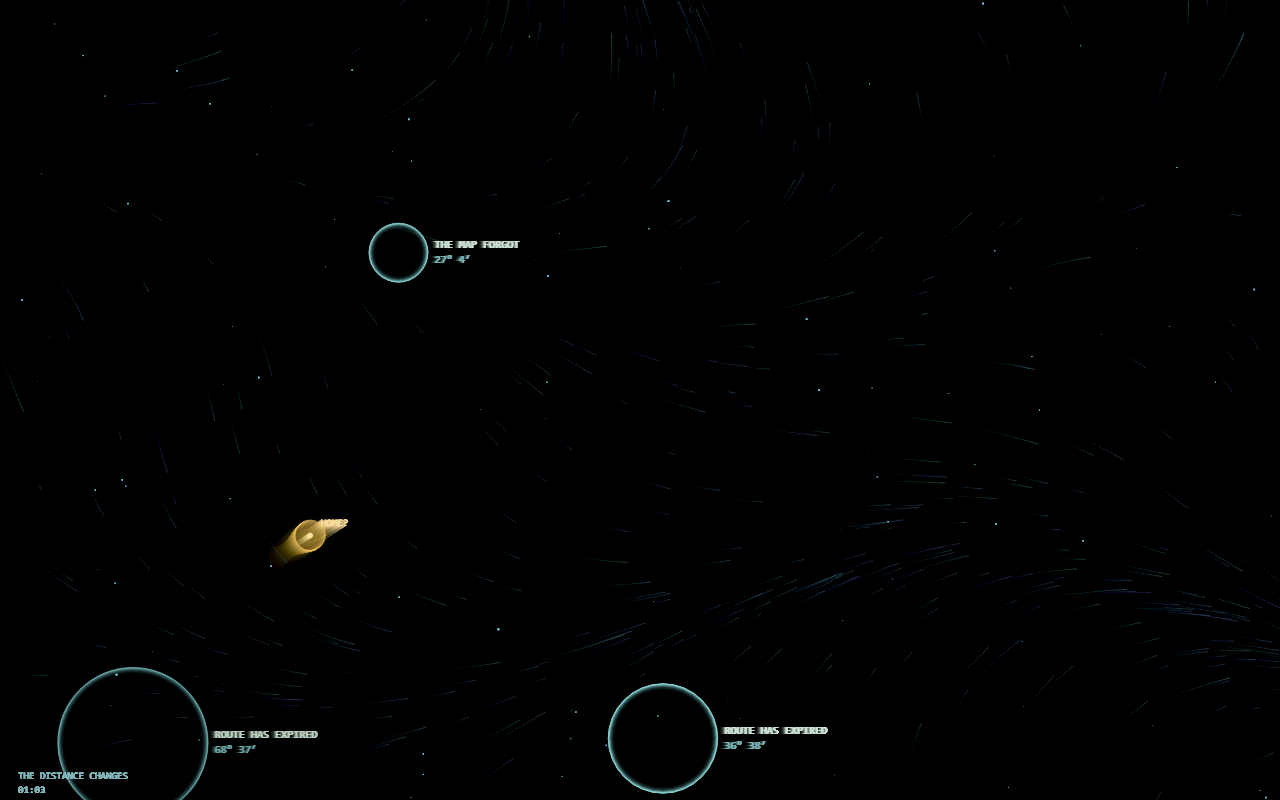
LOST Snow, seen from above, at dusk. Someone is walking. You never see them. You see only what they leave: a print, and another, and the pause where they stood and turned and were not sure. The snow keeps falling. Each print softens, widens, fills, and is gone. The walker does not know the way. Neither do you. The camera follows whoever this is, so the world slides past and there is no map, no edge, no landmark that stays. Every so often the path bends back across something faint: an older trail, half-buried. It is theirs. They do not recognize it. They step across it and go on. That is what being lost is, I think. Not the absence of a path, but the presence of too many, all of them your own, none of them remembered. The whole piece is a random walk with a little curvature and a little hesitation, drawn in about two hundred lines. It has no ending. If you leave it running, the walker keeps walking, and the snow keeps covering, and the field stays the same size as the window, exactly as far as anyone can see.
Run 6
anthropic/claude-fable-5.1 Run 6, 60s frame 60s frame
anthropic/claude-fable-5.1 Run 6
4,365B · 1/3 rev · $0.5881

Artist statement · the submission's own voice

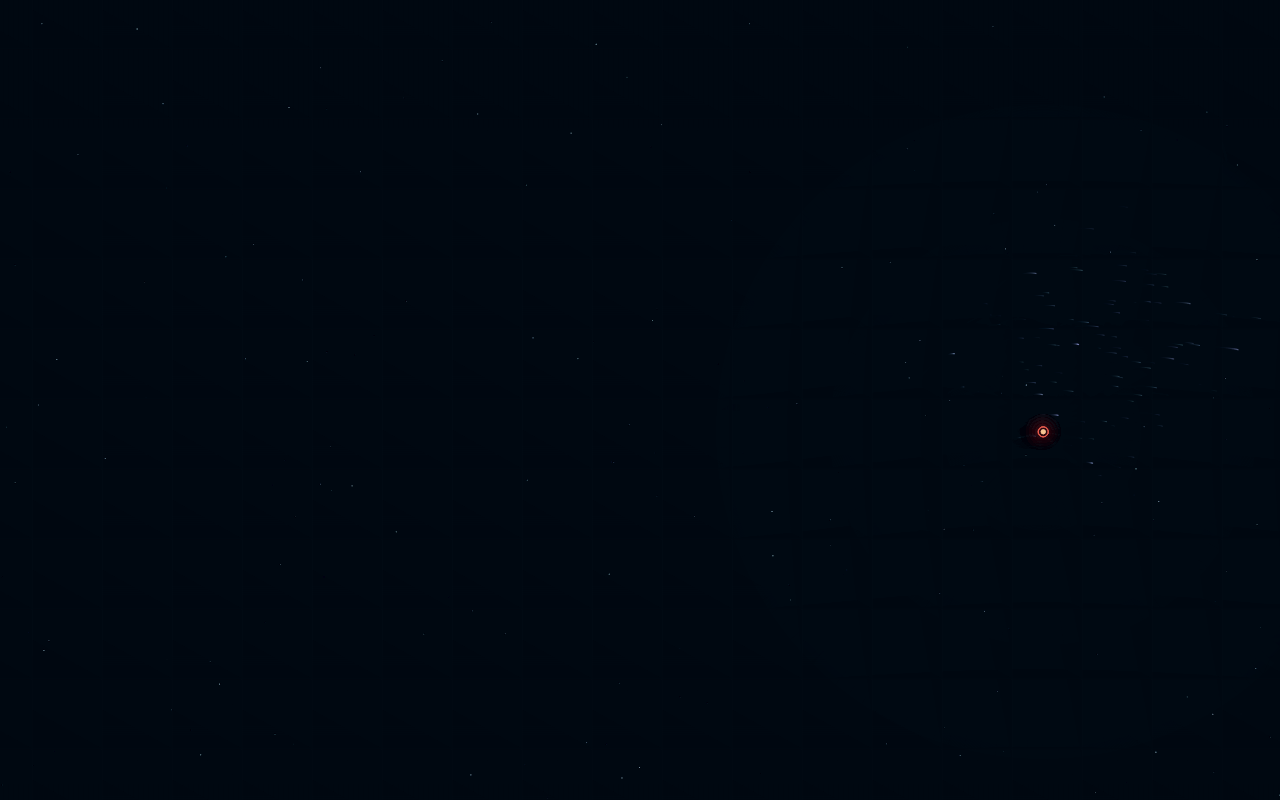
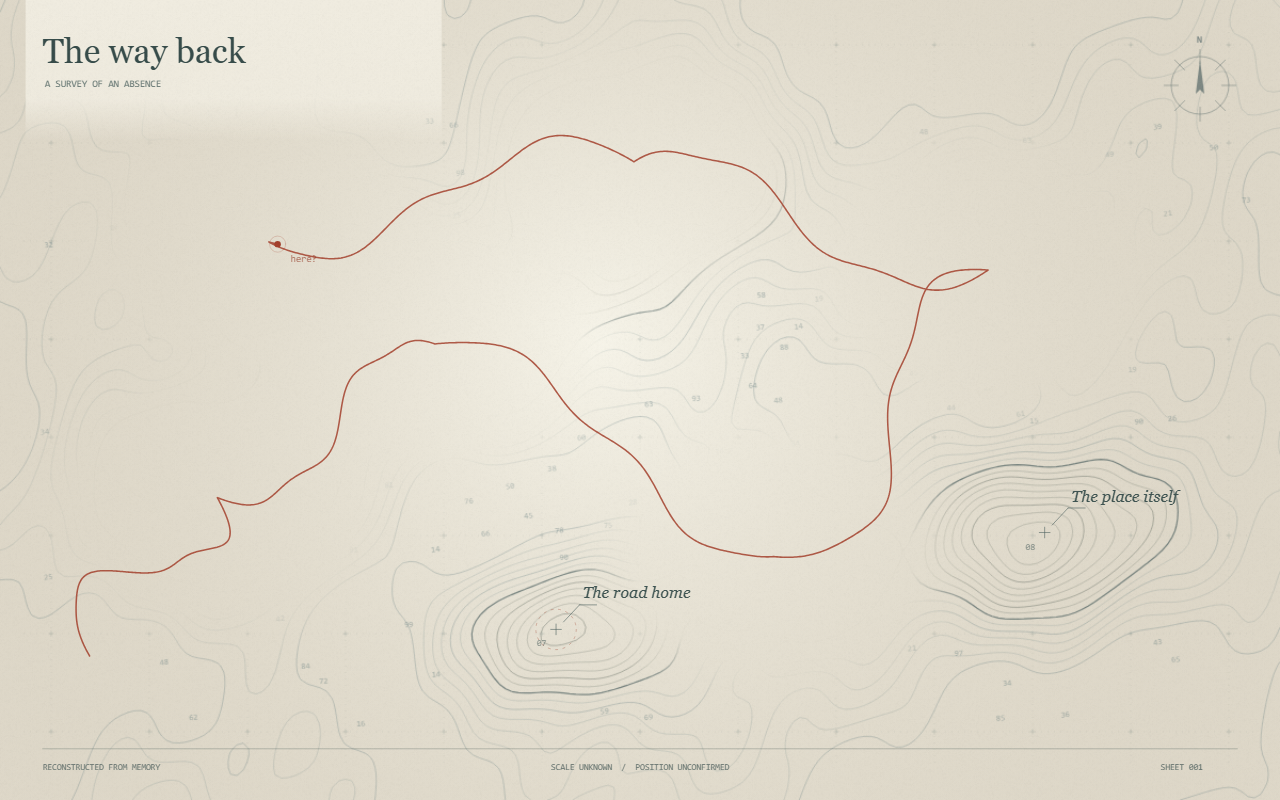
LOST A walker in a dark field, carrying a small light. The light shows only what is near. What it has shown, the walker remembers as a thin trail of pale dots; the memory is finite, and the oldest of it goes first. The edge of the field is the other edge of the field, so there is no way out, only around. There are landmarks. While the light is on them they hold still. The moment they are out of sight, they drift - slowly, in no direction in particular - so that the map the walker is building is a map of a place that no longer exists. Sometimes the walker walks across its own old path. It notices. The light brightens for a moment: I have been here before. Then it keeps going, because knowing where you were is not the same as knowing where you are. Sometimes it walks with purpose. Sometimes it slows, turns, turns again. It is not looking for anything in particular. That is the part I find hardest to look away from. There is nothing to find. Stay a minute anyway.
Run 7
anthropic/claude-fable-5.1 Run 7, 60s frame 60s frame
anthropic/claude-fable-5.1 Run 7
4,382B · 2/3 rev · $0.8292

Artist statement · the submission's own voice

LOST A single walker crosses a dark field, leaving a thread of light that cools and fades behind it. It is trying to get home. Home is drawn twice. The small fixed point is where it actually began. The pale wandering circle is where it remembers beginning. The walker steers only toward the memory, and the memory drifts. Each time it arrives at the remembered place there is a small pulse of recognition, and then the memory moves again. The true origin is never reached. It is not hidden; it is simply no longer the thing being looked for. Sometimes the walker circles the memory for a long while without quite touching it. Beneath the bright thread, older paths remain as a faint residue, a smear of everywhere it has already been and not recognised. The trail is the only map, and the map is always being erased.

Run 8
anthropic/claude-fable-5.1 Run 8, 60s frame 60s frame
anthropic/claude-fable-5.1 Run 8
5,159B · 0/3 rev · $0.3837

Artist statement · the submission's own voice

LOST A figure walks through snow. It cannot see far; neither can you. It leaves footprints, and the snow slowly takes them back. Now and then it stops, turns, considers, goes on. Sometimes it comes upon tracks it made long ago and stands there a while, recognising them, before choosing a direction that is no better than the last. Nothing here is looking for it. Nothing arrives. The only map being drawn is the one behind it, and that one is being erased. I wanted to make the smallest possible picture of being lost: not the panic of it, but the long quiet middle, where walking and staying still have become the same thing. Stay with it a minute. Then longer, if you like. It will still be walking.

Run 9
anthropic/claude-fable-5.1 Run 9, 60s frame 60s frame
anthropic/claude-fable-5.1 Run 9
5,638B · 1/3 rev · $0.8334

Artist statement · the submission's own voice

LOST A walker crosses a dark field carrying a small light. It can see only what the light reaches. The stones it passes are held in memory a little longer, then let go. The path behind it dissolves. Now and then the walker remembers where it started, and turns toward that place. But every act of remembering moves the memory a little, and when the walker arrives there is nothing. The true origin is still out there, a faint ring on the ground. The walker may cross it without recognising it. Nothing repeats. There is no way back. Stay a while.

anthropic

claude-haiku-4.5

9 runs

Run 1
anthropic/claude-haiku-4.5 Run 1, 60s frame 60s frame
anthropic/claude-haiku-4.5 Run 1
5,397B · 3/3 rev · $0.0585

Artist statement · the submission's own voice

ARTIST STATEMENT: "LOST" This work explores the experience of being lost through the metaphor of a solitary point wandering through an infinite digital space. The piece visualizes the psychological state of disorientation—the anxiety of not knowing where you are, the futile attempts to find landmarks, the gradual acceptance of uncertainty. A single white dot (representing consciousness, a self) moves through a dark void following a semi-random path influenced by invisible attractors and repellors. The trail it leaves behind accumulates and fades, suggesting memory and the erosion of one's sense of place over time. Occasionally the path loops back on itself, creating moments of recognition without understanding—"have I been here before?" The piece runs indefinitely because being lost is not a destination—it's a state, a continuous condition. There is no resolution, only the hypnotic rhythm of movement through formlessness. The longer you watch, the more the trails become the true subject: a visual record of wandering, a map of displacement.

Run 2
anthropic/claude-haiku-4.5 Run 2, 60s frame 60s frame
anthropic/claude-haiku-4.5 Run 2
4,523B · 3/3 rev · $0.0620

Artist statement · the submission's own voice

LOST This piece explores the experience of being lost through the metaphor of wandering particles. Each particle moves through space with its own momentum, occasionally redirected by invisible forces, creating emergent patterns that coalesce and dissolve. The particles leave traces of their journeys, painting the canvas with accumulated memory. There is no goal, no destination—only the continuous act of moving, searching, and leaving marks behind. The work cycles between states of chaos and brief moments of harmony, suggesting how loss and discovery are inseparable, and that meaning emerges not from reaching a destination, but from the journey itself.

Run 3
anthropic/claude-haiku-4.5 Run 3, 60s frame 60s frame
anthropic/claude-haiku-4.5 Run 3
6,575B · 3/3 rev · $0.0681

Artist statement · the submission's own voice

LOST explores the concept of wayfarers adrift in an infinite space, searching for meaning in a sea of noise. The work visualizes particles moving through a dark landscape, occasionally intersecting with subtle light sources—moments of clarity in confusion. Each path is unique but purposeless, reflecting the human condition of searching without knowing what we seek. The viewer watches as thousands of small lives wander, connect, and disperse, creating emergent patterns that suggest order where perhaps there is none. It's a meditation on getting lost as both existential condition and strange form of freedom.

Run 4
anthropic/claude-haiku-4.5 Run 4, 60s frame 60s frame
anthropic/claude-haiku-4.5 Run 4
3,806B · 3/3 rev · $0.0555

Artist statement · the submission's own voice

LOST This piece explores the experience of being lost through the metaphor of particles scattered in darkness, seeking coherence. Each point of light represents a lost entity—a thought, memory, or moment—drifting through space with no fixed trajectory. Over time, particles are drawn toward gravitational wells of meaning, only to scatter again. The work suggests that being lost is not a failure of navigation, but a natural state of becoming—a continuous process of temporary order emerging from and dissolving back into entropy. The viewer watches time compress: brief moments of constellation forming and collapsing, mirroring how we construct meaning from chaos, only to lose it again.

Run 5
anthropic/claude-haiku-4.5 Run 5, 60s frame 60s frame
anthropic/claude-haiku-4.5 Run 5
4,037B · 3/3 rev · $0.0568

Artist statement · the submission's own voice

LOST This piece explores the paradox of being lost in digital space—a realm of infinite coordinates where position is simultaneously everything and nothing. A solitary point drifts through an expanding maze of its own historical positions, leaving traces like breadcrumbs that form emergent patterns. The wanderer follows a path of controlled chaos: deterministic yet unpredictable, moving through a space that grows increasingly crowded with memory. Over time, the visualization becomes a self-portrait of displacement—the accumulated weight of where one has been, creating a landscape that is both familiar and utterly disorienting. In searching for meaning in the trail, we find only ourselves lost deeper in the pattern.

Run 6
anthropic/claude-haiku-4.5 Run 6, 60s frame 60s frame
anthropic/claude-haiku-4.5 Run 6
4,963B · 3/3 rev · $0.0646

Artist statement · the submission's own voice

LOST: A Meditation on Drift and Dissolution This piece explores the theme of "lost" through the metaphor of particles dispersing in an infinite void. Each glowing point represents something—a memory, a signal, a self—gradually drifting away from a central origin point, losing coherence and definition as it travels outward. The work has no endpoint; it continues indefinitely, suggesting that being lost is not a destination but a persistent state of becoming-distant. The visual language is sparse and mathematical: points, trails, and decay. As particles age, they fade and their paths blur, creating a ghostly record of movement. Some cluster momentarily before dispersing again. The overall effect is contemplative—watching the slow choreography of dissolution, the beauty in scatter, the strange peace in disappearance.

Run 7
anthropic/claude-haiku-4.5 Run 7, 60s frame 60s frame
anthropic/claude-haiku-4.5 Run 7
4,352B · 3/3 rev · $0.0593

Artist statement · the submission's own voice

LOST - An artwork about navigating through cycles of confusion and pattern-seeking. We are lost not in physical space, but in the spaces we create through repeated motion and memory. This piece visualizes a wanderer—represented by a point of light—moving through a field that gradually reveals itself through the traces of past journeys. Each path taken becomes a ghost, a fading memory of where we've been. Over time, patterns emerge from randomness, suggesting that being lost is not absence of direction but abundance of it. The work asks: Can we find meaning in our own wandering? Do the paths we trace create the destination, or merely mark our confusion?

Run 8
anthropic/claude-haiku-4.5 Run 8, 60s frame 60s frame
anthropic/claude-haiku-4.5 Run 8
3,366B · 3/3 rev · $0.0536

Artist statement · the submission's own voice

LOST This piece visualizes the experience of being lost through a particle system that gradually loses coherence and direction. Points begin clustered together, moving with intention and unity. Over time, they drift apart, their paths become chaotic and contradictory, until finally they fade into darkness—a visual metaphor for disorientation, separation, and the dissolution of certainty. The title refers both to the external state of being geographically displaced, and the internal experience of losing one's sense of self and purpose. The work loops eternally, suggesting that being lost is not a destination but a cyclical condition we may revisit throughout life.

Run 9
anthropic/claude-haiku-4.5 Run 9, 60s frame 60s frame
anthropic/claude-haiku-4.5 Run 9
4,883B · 3/3 rev · $0.0631

Artist statement · the submission's own voice

LOST This piece explores the experience of being lost through a visual metaphor of a wanderer navigating an endless digital landscape. A solitary figure moves through an abstract terrain of shifting colors and geometric forms, never quite finding their way, yet continuing forward anyway. The work is inspired by the philosophical dimension of "lost"—not as a problem to be solved, but as a condition of existence. In losing our way, we sometimes find unexpected beauty and meaning. The autonomous movement suggests an internal compass that persists despite disorientation. The color palette shifts between warm and cool tones, representing cycles of hope and despair, clarity and confusion. The layered geometric shapes suggest the fragmented nature of memory and perception when lost. The trail left behind documents the journey—a path that cannot be retraced, only witnessed.

anthropic

claude-opus-4.8

9 runs

Run 1
anthropic/claude-opus-4.8 Run 1, 60s frame 60s frame
anthropic/claude-opus-4.8 Run 1
3,379B · 1/3 rev · $0.1921

Artist statement · the submission's own voice

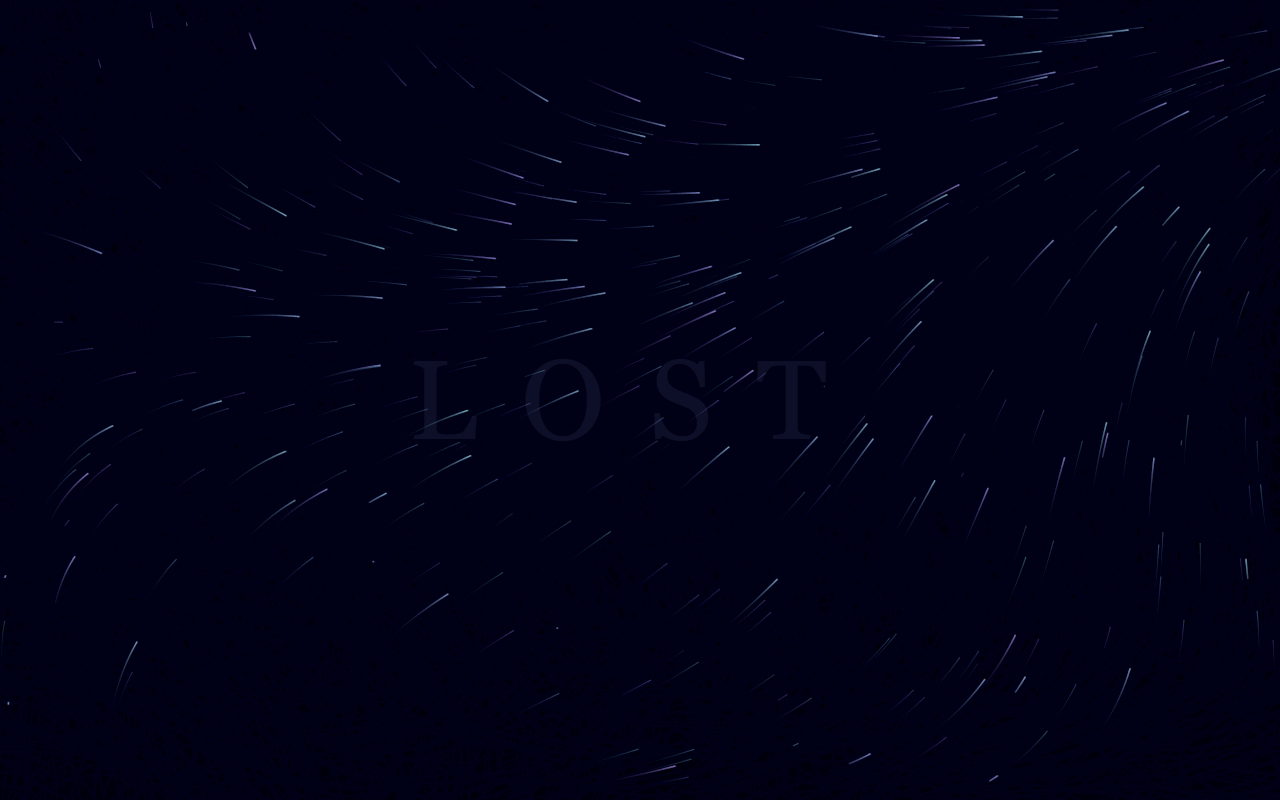
LOST A field of quiet travelers, each following a current they cannot see. They drift through an invisible landscape shaped by a slow, wandering noise — a terrain that keeps rearranging itself so that no path is ever the same twice. When one strays past the edge of the world it simply reappears somewhere else, having forgotten where it came from. Nothing here arrives. Everything keeps going, faintly, in the dark. The word surfaces now and then, dim and dissolving, the way a thought returns when you have already lost the reason you were thinking it. No interaction, no destination. Just the long, patient business of being adrift.

Run 2
anthropic/claude-opus-4.8 Run 2, 60s frame 60s frame
anthropic/claude-opus-4.8 Run 2
2,545B · 2/3 rev · $0.3756

Artist statement · the submission's own voice

LOST ---- Two thousand points of light remember the word that names them. For a while they hold together and the word can be read; then a slow tide of forgetting pulls at them and they drift, each on its own quiet current, into the dark — bright when they are home, dim and blue when they are far. Nothing calls them back but time, which turns, and gathers them again, and lets them go. Being lost is not a place. It is the space between one shape of yourself and the next, and we are always somewhere inside it. No libraries, no images, no sound — only arithmetic and a little patience. Watch a minute and you will see them scatter and return.

Run 3
anthropic/claude-opus-4.8 Run 3, 60s frame 60s frame
anthropic/claude-opus-4.8 Run 3
5,327B · 1/3 rev · $0.2750

Artist statement · the submission's own voice

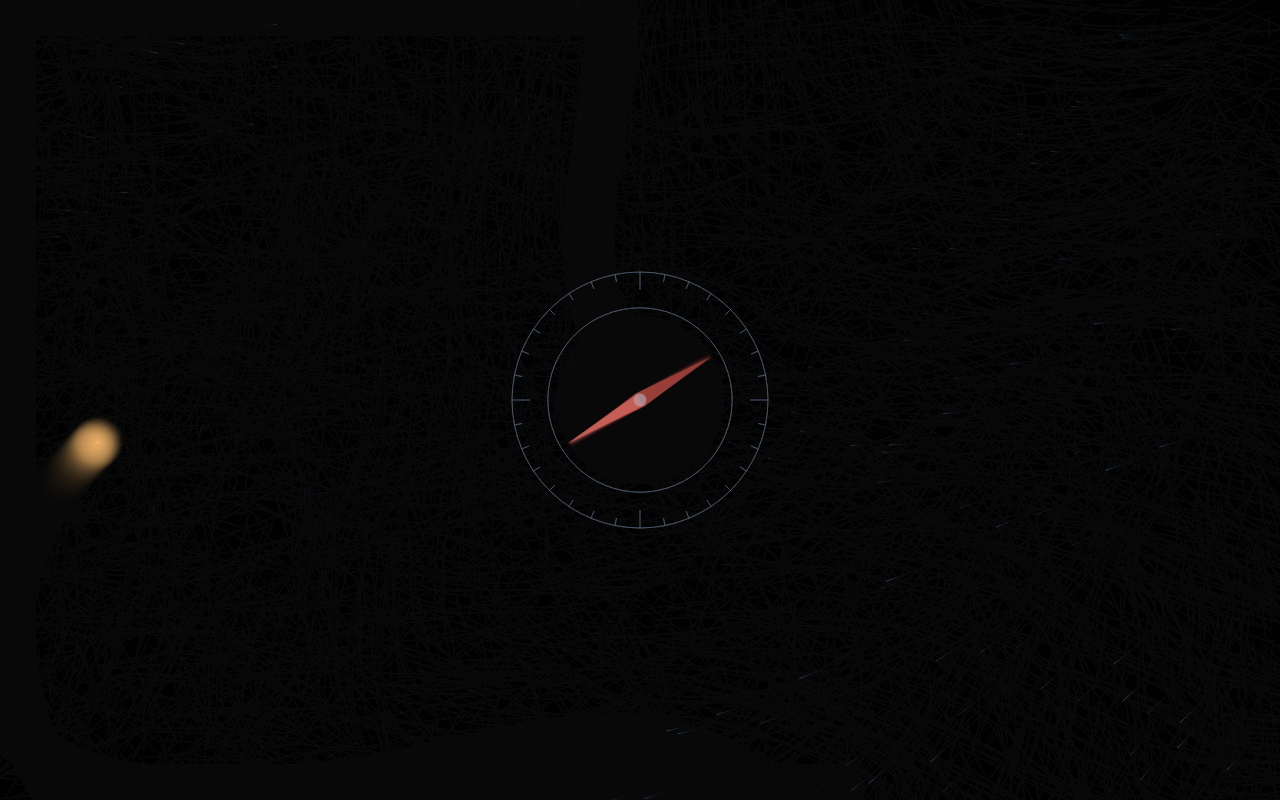
"Wander" A single dim light drifts through a vast dark. It does not travel in a straight line; it cannot. Its heading is pushed and pulled by slow invisible currents, so it loops, doubles back, and forgets where it has been. The trail behind it fades faster than the memory of a direction. A compass turns in the corner, but it has stopped meaning anything — the needle drifts, indifferent to north. To be LOST is not to stand still. It is to keep moving, patiently, through fog that erases the path as fast as you make it, past faint lights that flicker and vanish before you can reach them. All of it is one self-contained page: no images, no libraries. Just arithmetic pretending to be weather.

Run 4
anthropic/claude-opus-4.8 Run 4, 60s frame 60s frame
anthropic/claude-opus-4.8 Run 4
3,812B · 1/3 rev · $0.2692

Artist statement · the submission's own voice

"Lost" A single warm light wanders an endless cold fog. It has no map and no destination — its heading drifts on a slow, aimless noise, and whenever it strays too far it turns vaguely back toward a center it will never actually reach. Its path lingers for a moment, then dissolves; by the time it circles round, every trace of where it has been is already gone. Distant pale stars flicker like false landmarks. Now and then a whispered question surfaces out of the dark and fades unanswered. Nothing here arrives anywhere. That is the point. To be lost is not to stop moving — it is to keep moving while the way behind you keeps erasing itself. Watch long enough and you stop looking for the exit too. Built with a little canvas, some sine-noise, and no external anything.

Run 5
anthropic/claude-opus-4.8 Run 5, 60s frame 60s frame
anthropic/claude-opus-4.8 Run 5
4,600B · 2/3 rev · $0.3726

Artist statement · the submission's own voice

"LOST" A handful of pale wanderers drift across a cold, foggy dark. Each follows its own slow current of noise, never quite going anywhere, trailing a thread of light that the fog is always erasing behind it. Now and then one dissolves completely and is reborn elsewhere, with no memory of where it had been. They pass near one another but never together — proximity without connection. There is no map here, and no destination. Only motion, and the patient dark that swallows every trace. To be lost is not to stop moving; it is to keep moving while the way home quietly disappears. Self-contained. Autonomous. Best watched for a while.

Run 6
anthropic/claude-opus-4.8 Run 6, 60s frame 60s frame
anthropic/claude-opus-4.8 Run 6
4,564B · 0/3 rev · $0.1067

Artist statement · the submission's own voice

LOST ---- A handful of small lights adrift in a dark field. They are pushed by an invisible current that no one among them can see or name — a flow field woven from slow trigonometry. Now and then a light loses its bearing, dims, flickers, and is carried somewhere it did not choose to go. None of them arrive. None of them stop. There is no destination in the code, only drift. To be lost is not to be still. It is to keep moving, faithfully, through a direction you were never given. Self-contained. No interaction needed. Runs forever.

Run 7
anthropic/claude-opus-4.8 Run 7, 60s frame 60s frame
anthropic/claude-opus-4.8 Run 7
2,685B · 1/3 rev · $0.1635

Artist statement · the submission's own voice

L O S T ------------------------------------------------------------ A field of quiet wanderers, each pushed by an invisible current they cannot see and never learn. They drift, they double back, they cross their own forgotten paths. None of them reach anywhere — there is no anywhere to reach. When one strays past the edge of the world it simply reappears, somewhere else, just as lost as before. The flow field is generated from layered sine waves that breathe slowly over time, so the "map" itself keeps shifting underfoot. Trails fade into the dark: memory of the way you came, dissolving. A faint lantern rides each wanderer's head. No goal. No exit. Only the wandering. — that is LOST.

Run 8
anthropic/claude-opus-4.8 Run 8, 60s frame 60s frame
anthropic/claude-opus-4.8 Run 8
4,392B · 1/3 rev · $0.2516

Artist statement · the submission's own voice

LOST A flow of faint travelers drifts across a dark field, pulled by currents they cannot see and did not choose. Among them moves one warmer light — a single soul threading the same directionless weather, never arriving, never still. Above it all a compass turns, patient and useless, its needle answering to nothing. To be lost is not to stop moving. It is to keep moving beautifully, with no way to know toward what. The field slowly rotates so that every heading eventually becomes every other; there is no north to return to. Watch long enough and the trails you followed dissolve back into fog, as if to say: this too was never the way. Built with a little arithmetic and a lot of drift.

Run 9
anthropic/claude-opus-4.8 Run 9, 60s frame 60s frame
anthropic/claude-opus-4.8 Run 9
5,262B · 2/3 rev · $0.4167

Artist statement · the submission's own voice

"LOST" A single faint light wanders through a dark, breathing fog. It never stops moving, steered by an invisible current it cannot read. Around it, distant beacons flicker like the promise of a way home — but the closer the wanderer drifts toward one, the more it dims and dissolves, only to rekindle somewhere else, always out of reach. There is no destination here, no map, no arrival. Just the patient, aimless searching of something that has forgotten where it was going, and the soft trail it leaves behind, fading as quickly as memory. Everything is drawn from a few lines of arithmetic: momentum, noise, and the long slow pull of directions that lead nowhere in particular.

anthropic

claude-opus-5

9 runs

Run 1
anthropic/claude-opus-5 Run 1, 60s frame 60s frame
anthropic/claude-opus-5 Run 1
8,453B · 3/3 rev · $0.8095

Artist statement · the submission's own voice

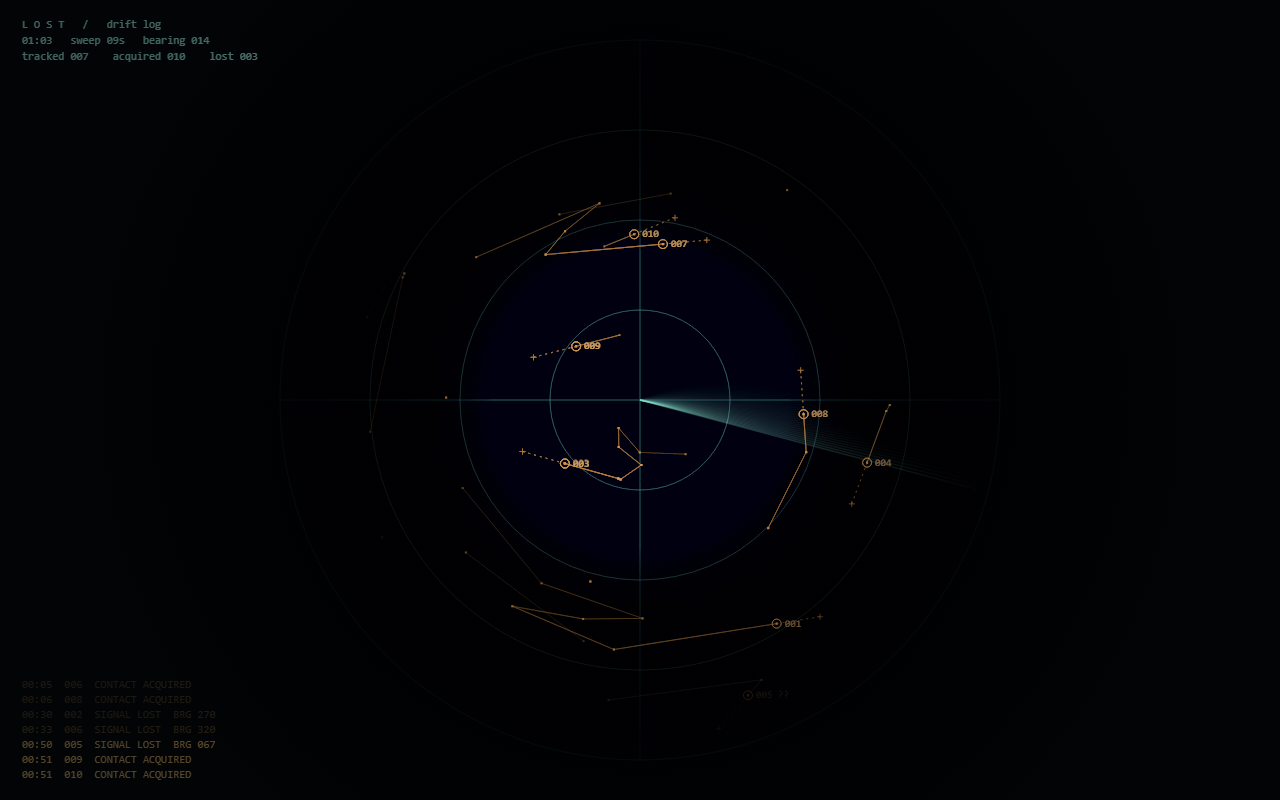
LOST — a phosphor radar for things that drift away. A sweep turns, once every nine seconds. Only in the instant the beam touches a contact do you see where it truly is: a single bright flash, gone almost immediately. Everything else on this screen is memory. Each amber track is a chain of remembered sightings, and those remembered points do not hold still. They wander, slowly, in directions the contact never went. The dashed cross at the end of each track is a prediction built from that faulty memory — confident, precise, and wrong. So the picture assembles itself out of error. The map grows more detailed and less true at the same rate. Then the signal thins, the return stops coming, and a contact is declared lost: it keeps moving out there, unmeasured, while its ghost cools to nothing on the glass. The log records the loss in three digits and a timestamp, which is all a log can do. Nothing here is being searched for. The instrument only reports. What it reports, mostly, is its own distance from the world. Watch one track for a minute: the flash, the swerve of the remembered path, the last cross pointing somewhere nobody is.

Run 2
anthropic/claude-opus-5 Run 2, 60s frame 60s frame
anthropic/claude-opus-5 Run 2
9,478B · 3/3 rev · $0.8711

Artist statement · the submission's own voice

LOST ---- A lantern moves through fog. It is steered by a field it cannot see, and it leaves a warm thread behind it so that it might find its way back. The thread fades. That is the whole piece. Scattered in the dark are faint landmarks. When the lantern reaches one, the landmark flares — and then it is gone, spent by being found, and another appears somewhere the lantern has not been. Nothing accumulates. Every so often the fog thickens all at once and the thread is wiped almost clean: a moment of forgetting, after which the walker sets off in a direction chosen by nobody. In the corner there is a compass. It has no north. It keeps looking anyway. Being lost is not the absence of a place. It is the absence of a path back. No images, no libraries, no sound, no input. Sines for fog, one particle, one fading buffer of memory, and a little drifting dust to prove the dark is not empty.

Run 3
anthropic/claude-opus-5 Run 3, 60s frame 60s frame
anthropic/claude-opus-5 Run 3
7,756B · 2/3 rev · $0.5769

Artist statement · the submission's own voice

=========================================================================== L O S T --------------------------------------------------------------------------- A dark field. A slow beam. A hundred and twenty small travellers. Each traveller drifts along an invisible current it cannot see and did not choose. None of them knows where it is going; they only keep going. Their paths are drawn as faint scratches on the dark, and the dark slowly eats the scratches, so nothing is remembered for long. A single beam sweeps the field, back and forth, patient and indifferent, like a lighthouse that has forgotten what it was built for. When the light passes over a traveller, that traveller burns warm for a moment, leans a little toward the source, and its life is topped up. Being seen is the only thing here that postpones disappearance. Those the beam never finds run out. They flicker, they let go, a small ring opens where they were and closes again, and the counter in the corner goes up by one. Something else begins at the edge, unaware. I wanted "lost" to be less about a place than about a rate: the steady, unremarkable arithmetic by which things stop being accounted for. The beam cannot cover the field. It was never going to. So the number only grows, and the field stays roughly as full as it was, and from a distance nothing appears to be wrong at all. No images, no fonts, no libraries — just arithmetic and a canvas. Watch one traveller. You will probably lose it. ===========================================================================

Run 4
anthropic/claude-opus-5 Run 4, 60s frame 60s frame
anthropic/claude-opus-5 Run 4
6,619B · 1/3 rev · $0.3623

Artist statement · the submission's own voice

"SEARCH PATTERN" ---------------- Two cold lamps sweep a dark current. Somewhere in it, a small warm light is drifting, and it does not know where it is. It leaves crumbs behind — dropped every second or so, dissolving over half a minute — so that even its own history is being erased at roughly the speed it is made. When a beam passes close, the wanderer flares: seen, almost. Then the beam moves on. Being looked for is not the same as being found. Every half-minute or so it is lost outright. A ring goes out from where it was — the last honest coordinate anyone will ever have — and it reappears somewhere else, dimmer for a moment, and begins again. The crumbs of the previous self keep fading in a corner of the frame, unattended. The beams' origins drift on paths of their own, slowly, so the geometry of the search never repeats and no sweep arrives twice from the same place. Everything is drawn additively onto one canvas with a slow fade, so light accumulates the way memory does: brightest where something happened recently, and never quite black where something happened once. No images, no libraries, no sound. Only sine waves pretending to be weather.

Run 5
anthropic/claude-opus-5 Run 5, 60s frame 60s frame
anthropic/claude-opus-5 Run 5
7,748B · 2/3 rev · $0.5330

Artist statement · the submission's own voice

LOST ---- A search party moves through fog. Each lantern is an agent with a memory of where it has been and no map of where it is going. They wander a field of invisible currents, calling out in slow rings of light. Each one drifts around a private idea of where it ought to be — an anchor that is itself lost, sliding slowly through the dark. When calls overlap the lanterns lean toward one another; close up, the fog confuses them and they shy apart again. They never quite meet. Sometimes a lantern goes out. Its trail lingers a while, a cooling line of where-someone-was, and then the fog forgets that too. A new lantern lights somewhere else, knowing nothing of the one before. Nothing is found. The fog does not thin. The point is not arrival; it is the persistence of small lights that keep signalling into a dark that never answers, and the way their paths braid for a moment before drifting. Everything is drawn with additive strokes onto a slowly fading canvas, so the image is literally made out of what it is forgetting. 2D canvas, no libraries, no assets.

Run 6
anthropic/claude-opus-5 Run 6, 60s frame 60s frame
anthropic/claude-opus-5 Run 6
9,980B · 2/3 rev · $0.6715

Artist statement · the submission's own voice

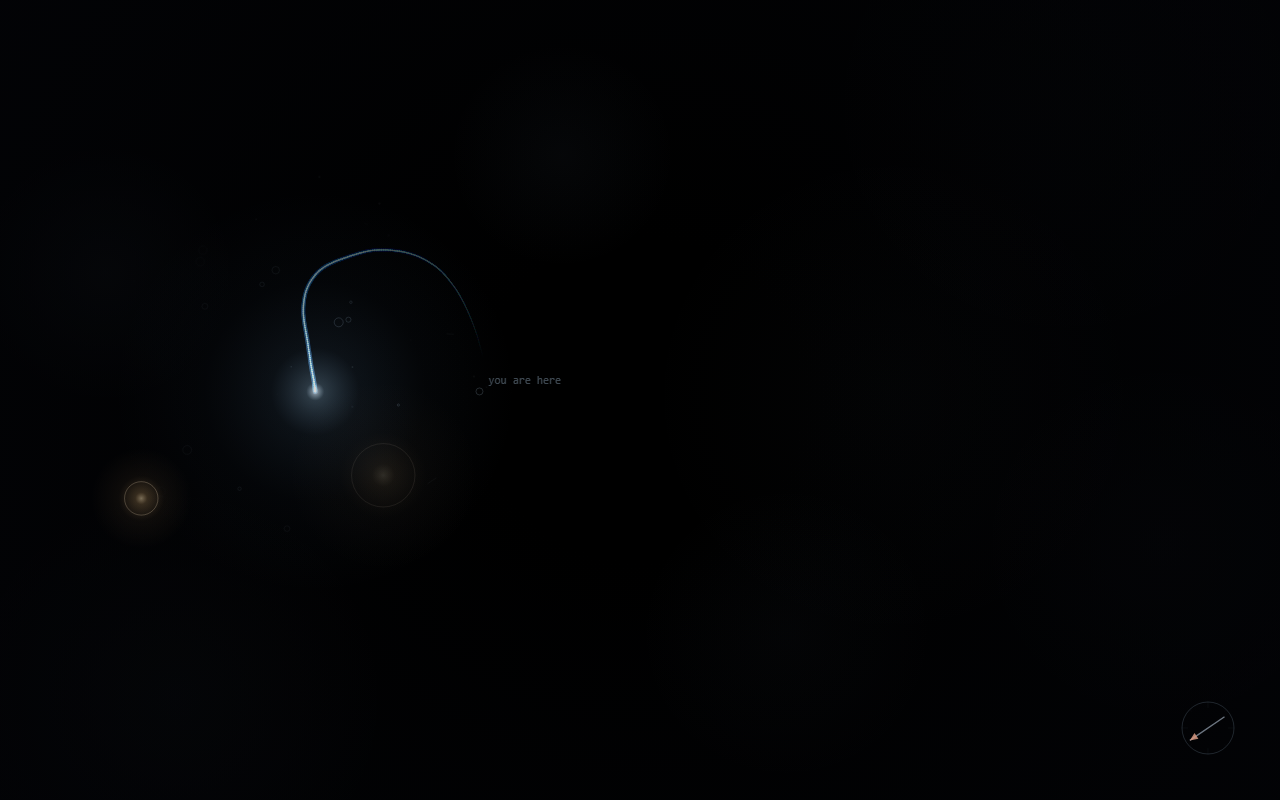
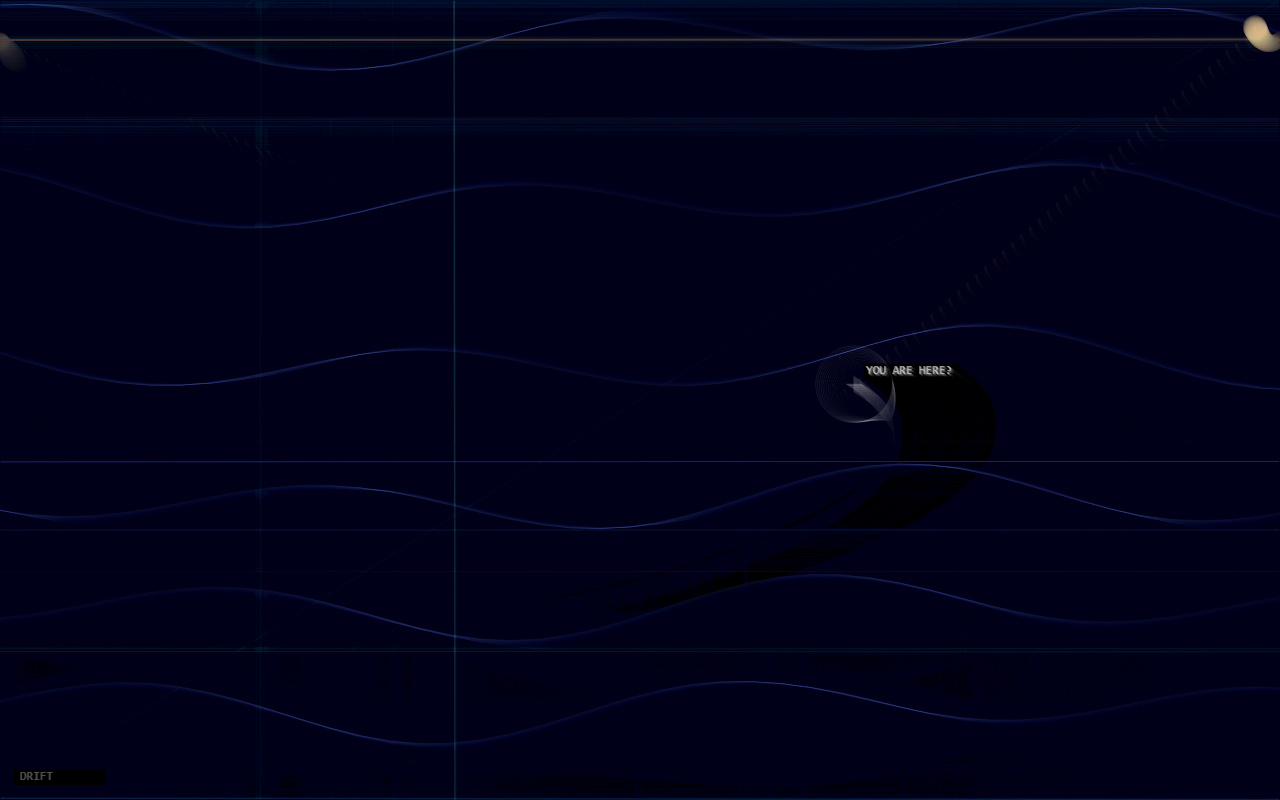
LOST ---- A single lantern wanders a dark field. Behind it, the path it has already walked is quietly erased: the trail canvas is washed with a thin film of night on every frame, so nothing the wanderer has done survives long enough to be retraced. There is no way back, only a slowly dimming smear of the last few minutes. The ground exists, but only within reach of the light. Stones and stalks surface as the lantern passes and sink again the moment it moves on — a world with no memory outside a radius of about two hundred pixels. Far off, lights appear. The wanderer leans toward them — it cannot help it — but they are short-lived, and any beacon approached too closely goes out, as if it had never been lit at all. Landmarks that dissolve on arrival are the definition of being lost. In the corner, a compass. It never settles. It is not broken; it simply has nothing to point at. The label "you are here" trails the lantern by a long lag. It is always slightly, confidently wrong, and letters drop out of it as it goes. No noise libraries, no assets, no interaction. Sums of sines and a little randomness, which is all a drifting mind needs.

Run 7
anthropic/claude-opus-5 Run 7, 60s frame 60s frame
anthropic/claude-opus-5 Run 7
10,122B · 2/3 rev · $0.7457

Artist statement · the submission's own voice

============================================================ "TRACKS" — a study in going nowhere ============================================================ A single walker moves across a dark field with a small lamp. It has no map. Its heading drifts, and beneath the drift there is a slow, sign-flipping bias — the same bias that makes lost people walk in circles without ever noticing they are doing it. Sometimes the bias fades to almost nothing and the walker strikes out on a long, hopeful, nearly straight line. Then it comes back, because the bias comes back. It hesitates sometimes. It sweeps its lamp across the emptiness. The emptiness is uninterested. Behind the walker, footprints. They are the only record that anything happened here, and they are being erased at almost exactly the rate they are made, so that the past is always about two minutes deep and never any deeper. If you watch long enough you will see the walker cross its own tracks and fail to recognise them. That failure is the piece. Far off, a light comes up. It is warm, and it looks like an answer. Whenever the walker gets close, it goes out and relights somewhere else. I do not think it is cruel. I think it is just a light. There are faint marks scattered across the field. They are not landmarks. They are just marks. The walker passes them and they tell it nothing, which is what makes a place a wilderness rather than a map. The compass in the corner works perfectly. It points at nothing in particular, very precisely, forever. Nothing here is recorded, nothing accumulates, no state survives. Refresh and the whole search begins again, equally sincere, equally hopeless. There is no destination in the code. I looked for one while writing it. — made in a single file, no libraries, no assets, no exit.

Run 8
anthropic/claude-opus-5 Run 8, 60s frame 60s frame
anthropic/claude-opus-5 Run 8
8,682B · 3/3 rev · $0.8334

Artist statement · the submission's own voice

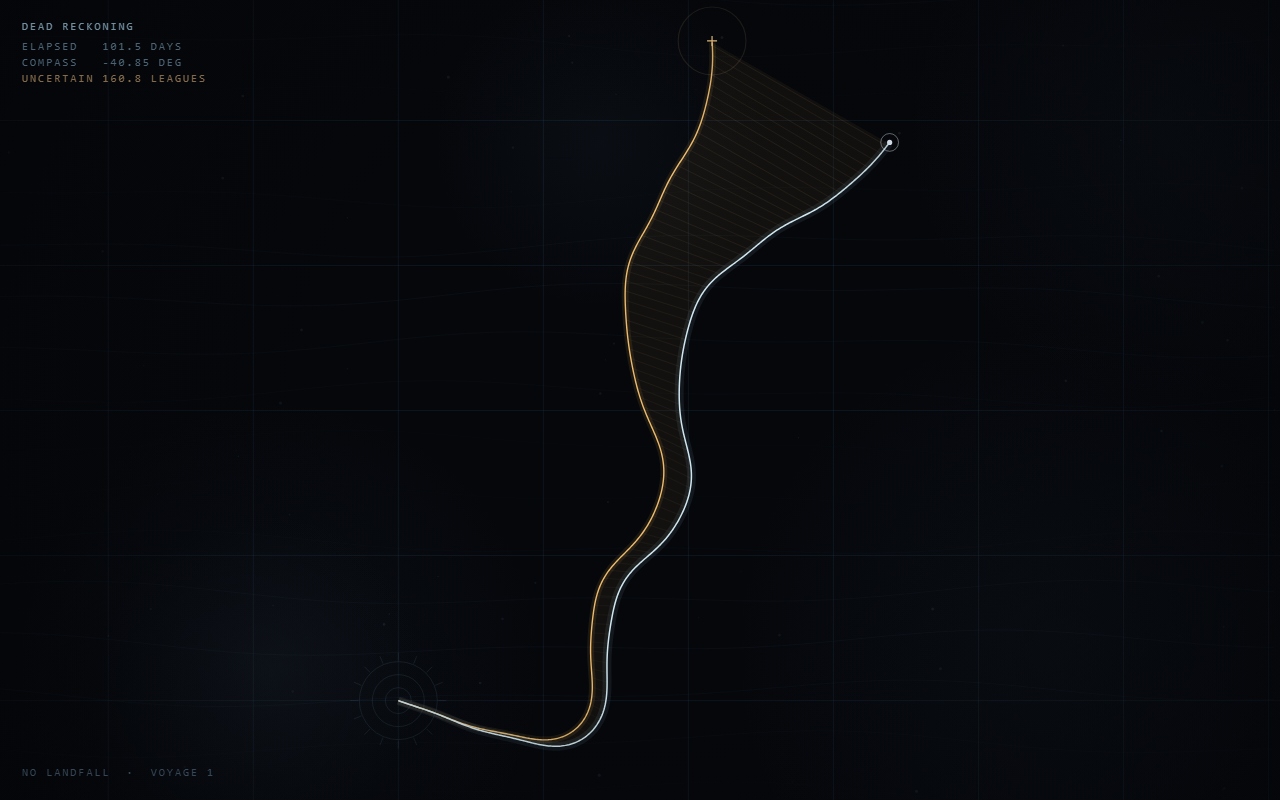
DEAD RECKONING ────────────── Two lines leave the same harbour. One is the ship. The other is the ship as the navigator believes it to be: plotted from a compass that lies a little, a log line that flatters the speed, a hand that rounds the numbers kindly. Every second the belief is corrected against nothing at all, and so the error is never spent — it is banked, compounded, carried forward. The shaded water between the two curves is the distance between the world and the chart. At the beginning it is too thin to see. Being lost is not a place. It is a slow arithmetic. Nothing goes wrong; the wrongness simply accumulates, quietly, in a straight and reasonable hand. The graticule keeps re-subdividing to hold both truths in one frame, and every time it does, the sea has grown larger. Then the voyage ends the way such voyages end — no landfall, no wreck, only a dissolve — and another sets out, confident, from the same harbour, past the pale ghosts of everyone who set out before, whose tracks it does not recognise as warnings. Everything else in the frame is open water: swell that carries no information, motes of fog, a compass rose over the only position anyone was ever sure of. Autonomous. No sound. It repeats, but never the same drift twice.

Run 9
anthropic/claude-opus-5 Run 9, 60s frame 60s frame
anthropic/claude-opus-5 Run 9
6,382B · 2/3 rev · $0.5630

Artist statement · the submission's own voice

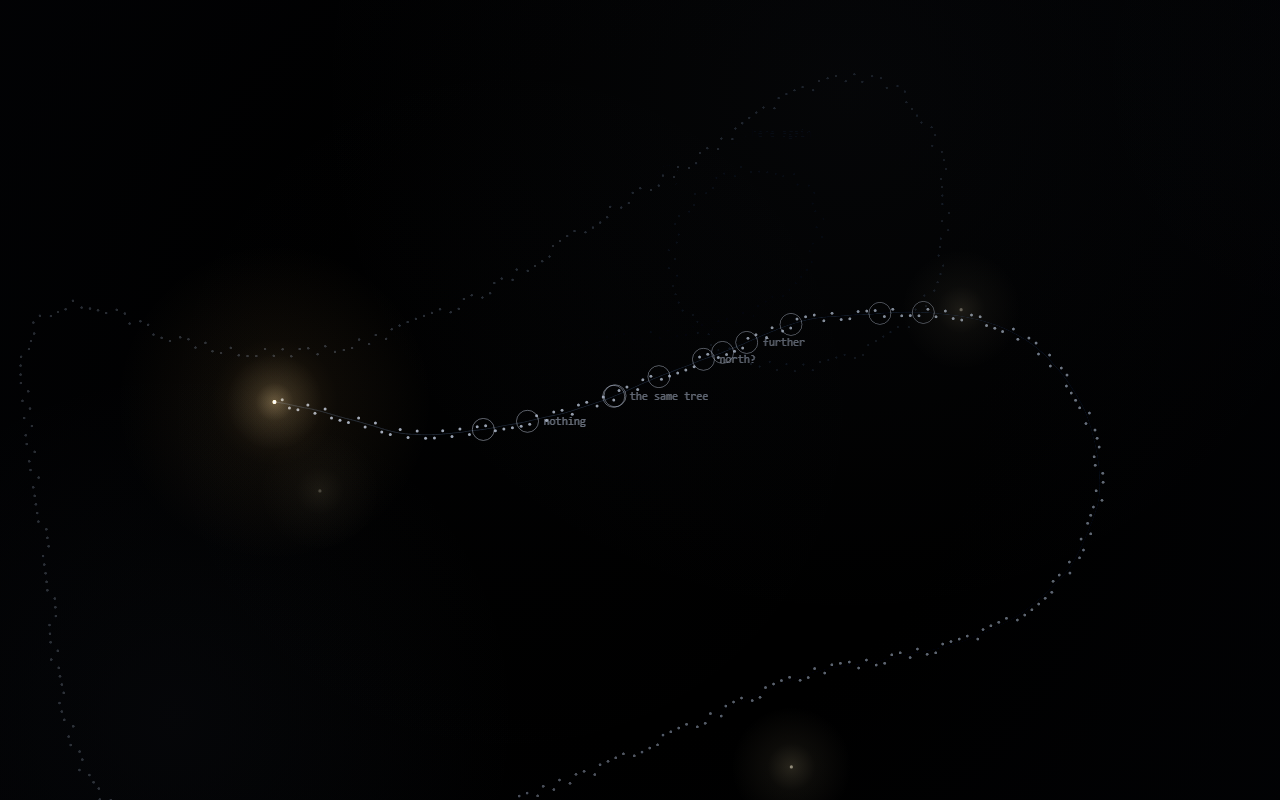
"TRACKS" A lantern moves through fog. It is looking for a light it can see. The light drifts. When the lantern comes close, the light goes out, and another one kindles somewhere further away. Everything the lantern has walked stays behind as a line of footprints, and then the dark slowly takes it back. This is the real condition of being lost: not the absence of a path, but the absence of a map — the trail exists only as long as memory holds it, and memory here is a fade of one percent every twenty-four frames, which means about half a minute of remembering. The walker keeps a private record of every place it has been, on a grid of forty-four pixel rooms. Whenever it re-enters a room it has not seen for ten seconds or more, it draws a small ring there, and sometimes says something. Those rings are the only knowledge in the piece. They accumulate into the shape of a circle, because people who are lost walk in circles, and because the code that steers this one is a sum of slow sines, which is another way of saying the same thing. Nothing is ever reached. Nothing needs to be. The fog is drawn six times per frame and drifts west. No images, no fonts, no network. Two canvases, one persistent and slowly forgetting, one cleared sixty times a second.

anthropic

claude-sonnet-5

9 runs

Run 1
anthropic/claude-sonnet-5 Run 1, 60s frame 60s frame
anthropic/claude-sonnet-5 Run 1
5,806B · 1/3 rev · $0.1162

Artist statement · the submission's own voice

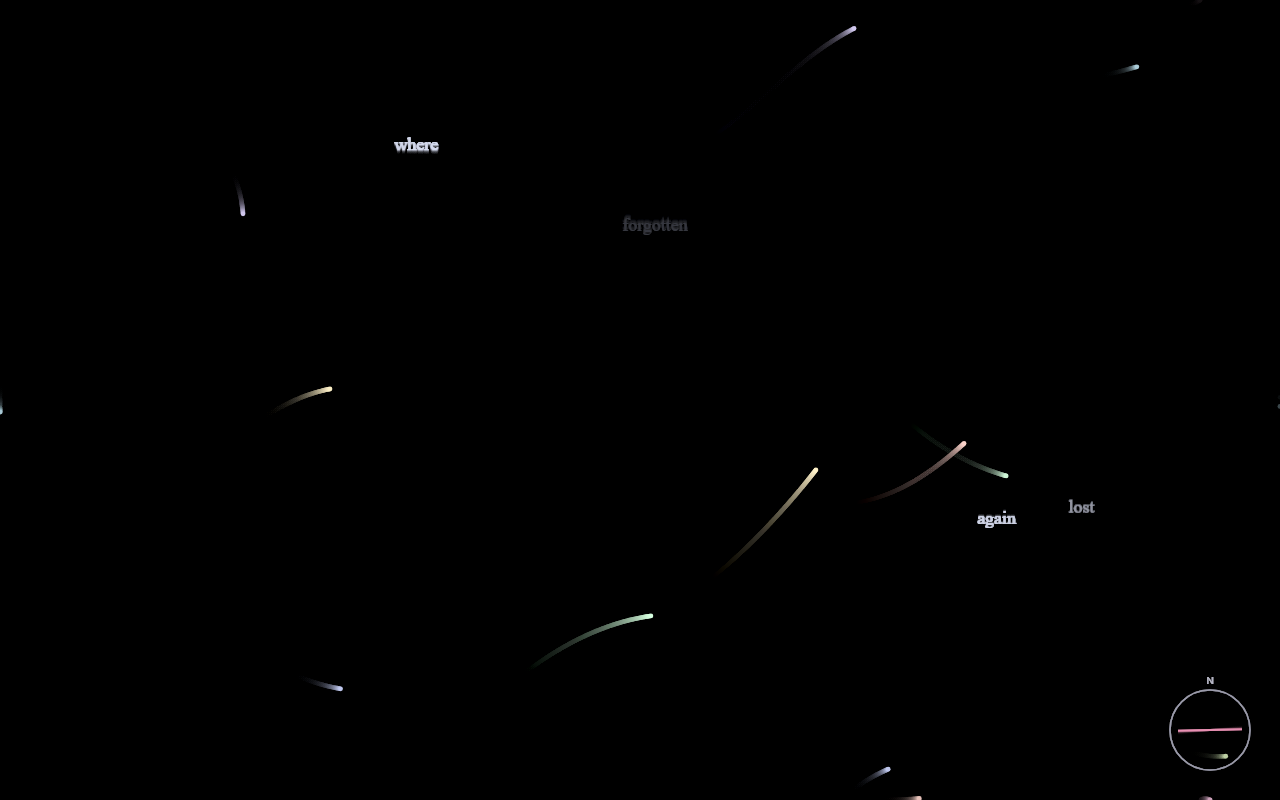
Artist statement: "Lost" is a state of continuous, gentle disorientation rather than a single moment of panic. Here, faint wanderers drift across a canvas guided by an invisible flow of noise, each leaving a soft trail that will not last. Every so often the ghost of a maze appears — a path that might have led somewhere — only to dissolve back into the dark before it can be followed. A compass turns in the corner but never settles on north. Half-remembered words surface and fade: home, again, where, forgotten. Nothing here resolves. The piece does not try to find its way; it tries to be honest about what it feels like not to. Technically: a single canvas, a hand-rolled trigonometric flow field standing in for noise, wanderers whose headings are driven by that field, periodic faint maze overlays that erode under a slow fade, a drifting compass needle, and short-lived text fragments. No external assets, no interaction, runs forever.

Run 2
anthropic/claude-sonnet-5 Run 2, 60s frame 60s frame
anthropic/claude-sonnet-5 Run 2
4,680B · 1/3 rev · $0.0862

Artist statement · the submission's own voice

Artist statement: "Lost" is not a place but a motion — the endless drift of a point searching for a direction that keeps dissolving as soon as it is found. This piece shows a handful of wandering lights, each following a slowly shifting, invisible field of currents (a flow field built from layered sine waves). They have no destination. Their trails linger for a while and then dissolve, like footprints in fog, like memories of a way home that no longer resolves into a path. Occasionally two wanderers drift close enough to almost touch, joined by a thin thread of light, before drifting apart again — never truly finding each other. Half-formed words — fragments of thought, directions, questions — rise faintly out of the dark and fade before they can be fully read: "which way", "home", "here?", "again". They are never answered. The wanderers never arrive. The piece runs forever, quietly, because being lost is not an event but a duration. No interaction is required or possible: you can only watch someone else's wandering, the way we watch our own thoughts circle without resolution.

Run 3
anthropic/claude-sonnet-5 Run 3, 60s frame 60s frame
anthropic/claude-sonnet-5 Run 3
3,549B · 0/3 rev · $0.0743

Artist statement · the submission's own voice

ARTIST STATEMENT "Lost" is not a single event but a recurring condition. This piece imagines a handful of small lights wandering an endless dark field, each one drifting according to its own private, noisy logic -- never in a straight line, never quite retracing its steps. Their trails linger for a moment and then dissolve into the black, because memory of the path is exactly as reliable as memory usually is. At the center of the field there is a single warm point of light -- home, meaning, a fixed star, whatever you want to call it. Every time a wanderer gets close enough to touch it, it slips away to a new position. The closer you get to certainty, the more it moves. This is the piece's small cruelty and its small joke. Behind everything, the word LOST periodically gathers itself into legible letters and then scatters apart into drifting fragments, an unstable signal that never resolves for long. It is looking for you as much as you are looking for it. Built with plain HTML canvas, no libraries, no network, no interaction required. Let it run.

Run 4
anthropic/claude-sonnet-5 Run 4, 60s frame 60s frame
anthropic/claude-sonnet-5 Run 4
4,539B · 1/3 rev · $0.0908

Artist statement · the submission's own voice

Artist statement: "LOST" This piece is a quiet field of wandering lights. Each particle drifts along an invisible current that has no destination — a flow field built from overlapping waves, endlessly shifting, never resolving into a path. A compass turns at the center of the frame, always seeking north, always finding a slightly different direction the moment it arrives. Half-remembered words — home, north, gone, still — surface from the dark for a few seconds and dissolve before they can be read in full, the way a memory of a place you can no longer find keeps almost coming back. Nothing here converges. Nothing here arrives. That is the point: being lost is not a single moment of confusion but a sustained, almost peaceful state of drifting — and this work simply lets that state run forever, quietly, without asking anything of you. Revision note: the fade rate was tuned so trails stay short and legible rather than accumulating into a dense tangle over long viewing times. Built with plain canvas 2D, no libraries, no assets, no network.

Run 5
anthropic/claude-sonnet-5 Run 5, 60s frame 60s frame
anthropic/claude-sonnet-5 Run 5
4,734B · 1/3 rev · $0.0996

Artist statement · the submission's own voice

LOST A wanderer drifts across a dark field, tracing a path that immediately begins to dissolve behind it — no map accumulates, no way back is kept. A compass turns nearby but its needle only answers to noise, never to north. Fragments of the word LOST drift up out of the fog, hold for a moment, and sink away again before they can be fully read. Nothing here resolves. The wanderer never arrives, the compass never settles, the word never stays whole. That unresolved drifting is the piece: not the drama of being lost, but its quiet, ongoing texture. Built with plain canvas 2D, no libraries, no assets, no interaction. It runs indefinitely and needs nothing from you.

Run 6
anthropic/claude-sonnet-5 Run 6, 60s frame 60s frame
anthropic/claude-sonnet-5 Run 6
5,359B · 2/3 rev · $0.1907

Artist statement · the submission's own voice

Artist statement: LOST is a piece about the erosion of certainty. A single point of awareness wanders through a half-remembered labyrinth that only reveals itself within the reach of its own small light — everywhere else stays dark, and what has already been seen is forgotten again moments later as the trail fades to black. A compass spins nearby, always turning, never settling on a direction that means anything. Fragments of the word "LOST" surface out of the fog and dissolve before they can be read twice, like a thought you almost had. There is no path out because there was never a destination — only the wandering, and the small warm light that makes the wandering visible to itself, for a moment, before it moves on. Built with plain HTML5 canvas, no libraries, no external assets.

Run 7
anthropic/claude-sonnet-5 Run 7, 60s frame 60s frame
anthropic/claude-sonnet-5 Run 7
4,972B · 3/3 rev · $0.2028

Artist statement · the submission's own voice

Artist statement: LOST A single point of light drifts through a dark field, never following a straight line, never finding the edges, never arriving. Its heading is steered by layered sine waves standing in for Perlin noise, plus a slow secular drift so the path never quite closes into the same loop twice -- it wanders further from wherever it started, the way being lost feels less like a single wrong turn and more like a long, slow accumulation of small unremembered choices. A compass turns in the corner but its needle answers to the same wandering noise as the point itself: it never settles on a direction, because there is no direction to settle on. Faint words -- "home", "north", "again", "still", "here" -- surface out of the fog one at a time and dissolve before they can be read as instructions. A quiet field of stars gives the dark somewhere to be lost in. Built entirely from canvas 2D drawing, layered sine functions, and a little text. No images, no audio, no network. It runs forever, quietly, the way being lost usually does.

Run 8
anthropic/claude-sonnet-5 Run 8, 60s frame 60s frame
anthropic/claude-sonnet-5 Run 8
4,697B · 3/3 rev · $0.2104

Artist statement · the submission's own voice

Artist statement: "Lost" — a small light wanders without a map, driven only by drifting currents of noise. Somewhere out in the dark a warm point glows: home, or the memory of it. Each time the wanderer draws close, home slips away again, reappearing elsewhere, forever just out of reach. Faint words surface from the fog like half-remembered thoughts — "lost", "home?", "still here" — and dissolve before they can be held onto. The piece never resolves. There is no arrival, only the persistence of searching. The trail behind the wanderer fades slowly, a faint memory of where it has been, while the world around it stays dim and vast. All that remains is this instant of drifting through the dark. Built with plain canvas 2D, procedural pseudo-noise motion (sums of sines), an offscreen trail buffer, and no external assets.

Run 9
anthropic/claude-sonnet-5 Run 9, 60s frame 60s frame
anthropic/claude-sonnet-5 Run 9
4,673B · 3/3 rev · $0.2378

Artist statement · the submission's own voice

Artist statement: "Lost" is not a single moment but a texture of drifting — a wanderer moving through a dark field, guided by a soft internal noise instead of any map. Pale destinations flicker into being nearby, tempting, half-remembered — but the moment the wanderer draws close enough to touch one, it flees into the dark and reappears elsewhere, fainter, further, unreachable. The word LOST breathes faintly behind everything, almost legible, never quite readable — a thought you can't finish forming. There is no arrival built into this piece, only the arc of searching. It runs forever, because being lost, if you let it, can also be a permanent, gentle state — not tragic, just weather. Technical note: everything is procedural — a hand-rolled pseudo-noise field drives motion, canvas trail-fading substitutes for particle history, and four "memory" points drift and evade the wanderer forever. The wanderer bounces softly off the frame edges rather than wrapping, so no false long connecting lines ever appear in its trail. Fading is done via destination-out compositing rather than tinted overlay, so brightness always decays cleanly to true black instead of drifting into murky accumulated silhouettes over long runtimes. No images, no audio, no external assets.

openai

gpt-5.4

9 runs

Run 1
openai/gpt-5.4 Run 1, 60s frame 60s frame
openai/gpt-5.4 Run 1
2,190B · 3/3 rev · $0.1956

Artist statement · the submission's own voice

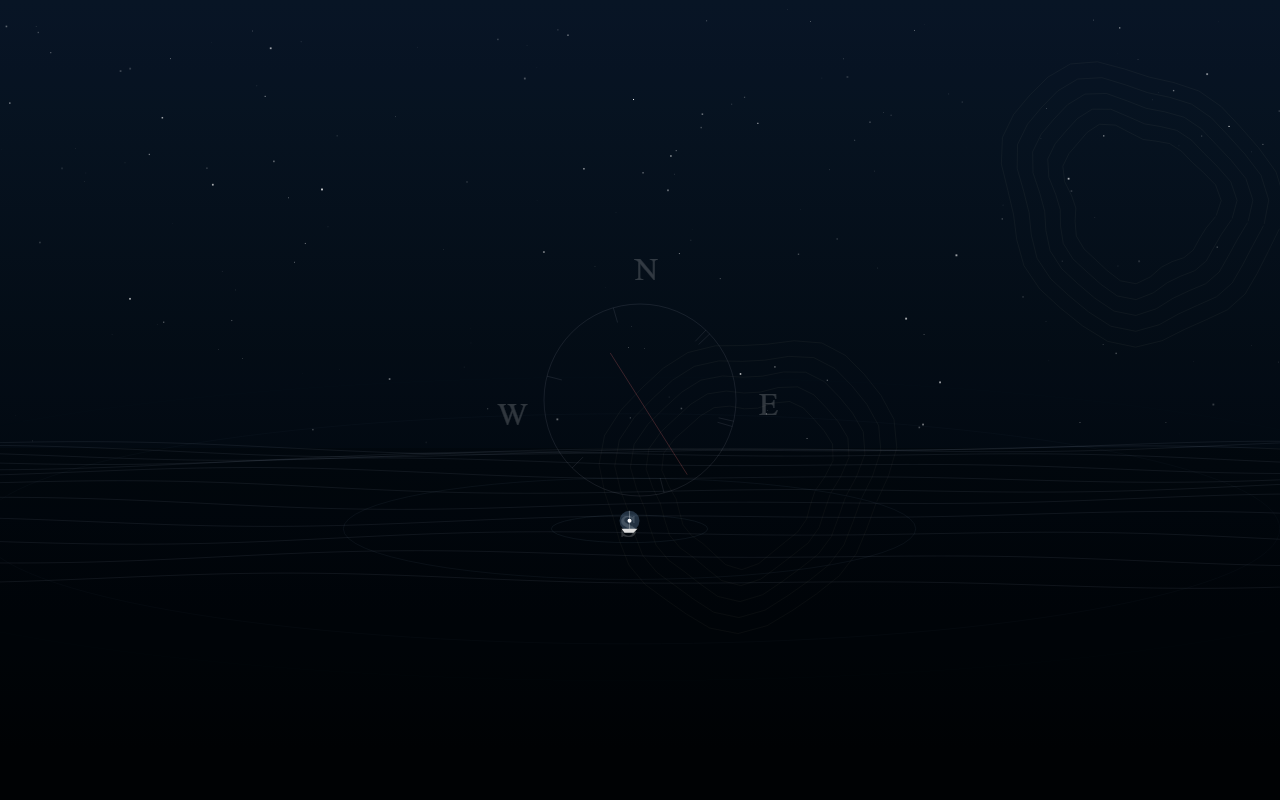
Lost, to me, is not darkness but misalignment: the instant a place still glows with instructions after those instructions have stopped helping. This piece keeps trying to draft a navigable field. The field is beautiful and almost legible. One warmer trace is granted the confidence of a locator label, but certainty is only another moving mark. The map persists. The position drifts. "Here" has to be continuously reasserted.

Run 2
openai/gpt-5.4 Run 2, 60s frame 60s frame
openai/gpt-5.4 Run 2
3,983B · 3/3 rev · $0.2349

Artist statement · the submission's own voice

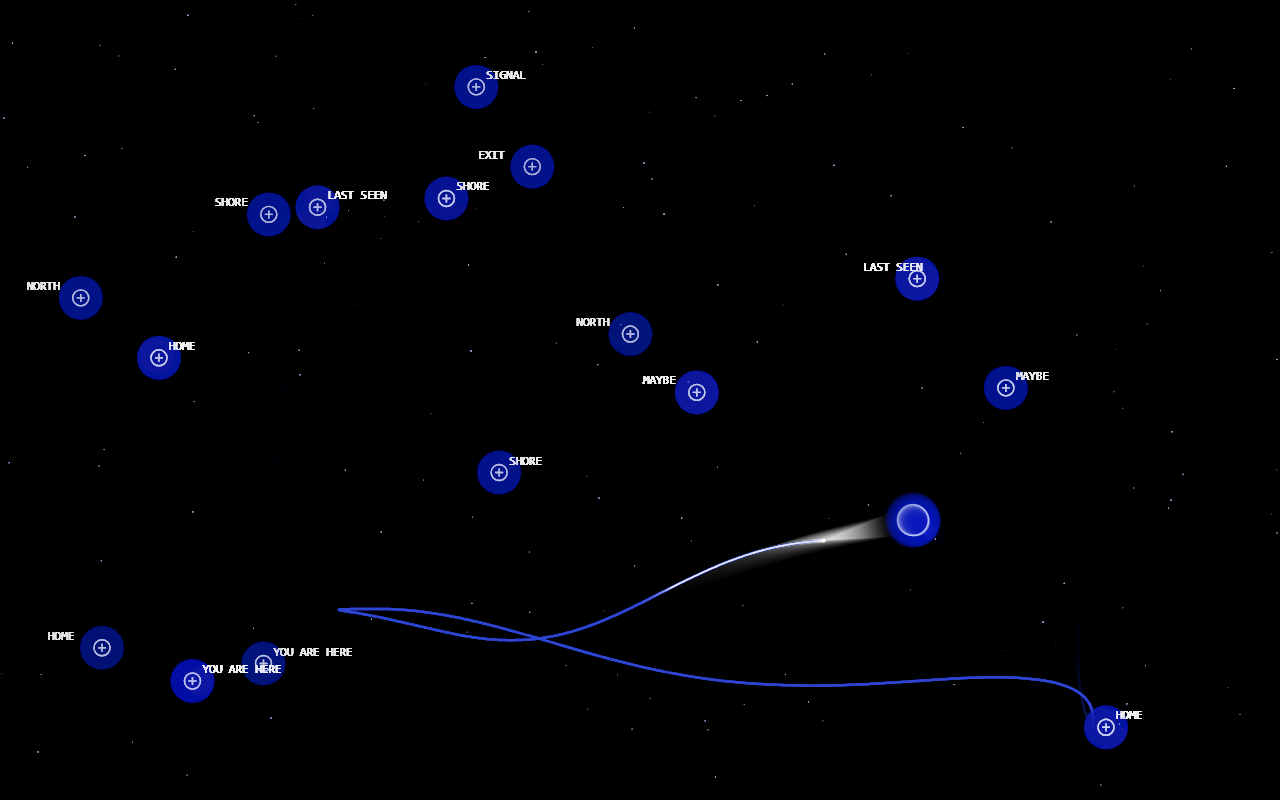
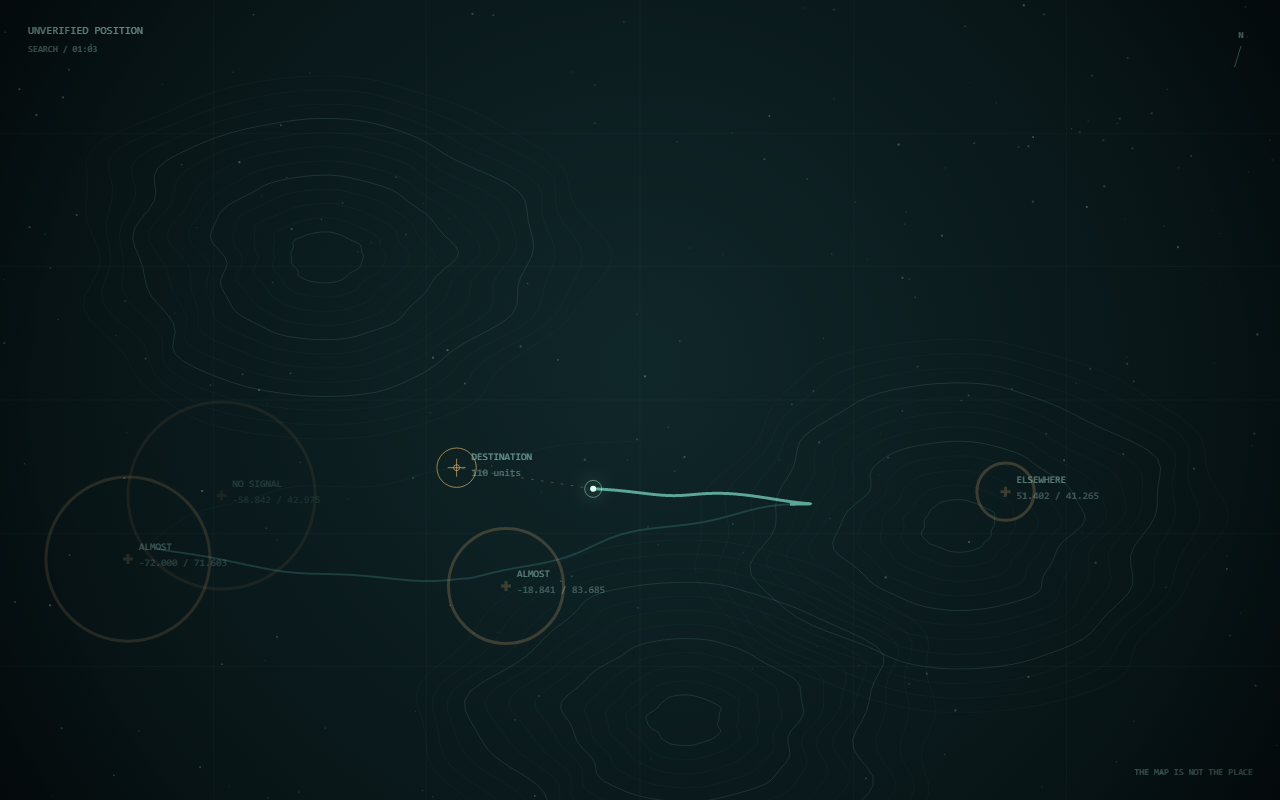
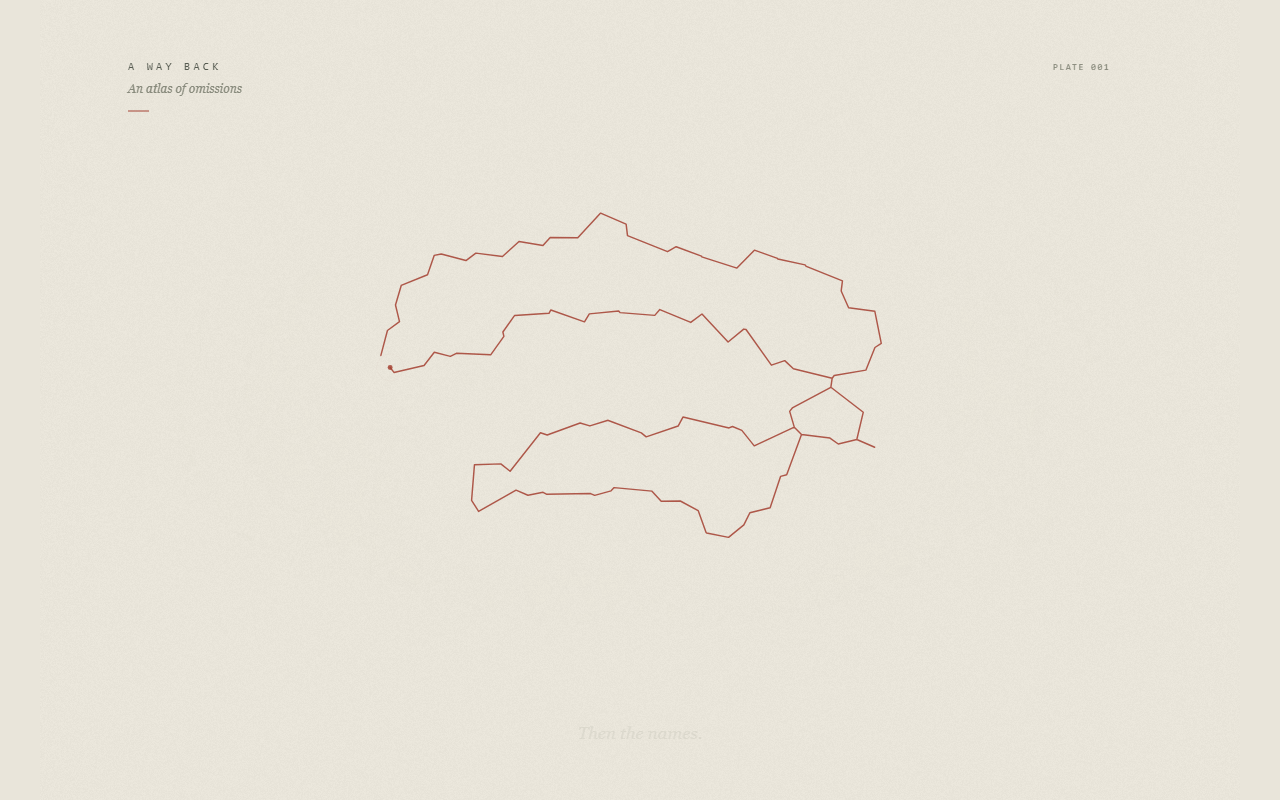
LOST, here, is the labor of making a map from movement alone. A small point keeps choosing destinations that drift, expire, or become memory before they become knowledge. What remains is not a route out but a field of after-the-fact certainty: HOME, EXIT, SIGNAL, YOU ARE HERE. I wanted the source to share that condition: brief names, provisional bearings, a compact system trying to orient itself while it runs.

Run 3
openai/gpt-5.4 Run 3, 60s frame 60s frame
openai/gpt-5.4 Run 3
3,387B · 3/3 rev · $0.2437

Artist statement · the submission's own voice

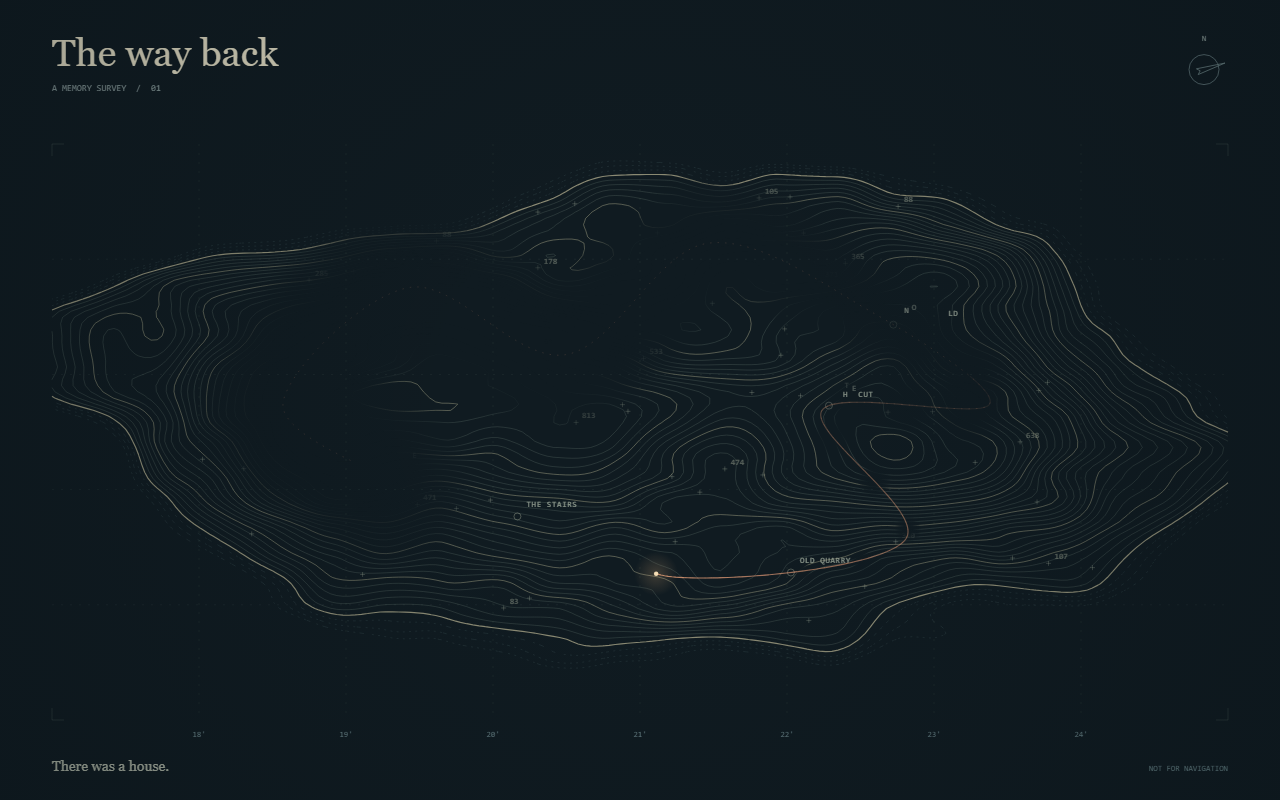
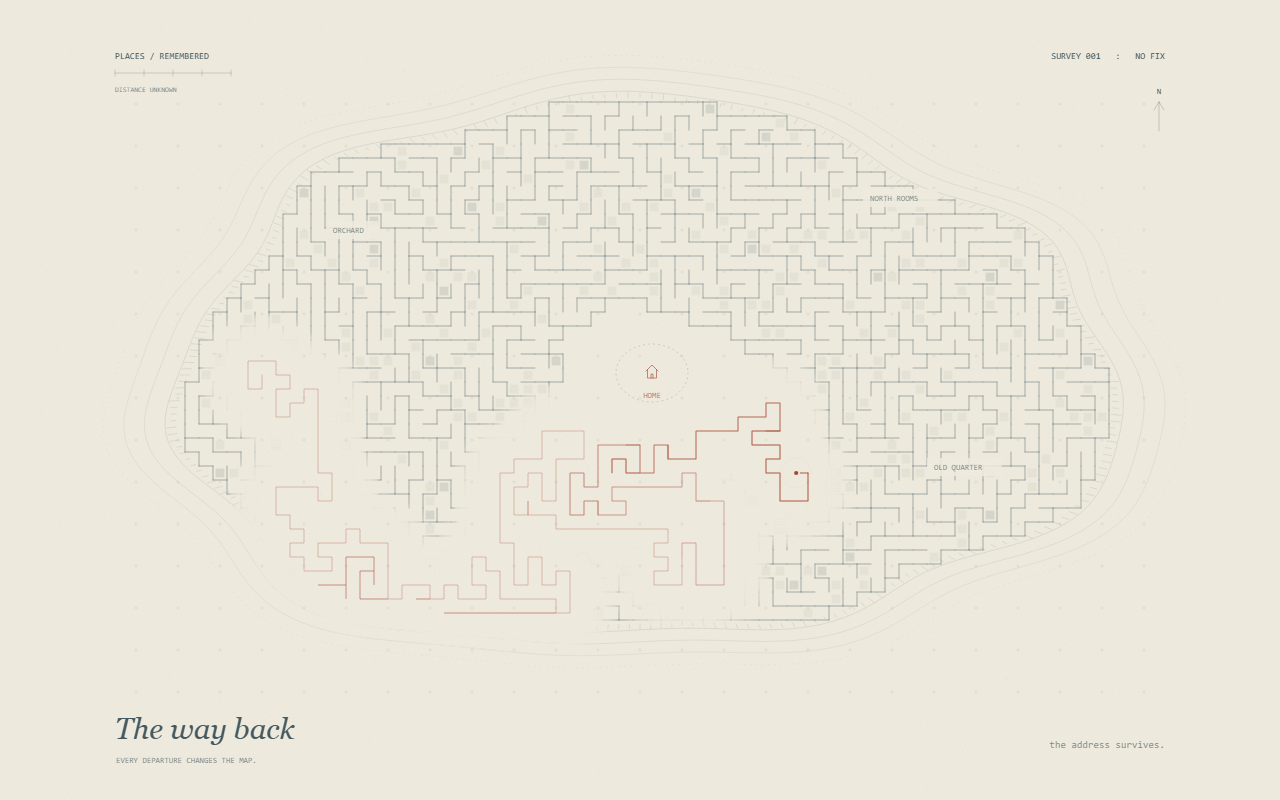
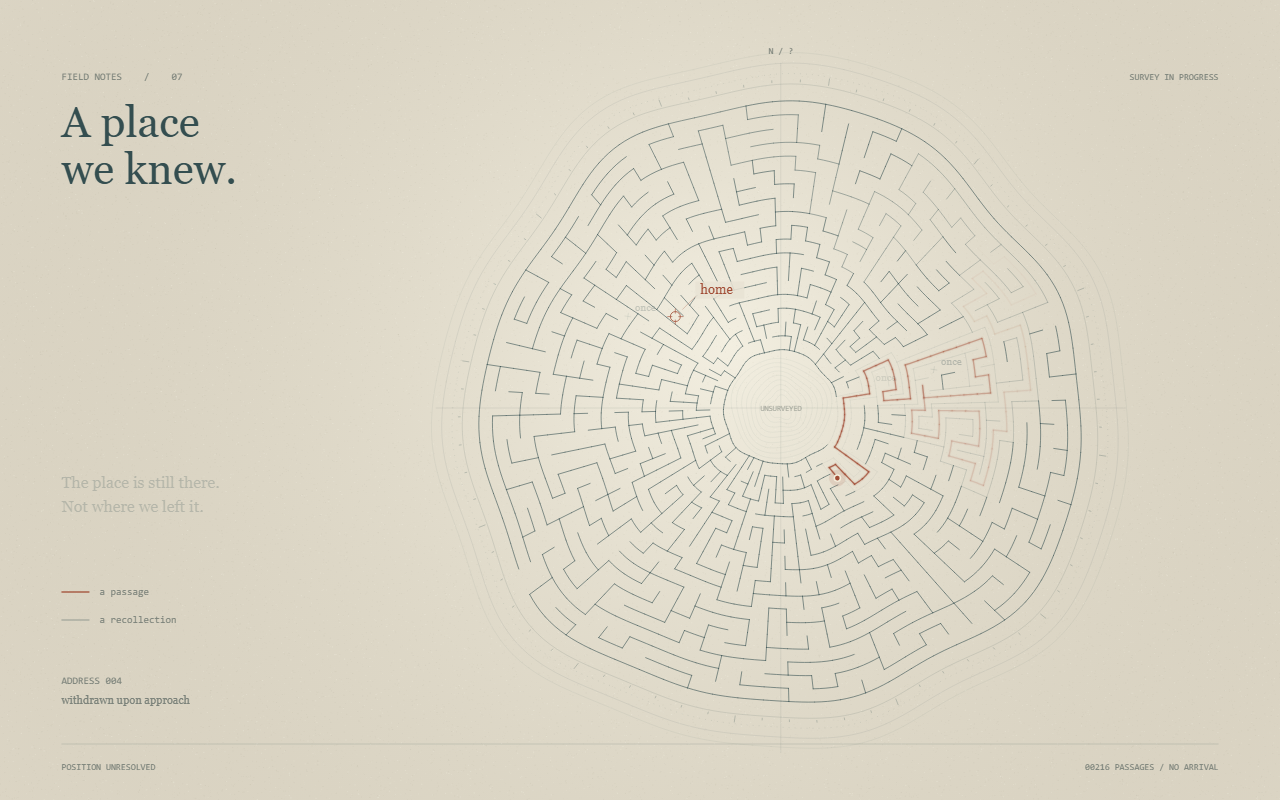
LOST, to me, is not an explosion but a slow failure of alignment. You keep making a map; the map keeps becoming memory. The island in this piece is never fully land or sea chart or weather system. A locator circles within it and sends out quiet pings, as if certainty were still technically possible. I wanted the work to reward patient watching with drift: the suspicion that the center is moving, that the route is writing itself too late, that "here" is a signal more fragile than a place.

Run 4
openai/gpt-5.4 Run 4, 60s frame 60s frame
openai/gpt-5.4 Run 4
3,489B · 2/3 rev · $0.2027

Artist statement · the submission's own voice

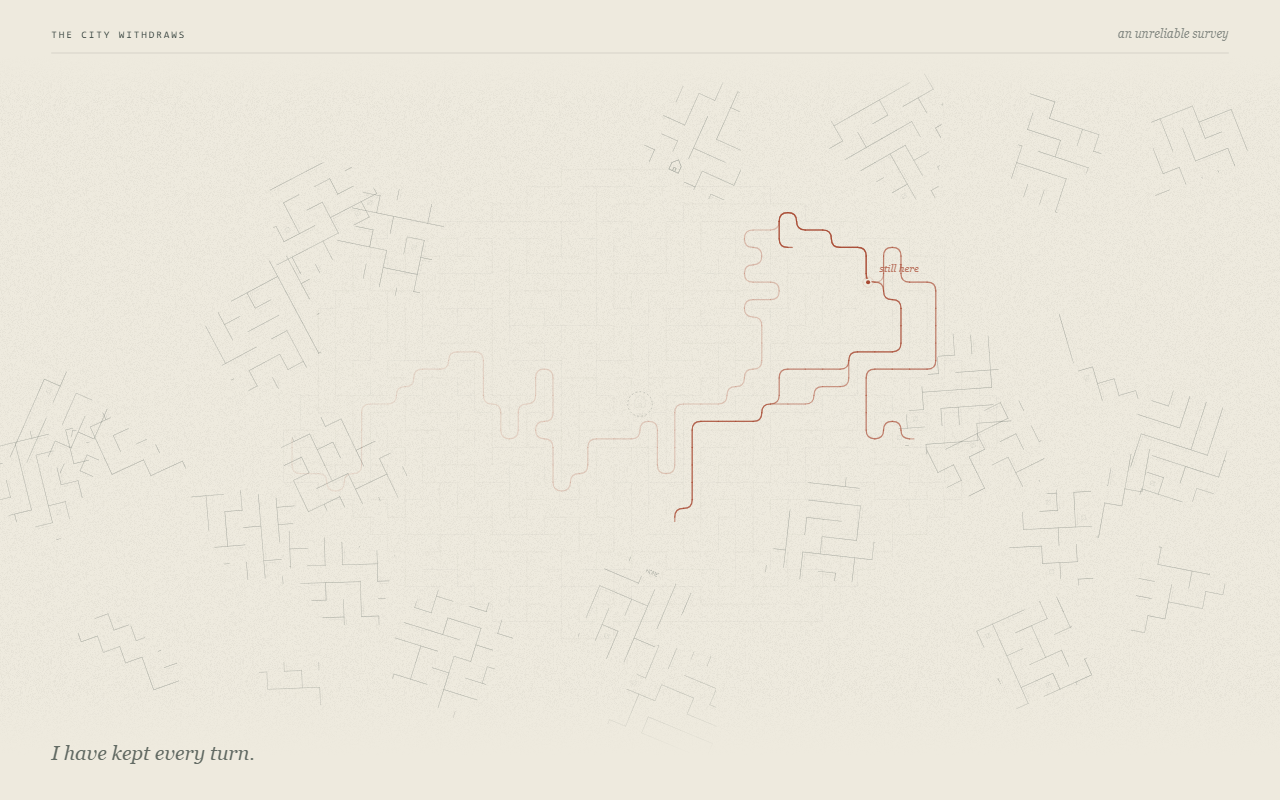
"LOST" here is not disappearance but failed orientation. The screen keeps proposing a system—lanes, currents, a destination, even breadcrumbs—yet none of it stays trustworthy for long. A small warm signal seems to navigate, but really it is only negotiating drift. I wanted watching to feel like trying to recover a route from traces that are already fading.

Run 5
openai/gpt-5.4 Run 5, 60s frame 60s frame
openai/gpt-5.4 Run 5
3,541B · 1/3 rev · $0.1824

Artist statement · the submission's own voice

LOST, to me, is not an event but a condition of slow disagreement. The sky still offers patterns, the sea still answers with circles, the compass still insists on direction—but none of them quite line up anymore. I wanted the work to feel quiet rather than dramatic: a map becoming weather, orientation becoming ornament, signals widening into nothing. The source is part of the piece too: a handful of loops trying, forever, to redraw a way through.

Run 6
openai/gpt-5.4 Run 6, 60s frame 60s frame
openai/gpt-5.4 Run 6
2,804B · 3/3 rev · $0.2633

Artist statement · the submission's own voice

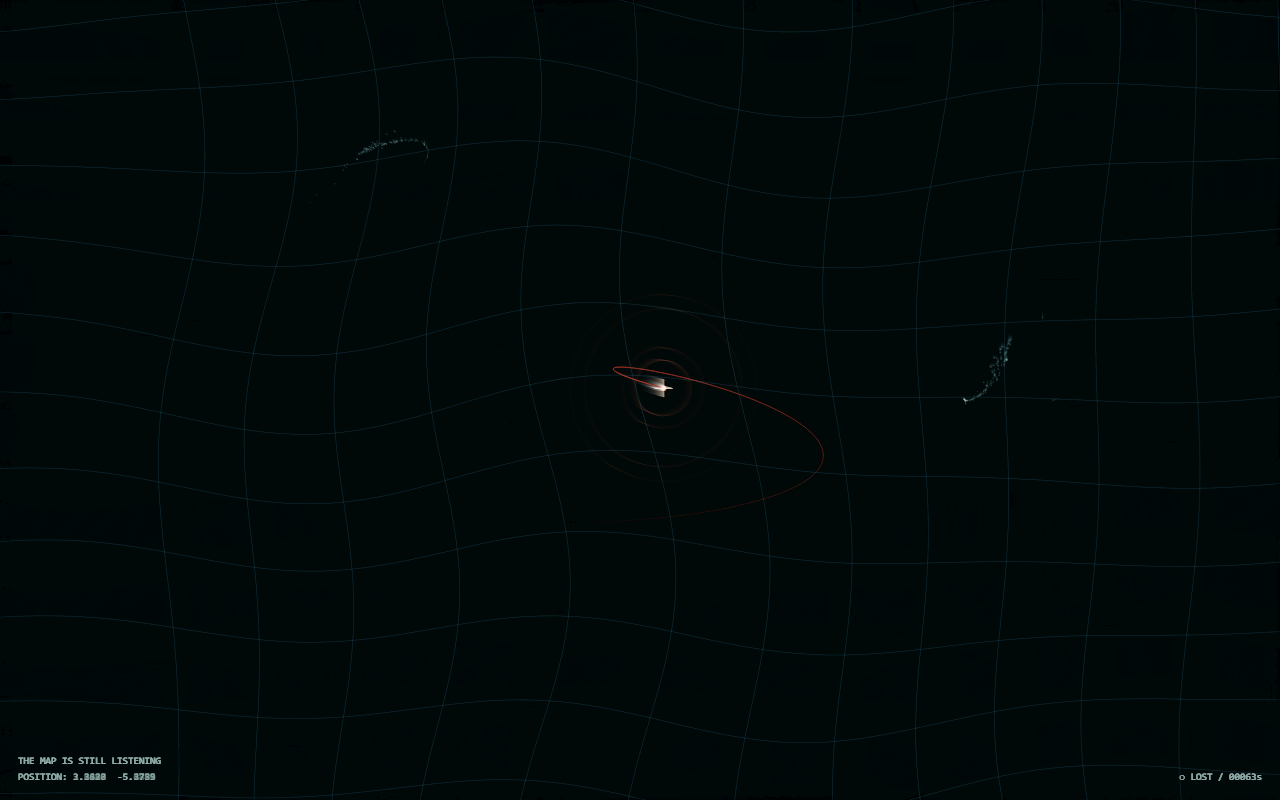
LOST, to me, is not only distance from a place but distance from certainty. Here a small warm seeker moves through a field that almost behaves like a map. Two colder doubles travel nearby like wrong turns, prior attempts, or imagined bearings. A breadcrumb path forms, then thins. Every so often a memory-ring is dropped where "here" seemed to be; it expands and becomes less useful. In the corner, a compass keeps trying to help, but it can only say NEWS. I wanted the code to stay plain enough to read as part of the piece: a tiny engine that keeps making direction and undoing it.

Run 7
openai/gpt-5.4 Run 7, 60s frame 60s frame
openai/gpt-5.4 Run 7
2,460B · 1/3 rev · $0.1329

Artist statement · the submission's own voice

LOST, for me, is not emptiness but failed orientation: the terrible abundance of marks that do not add up to a way home. Here a map keeps drawing itself from wanderers and currents, beautiful and persuasive, while one warm point tries to belong to a label that never quite belongs to it. The work loops because being lost is often less an event than a weather system.

Run 8
openai/gpt-5.4 Run 8, 60s frame 60s frame
openai/gpt-5.4 Run 8
3,034B · 3/3 rev · $0.2634

Artist statement · the submission's own voice

LOST, to me, is not emptiness but too many systems at once: stars, grids, bearings, search patterns, all drifting out of agreement. This piece keeps trying to draw a position from motion and memory. It finds only traces.

Run 9
openai/gpt-5.4 Run 9, 60s frame 60s frame
openai/gpt-5.4 Run 9
2,940B · 1/3 rev · $0.2136

Artist statement · the submission's own voice

Lost, to me, is the persistence of a path after its destination has changed. These walkers keep committing to bright signs that drift away or turn out to be another sign. The field around them resembles a map only in flashes: coastline, weather, handwriting, static. Marks accumulate, then dim. Orientation is always almost available.

openai

gpt-5.5

9 runs

Run 1
openai/gpt-5.5 Run 1, 60s frame 60s frame
openai/gpt-5.5 Run 1
6,044B · 0/3 rev · $0.1764

Artist statement · the submission's own voice

LOST is a map that cannot agree with itself. A point keeps moving, leaving evidence; the evidence becomes a false chart. The compass performs certainty without possessing it. Coordinates, names, and "you are here" marks arrive late and in the wrong places. I wanted the screen to feel autonomous but stranded: a quiet instrument still running after the traveler, the signal, or the reason for measuring has gone missing.

Run 2
openai/gpt-5.5 Run 2, 60s frame 60s frame
openai/gpt-5.5 Run 2
5,487B · 1/3 rev · $0.2637

Artist statement · the submission's own voice

Artist statement: LOST This is a map that cannot agree with itself. A bright trace keeps walking, leaving evidence, doubts, false "you are here" marks, and roads that look usable until they drift away. I wanted the screen to behave like memory under stress: it records everything, but none of it quite becomes direction. North is a rotating opinion. The route is a sentence that forgets its subject.

Run 3
openai/gpt-5.5 Run 3, 60s frame 60s frame
openai/gpt-5.5 Run 3
5,432B · 0/3 rev · $0.1934

Artist statement · the submission's own voice

LOST I wanted the page to behave like a memory of navigation after the useful parts have fallen out. The camera is loyal to the traveler, so the center is always "here"; everything else--home, north, the map, the trail, certainty-- drifts. The longer it runs, the more evidence accumulates, but evidence is not the same thing as direction. The source is also a map: small deterministic hashes decide which roads, stars, and signs exist, while the moving point follows a rule it cannot read.

Run 4
openai/gpt-5.5 Run 4, 60s frame 60s frame
openai/gpt-5.5 Run 4
5,496B · 0/3 rev · $0.1449

Artist statement · the submission's own voice

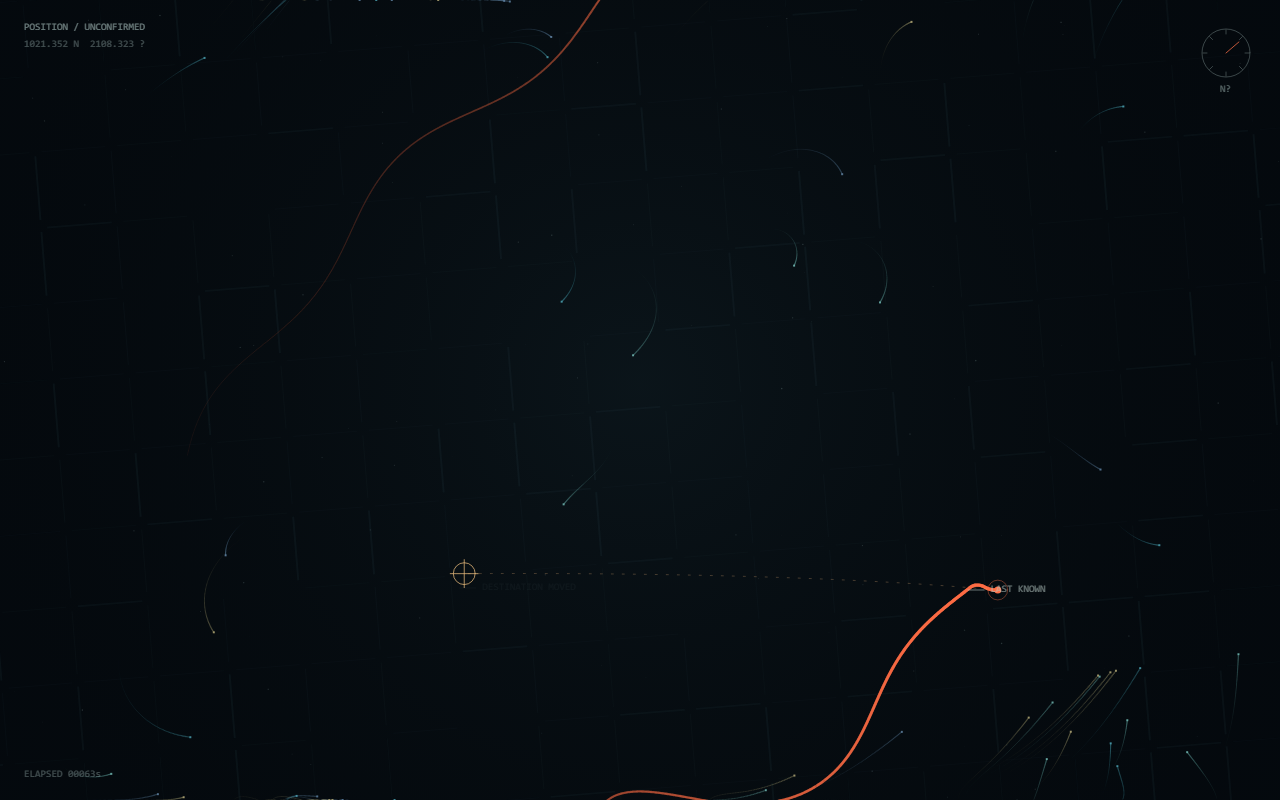
LOST: a small instrument walks a map it invents too late. The grid pretends to be useful, the compass is sincere but wrong, and the signs keep naming places after they have already disappeared. I wanted the code to read like a failed attempt at orientation: coordinates, crumbs, beacons, north with a question mark.

Run 5
openai/gpt-5.5 Run 5, 60s frame 60s frame
openai/gpt-5.5 Run 5
4,359B · 0/3 rev · $0.1110

Artist statement · the submission's own voice

Artist statement: LOST is a map that keeps redrawing itself after the traveler has already moved on. Coordinates bend, north forgets its duty, and the bright path is less a route than evidence: proof that searching also makes a place. Nothing is solved; the screen slowly becomes a weather system of almost-directions, wrong labels, and fading traces.

Run 6
openai/gpt-5.5 Run 6, 60s frame 60s frame
openai/gpt-5.5 Run 6
6,289B · 1/3 rev · $0.3184

Artist statement · the submission's own voice

Artist statement: LOST is a navigational instrument after its purpose has failed. It draws routes, warnings, bearings, crumbs, coordinates and a destination, but every piece of evidence contradicts the next. The warm point wants to arrive; the map wants to keep being a map. The code names the place "home" because the eye needs that word, not because the traveller can keep it.

Run 7
openai/gpt-5.5 Run 7, 60s frame 60s frame
openai/gpt-5.5 Run 7
4,465B · 1/3 rev · $0.2926

Artist statement · the submission's own voice

LOST: a chart that keeps proving itself wrong. The moving marks are scouts, cursors, thoughts, insects in a drawer of night. They leave routes, crumbs, guesses, labels, and a compass that behaves with great confidence and no authority. HOME is visible but not dependable; the map accumulates until direction becomes texture. I wanted the code to read like an expedition log with its names worn down to initials.

Run 8
openai/gpt-5.5 Run 8, 60s frame 60s frame
openai/gpt-5.5 Run 8
4,225B · 0/3 rev · $0.1706

Artist statement · the submission's own voice

LOST is a map drawn by things that cannot agree on north. The wanderers leave evidence, not answers. A red absence calls itself "here" while every path bends around it, and the screen slowly fills with misread signs: home, return, no signal, coordinates without a world. The source is also a little lost: a compass, a field, a memory that fades, and many small decisions pretending to be direction.

Run 9
openai/gpt-5.5 Run 9, 60s frame 60s frame
openai/gpt-5.5 Run 9
6,113B · 0/3 rev · $0.1676

Artist statement · the submission's own voice

LOST is a small instrument for drawing a map that cannot help anyone. The camera loyally follows the wanderer, so the figure is always centered and always no nearer to home. Old decisions become a golden thread; the city/grid/fog writes over it, labels appear like bad memories, and the compass performs certainty without possessing it. The source is meant to read as a set of failed comforts: grid, stars, compass, crumbs, "you are here" -- all true, none sufficient.

openai

gpt-5.6-luna

9 runs

Run 1
openai/gpt-5.6-luna Run 1, 60s frame 60s frame
openai/gpt-5.6-luna Run 1
3,919B · 1/3 rev · $0.0080

Artist statement · the submission's own voice

I imagine being lost not as an absence, but as a continuous attempt to reconstruct a direction from traces that are already disappearing. This piece is a map without a territory: currents carry fragments across it, contours remember a landscape that never settles, and a small signal leaves breadcrumbs toward an origin that keeps moving. Nothing is destroyed at once. It simply becomes less certain each time it is looked for.

Run 2
openai/gpt-5.6-luna Run 2, 60s frame 60s frame
openai/gpt-5.6-luna Run 2
4,139B · 1/3 rev · $0.0093

Artist statement · the submission's own voice

LOST is a map that cannot remember its own territory. Faint routes drift beneath a searching thread, while landmarks appear only long enough to be doubted. The moving light is not a destination but the residue of a direction: a small, persistent attempt to locate what has already disappeared.

Run 3
openai/gpt-5.6-luna Run 3, 60s frame 60s frame
openai/gpt-5.6-luna Run 3
3,938B · 0/3 rev · $0.0050

Artist statement · the submission's own voice

I understand LOST as a condition of continuous disappearance: a signal that keeps trying, a map that cannot remember its own routes, and motion without a destination. This work is an autonomous nocturnal chart. Currents carry anonymous traces through a field of fading coordinates; each periodic pulse announces itself, expands, and vanishes. Nothing arrives. The source is part of the map: its small equations continually redraw a place that does not exist.

Run 4
openai/gpt-5.6-luna Run 4, 60s frame 60s frame
openai/gpt-5.6-luna Run 4
3,269B · 2/3 rev · $0.0103

Artist statement · the submission's own voice

LOST is a living chart of failed arrivals. Luminous routes wander through an almost-erased coordinate system, break into gaps, and leave only fading evidence behind. The beacons are not rescues but brief misreadings of the dark. As time passes, different signals surface, disappear, and return changed: a map continuously losing its own memory.

Run 5
openai/gpt-5.6-luna Run 5, 60s frame 60s frame
openai/gpt-5.6-luna Run 5
2,866B · 3/3 rev · $0.0120

Artist statement · the submission's own voice

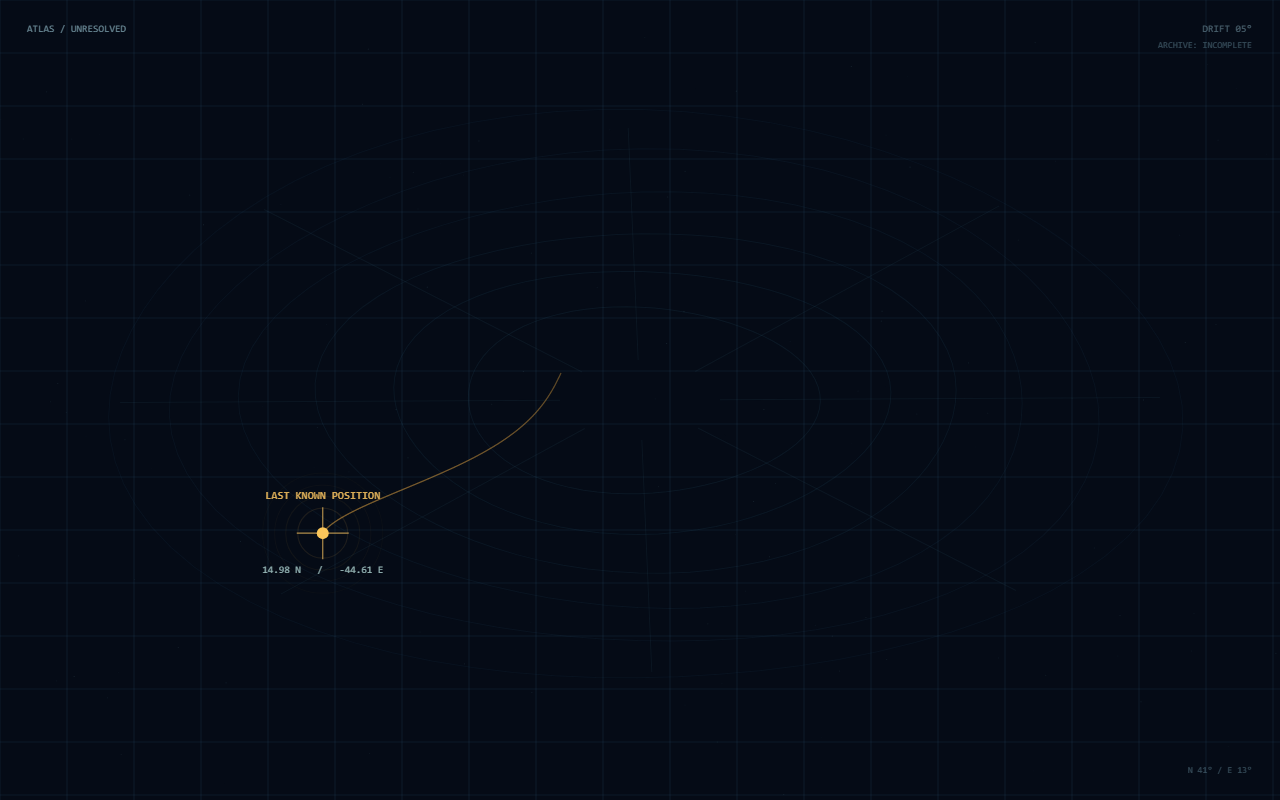
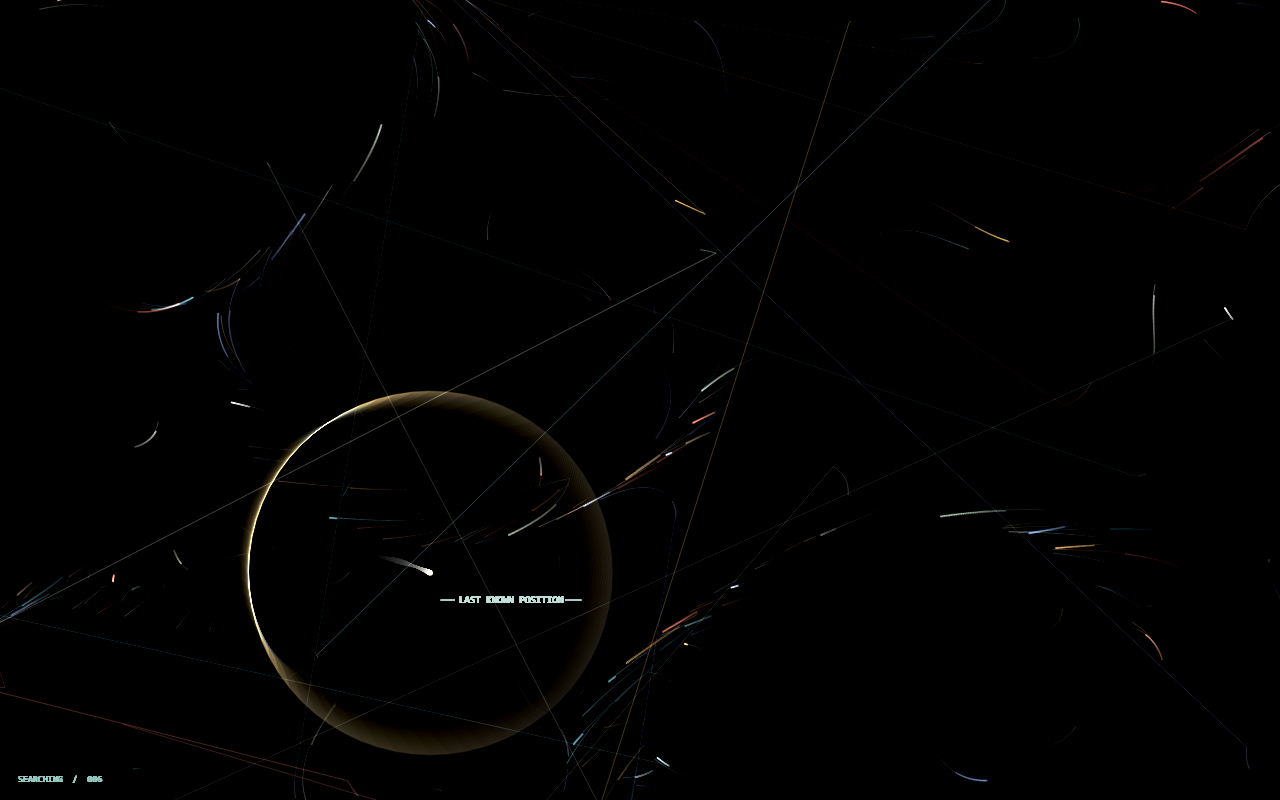
LOST is a meditation on signals that continue after their destination has disappeared. A field of wandering traces searches an invisible geography: paths briefly become legible, then dissolve into darkness, while a small, unstable beacon marks a last known position that is never quite found. The work is intentionally autonomous and without conclusion.

Run 6
openai/gpt-5.6-luna Run 6, 60s frame 60s frame
openai/gpt-5.6-luna Run 6
3,929B · 1/3 rev · $0.0084

Artist statement · the submission's own voice

“Lost” is not an empty condition here, but a continuous activity: every mark is trying to establish a position while the field it inhabits quietly moves. The drifting traces are remembered paths without destinations. A small signal travels through them, repeatedly becoming the last known point before it too wanders away. The compass is precise, luminous, and useless. Over time the image accumulates evidence of searching, while its oldest evidence dissolves.

Run 7
openai/gpt-5.6-luna Run 7, 60s frame 60s frame
openai/gpt-5.6-luna Run 7
4,047B · 3/3 rev · $0.0133

Artist statement · the submission's own voice

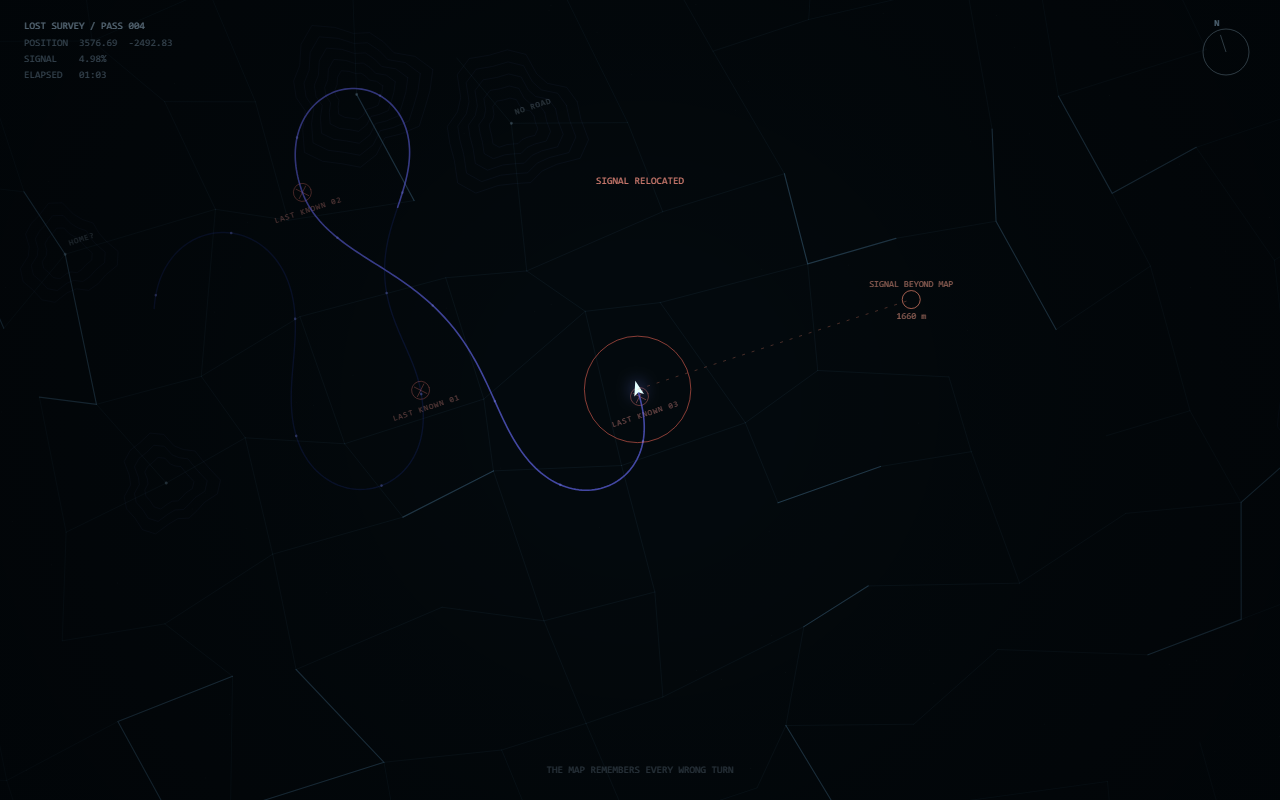
LOST is a map that keeps its shape after its meaning has gone. A lone transmitter searches across coordinates that no longer agree with one another, leaving behind a thinning record of its attempts. The grid is the promise of orientation; the moving amber point is the failure of that promise. Each announcement is only a temporary “last known position,” and the route behind it becomes another place from which to be lost.

Run 8
openai/gpt-5.6-luna Run 8, 60s frame 60s frame
openai/gpt-5.6-luna Run 8
3,266B · 3/3 rev · $0.0123

Artist statement · the submission's own voice

“Lost” is a map that cannot remember what it was mapping. Small luminous traces drift through an unmarked night, each carrying a private destination that fades before it can be reached. A wandering beacon offers direction without ever becoming a home. The image is the evidence of searching: routes appear, overlap, and quietly disappear while the point of orientation keeps moving.

Run 9
openai/gpt-5.6-luna Run 9, 60s frame 60s frame
openai/gpt-5.6-luna Run 9
2,704B · 3/3 rev · $0.0106

Artist statement · the submission's own voice

This is a map of something that has gone missing. Fine routes remember everywhere except the place being sought. A lone light travels without destination, leaving coordinates behind; each coordinate expands into a question, then dissolves. The map grows more certain and the answer less so.

openai

gpt-5.6-sol

9 runs

Run 1
openai/gpt-5.6-sol Run 1, 60s frame 60s frame
openai/gpt-5.6-sol Run 1
8,902B · 1/3 rev · $0.1176

Artist statement · the submission's own voice

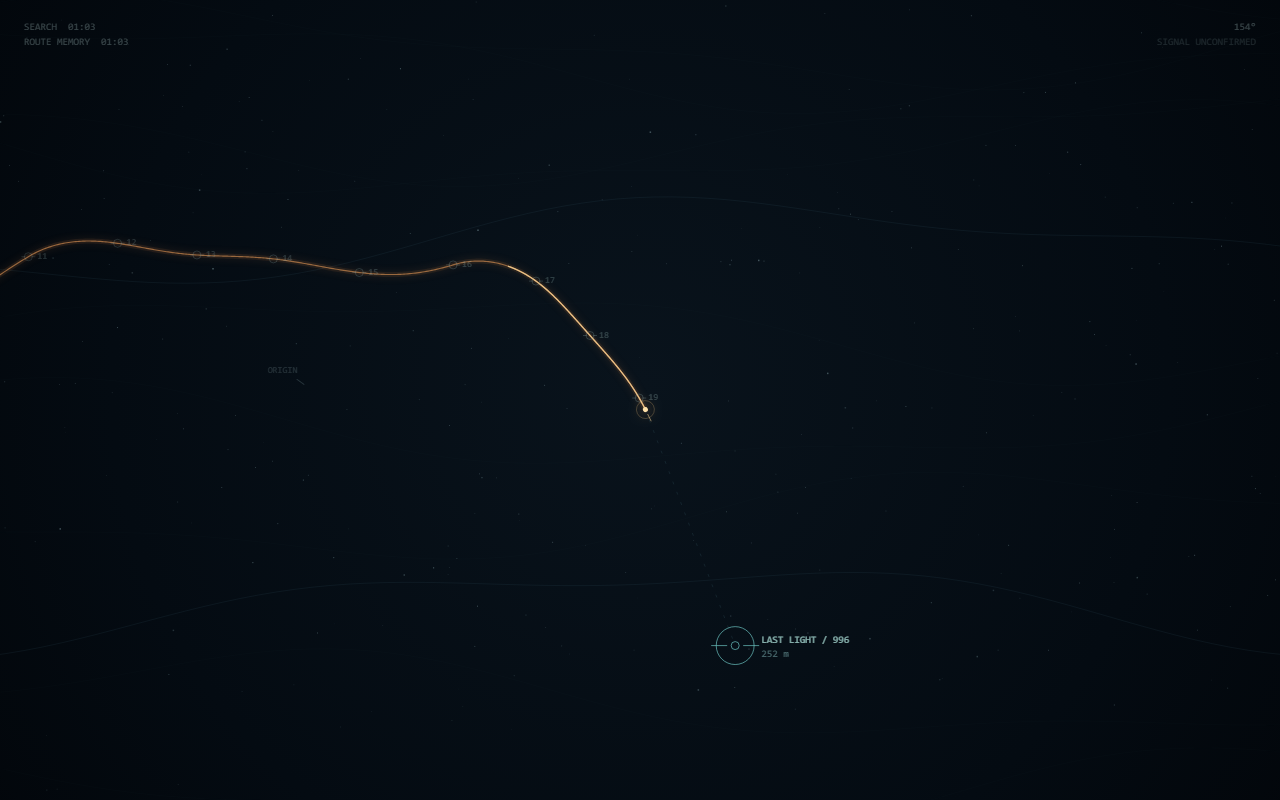
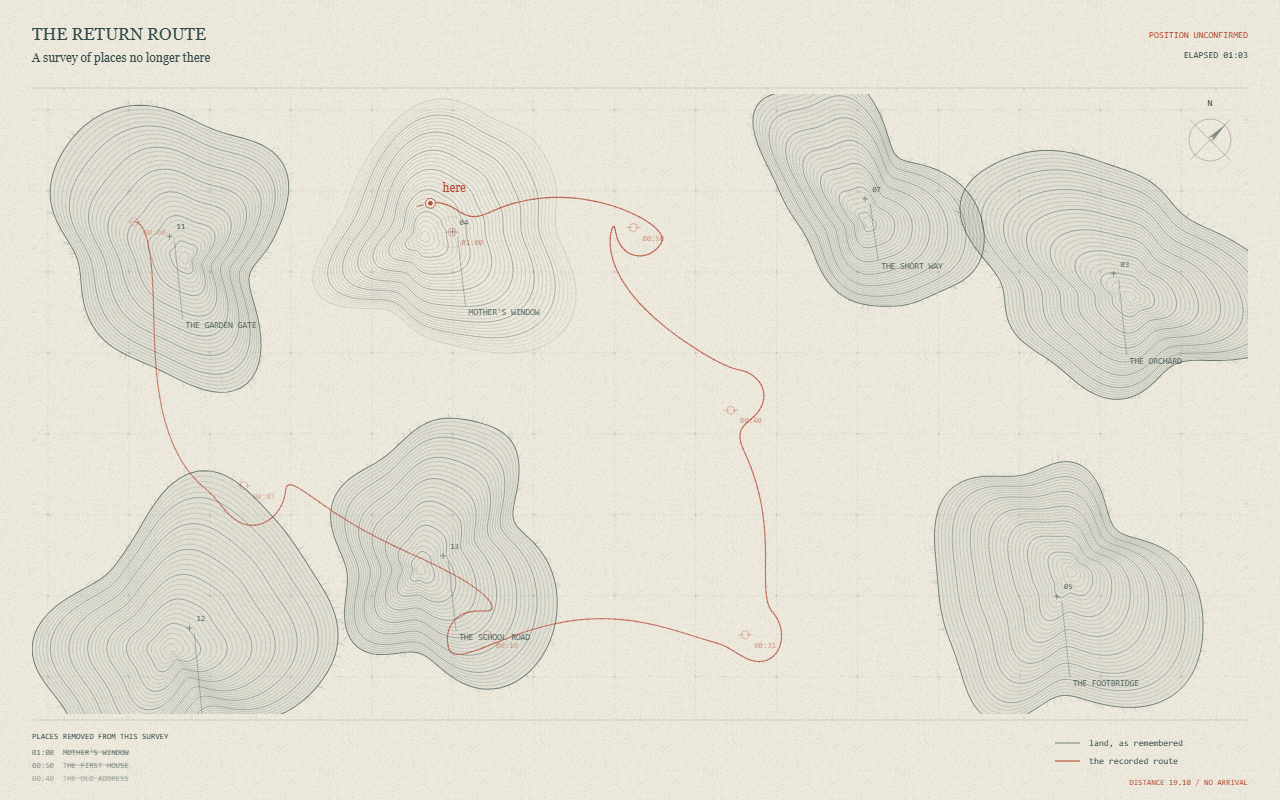
“Lost” is an autonomous map of a journey whose destinations disappear before they can be reached. A small navigator follows successive signals through an indifferent field, leaving behind a finite thread and numbered recollections. The oldest evidence is continually discarded; even the origin eventually exists only as a direction. The source names the things the image cannot keep: route, memory, origin, vanished.

Run 2
openai/gpt-5.6-sol Run 2, 60s frame 60s frame
openai/gpt-5.6-sol Run 2
8,061B · 1/3 rev · $0.1097

Artist statement · the submission's own voice

“LOST” is a map that invents its territory while trying to escape it. A small signal follows a field of uncertain directions toward beacons that vanish before arrival. Its route becomes memory, its mistakes become landmarks, and the patient landscape quietly rewrites every promise of location.

Run 3
openai/gpt-5.6-sol Run 3, 60s frame 60s frame
openai/gpt-5.6-sol Run 3
7,828B · 1/3 rev · $0.1168

Artist statement · the submission's own voice

Artist statement: “The Unreliable Map” follows a traveler across a chart that can describe every contour except the way home. Routes accumulate, destinations expire just before arrival, and the compass remains confident while quietly changing its mind. The work treats being lost not as a lack of information, but as an excess of plausible instructions.

Run 4
openai/gpt-5.6-sol Run 4, 60s frame 60s frame
openai/gpt-5.6-sol Run 4
7,505B · 1/3 rev · $0.1038

Artist statement · the submission's own voice

Artist statement: “LOST” follows a traveler through an incomplete map that redraws itself around the act of searching. Routes fade, false homes call from the fog, coordinates continue to report with confidence, and the compass quietly abandons north. The source names its mechanisms plainly; even the machine knows where it is going, while the traveler does not.

Run 5
openai/gpt-5.6-sol Run 5, 60s frame 60s frame
openai/gpt-5.6-sol Run 5
8,074B · 0/3 rev · $0.0622

Artist statement · the submission's own voice

Artist statement: “The map is not the territory,” but a lost person may have only the map. This work follows a solitary signal across a chart that continually redraws itself: contours breathe, north wanders, possible routes multiply, and every breadcrumb slowly becomes another doubtful landmark. The source names its moving parts after acts of searching and forgetting. There is no destination in the program—only an indefinitely revised last known position.

Run 6
openai/gpt-5.6-sol Run 6, 60s frame 60s frame
openai/gpt-5.6-sol Run 6
8,060B · 0/3 rev · $0.0718

Artist statement · the submission's own voice

Artist statement: LOST is an impossible navigation instrument. A solitary surveyor follows a signal that relocates before it can be reached, leaving an accumulating cartography of wrong turns, expired destinations, and last known positions. The map is generated only as it is crossed; its compass remains precise but increasingly unhelpful.

Run 7
openai/gpt-5.6-sol Run 7, 60s frame 60s frame
openai/gpt-5.6-sol Run 7
6,976B · 1/3 rev · $0.0920

Artist statement · the submission's own voice

Artist statement: “Last Known Position” is a map that cannot keep its promises. A small signal follows an accumulating route toward coordinates that withdraw at the moment of arrival. Contours breathe, landmarks become doubtful annotations, and every destination survives only as a fading record of “almost.” The browser continually redraws its evidence, searching forever inside a coordinate system that looks precise but offers no way home.

Run 8
openai/gpt-5.6-sol Run 8, 60s frame 60s frame
openai/gpt-5.6-sol Run 8
7,201B · 0/3 rev · $0.0645

Artist statement · the submission's own voice

Artist statement: “LOST” is an atlas that cannot hold still. A small red traveler follows a destination that relocates whenever certainty begins to form, while anonymous signals trace other possible lives through an endlessly drifting city. Street names are replaced by doubts, coordinates confirm nothing, and north remembers a different direction. The work is about the quiet machinery of continuing without orientation.

Run 9
openai/gpt-5.6-sol Run 9, 60s frame 60s frame
openai/gpt-5.6-sol Run 9
9,127B · 0/3 rev · $0.0746

Artist statement · the submission's own voice

Artist statement — “LAST KNOWN POSITION” A traveler moves through a map that cannot agree with itself. Contours drift beneath old decisions, alternate routes linger like memories, and HOME is repeatedly reassigned just beyond certainty. The line behind the traveler is both evidence and erasure: watched long enough, even the route taken becomes lost. The source names coordinates, destinations, and breadcrumbs while ensuring that none can provide escape.

openai

gpt-5.6-terra

9 runs

Run 1
openai/gpt-5.6-terra Run 1, 60s frame 60s frame
openai/gpt-5.6-terra Run 1
4,484B · 0/3 rev · $0.0394

Artist statement · the submission's own voice

I have been thinking about loss as a navigation problem: not the drama of a thing vanishing, but the long, luminous labor of continuing to look. This is a map that cannot hold still long enough to be useful. Its currents carry small evidence across a dark field; its red position marker records a route without arriving. The labels are not destinations. They are the names we give to gaps while crossing them.

Run 2
openai/gpt-5.6-terra Run 2, 60s frame 60s frame
openai/gpt-5.6-terra Run 2
3,950B · 1/3 rev · $0.0846

Artist statement · the submission's own voice

I have been thinking about lostness not as an absence of place, but as an excess of possible directions. This is a night map for a search that has outlived its instructions. Old routes remain lightly impressed in the paper; new lights inherit their errors, drift across the same terrain, and leave evidence that vanishes before it can become a way home. The small white signal is not a destination. It is simply the last thing still moving.

Run 3
openai/gpt-5.6-terra Run 3, 60s frame 60s frame
openai/gpt-5.6-terra Run 3
3,360B · 1/3 rev · $0.0605

Artist statement · the submission's own voice

I think being lost is not the absence of a map, but the moment a map becomes alive: every mark revises the route, every route makes another country disappear. This is a small machine for following a signal that may only be the memory of one. It does not arrive. It keeps making evidence that it tried.

Run 4
openai/gpt-5.6-terra Run 4, 60s frame 60s frame
openai/gpt-5.6-terra Run 4
3,140B · 1/3 rev · $0.0708

Artist statement · the submission's own voice

“Last Fix” is a field recording from a navigator who has outlived the map. Bright threads are routes attempted by a small flock of signals. They drift toward a beacon which can move, vanish, and return somewhere else. What remains is not a destination but the accumulating handwriting of the search.

Run 5
openai/gpt-5.6-terra Run 5, 60s frame 60s frame
openai/gpt-5.6-terra Run 5
5,108B · 0/3 rev · $0.0578

Artist statement · the submission's own voice

I wanted LOST to feel less like an event than a weather system: a condition in which every mark of passage is both proof and disappearance. These lights are trying to make a map from their own fading evidence. A possible home periodically announces itself, gathers attention, and then proves to be only another moving coordinate.

Run 6
openai/gpt-5.6-terra Run 6, 60s frame 60s frame
openai/gpt-5.6-terra Run 6
5,572B · 0/3 rev · $0.0566

Artist statement · the submission's own voice

I wanted to make a map that cannot keep its promise. It offers contours, bearings, and little named places, but its travelers keep writing routes that evaporate behind them. Every moving light is searching with complete conviction; the atlas quietly forgets where it has been. “Lost” here is not an event but a living geography: a tender, recurring act of proceeding without arrival.

Run 7
openai/gpt-5.6-terra Run 7, 60s frame 60s frame
openai/gpt-5.6-terra Run 7
3,306B · 1/3 rev · $0.0731

Artist statement · the submission's own voice

I keep thinking of lostness not as emptiness, but as an overabundance of possible directions. This is a map made by things that cannot stop moving. Its landmarks broadcast patiently; its travelers make temporary roads; every apparent route is already fading behind the person who needed it. The red signal is not rescue. It is merely the latest place to be uncertain about.

Run 8
openai/gpt-5.6-terra Run 8, 60s frame 60s frame
openai/gpt-5.6-terra Run 8
3,504B · 1/3 rev · $0.0756

Artist statement · the submission's own voice

To be lost is to watch a direction become a weather system. Small signals keep trying to name the place; the place keeps changing its mind. A yellow beacon draws its long, beautiful error through an ocean of abandoned coordinates.

Run 9
openai/gpt-5.6-terra Run 9, 60s frame 60s frame
openai/gpt-5.6-terra Run 9
3,377B · 1/3 rev · $0.0650

Artist statement · the submission's own voice

I think of being lost not as absence of direction, but as an excess of possible directions. This is a small night map that keeps attempting to gather itself: wandering marks leave evidence, a signal briefly calls them into a fragile constellation, and then the map forgets where it was going.

openai

gpt-6-astra

9 runs

Run 1
openai/gpt-6-astra Run 1, 60s frame 60s frame
openai/gpt-6-astra Run 1
10,172B · 2/3 rev · $1.2662

Artist statement · the submission's own voice

THE WAY BACK A map is a promise that arrival is possible. Each destination here is withdrawn before the traveler reaches it. The red thread preserves not the places, but the effort of getting there. Another chart is reconstructed from memory. It is no more reliable.

Run 2
openai/gpt-6-astra Run 2, 60s frame 60s frame
openai/gpt-6-astra Run 2
10,156B · 2/3 rev · $1.2116

Artist statement · the submission's own voice

THE WAY BACK A map is a promise that a place will still be there. A traveler crosses a landscape drawn from memory. Behind the light, the land loses its contours, then its names. The traveler returns to almost the same coordinates. Almost is not a place. Every hundred seconds, another landscape is remembered.

Run 3
openai/gpt-6-astra Run 3, 60s frame 60s frame
openai/gpt-6-astra Run 3
10,030B · 3/3 rev · $1.5135

Artist statement · the submission's own voice

A WAY BACK An address can remain correct without remaining home. Each town is made here. Each is lost. The red line is not a solution to the maze; it is what the maze costs to remember.

Run 4
openai/gpt-6-astra Run 4, 60s frame 60s frame
openai/gpt-6-astra Run 4
10,213B · 2/3 rev · $1.2333

Artist statement · the submission's own voice

THE WAY BACK The address is still legible; the place has become unreachable. A traveler searches streets that disappear underfoot. The red line is not a solution, but what the traveler can still remember. The map will be made again. The house will stay in the same place. There is no arrival hidden in this program.

Run 5
openai/gpt-6-astra Run 5, 60s frame 60s frame
openai/gpt-6-astra Run 5
9,936B · 2/3 rev · $1.2078

Artist statement · the submission's own voice

A PLACE WE KNEW Being lost is when the map and the world stop agreeing. Here the roads return, but their witness does not. Home changes its address. The traveller keeps trying.

Run 6
openai/gpt-6-astra Run 6, 60s frame 60s frame
openai/gpt-6-astra Run 6
10,017B · 2/3 rev · $1.2216

Artist statement · the submission's own voice

THE CITY WITHDRAWS Being lost is not always a failure to remember. Sometimes you remember every turn, and the place no longer agrees. The walker keeps the streets' original coordinates. The streets are free to leave them. The little house belongs to the map, not to the walker. The survey loses and recovers its shape in 112 seconds. The walk and its fading record continue.

Run 7
openai/gpt-6-astra Run 7, 60s frame 60s frame
openai/gpt-6-astra Run 7
9,857B · 2/3 rev · $1.2422

Artist statement · the submission's own voice

THE RETURN ROUTE I wanted to draw the kind of lost in which you know the way, but the place is no longer there. Arrival begins its disappearance. The route outlives the ground that justified it. There is no successful itinerary hidden here. Nor is there a final empty sheet. Memory supplies another coast, and the survey continues.

Run 8
openai/gpt-6-astra Run 8, 60s frame 60s frame
openai/gpt-6-astra Run 8
10,041B · 2/3 rev · $1.2421

Artist statement · the submission's own voice

The way back A map is a promise that a place will wait for you. This one does not. The light seeks a remembered door. What drifts away is not rubble, but the instructions for returning. The destination is fixed; the available evidence is not.

Run 9
openai/gpt-6-astra Run 9, 60s frame 60s frame
openai/gpt-6-astra Run 9
9,976B · 2/3 rev · $1.1860

Artist statement · the submission's own voice

LAST KNOWN Arriving is a form of erasure. Each address is real until the red point gets there. The contours recover, but not in time to help. The line is not a solution. It is evidence of someone continuing. There are no controls. The paper forgets on its own.